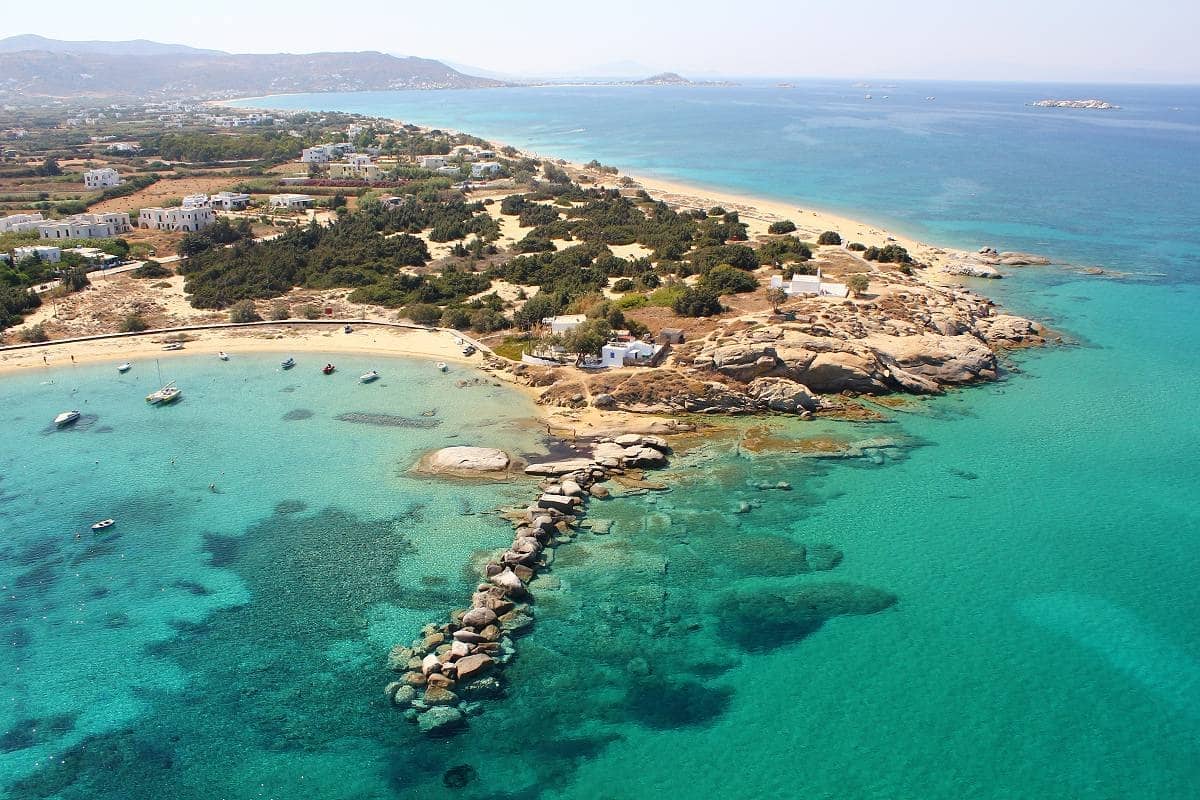
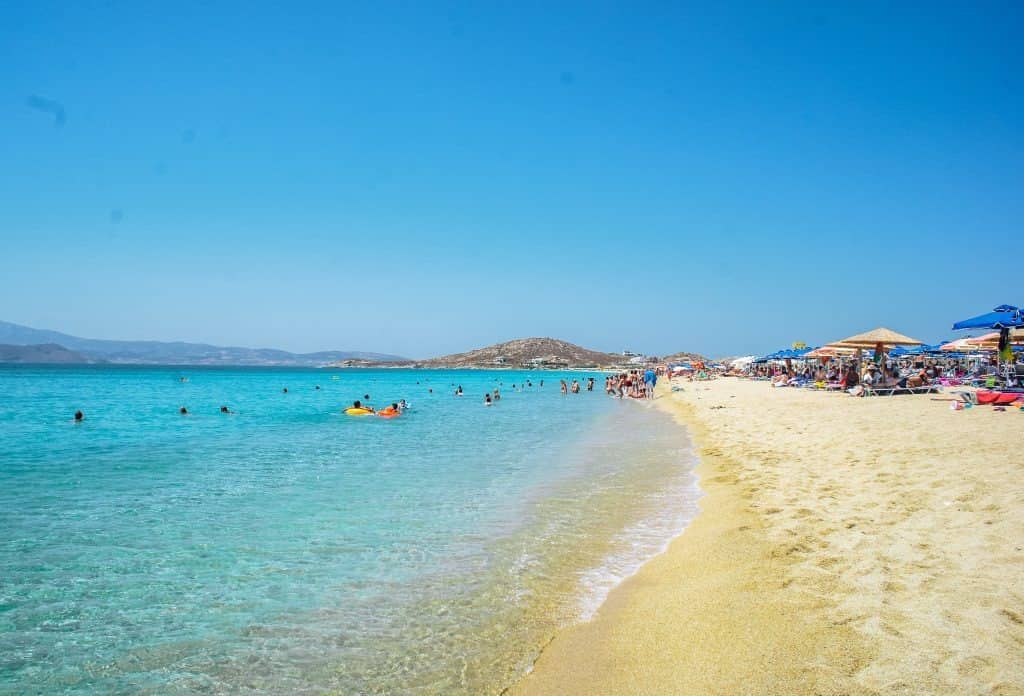
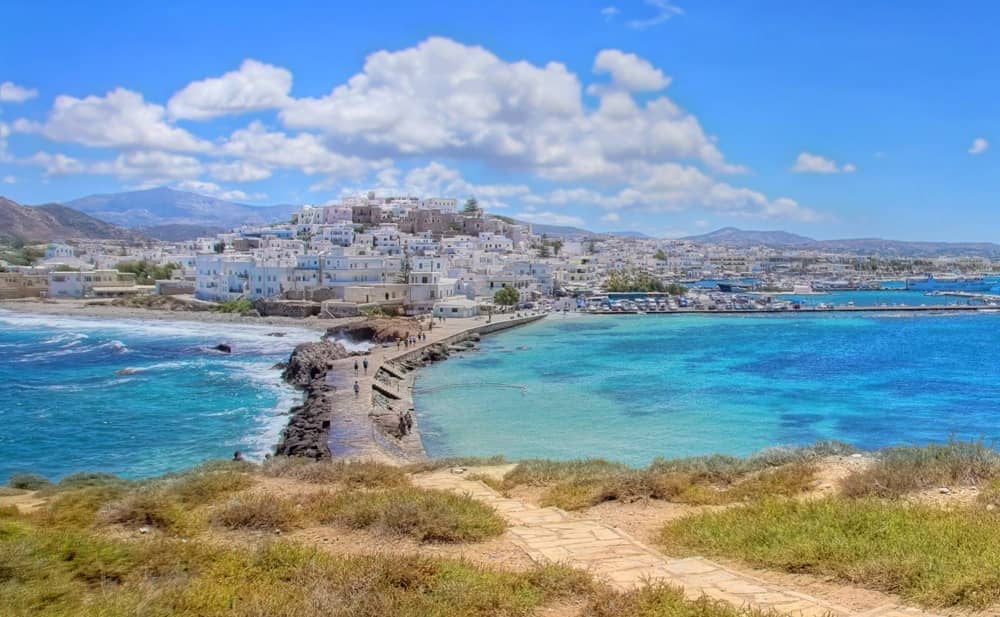
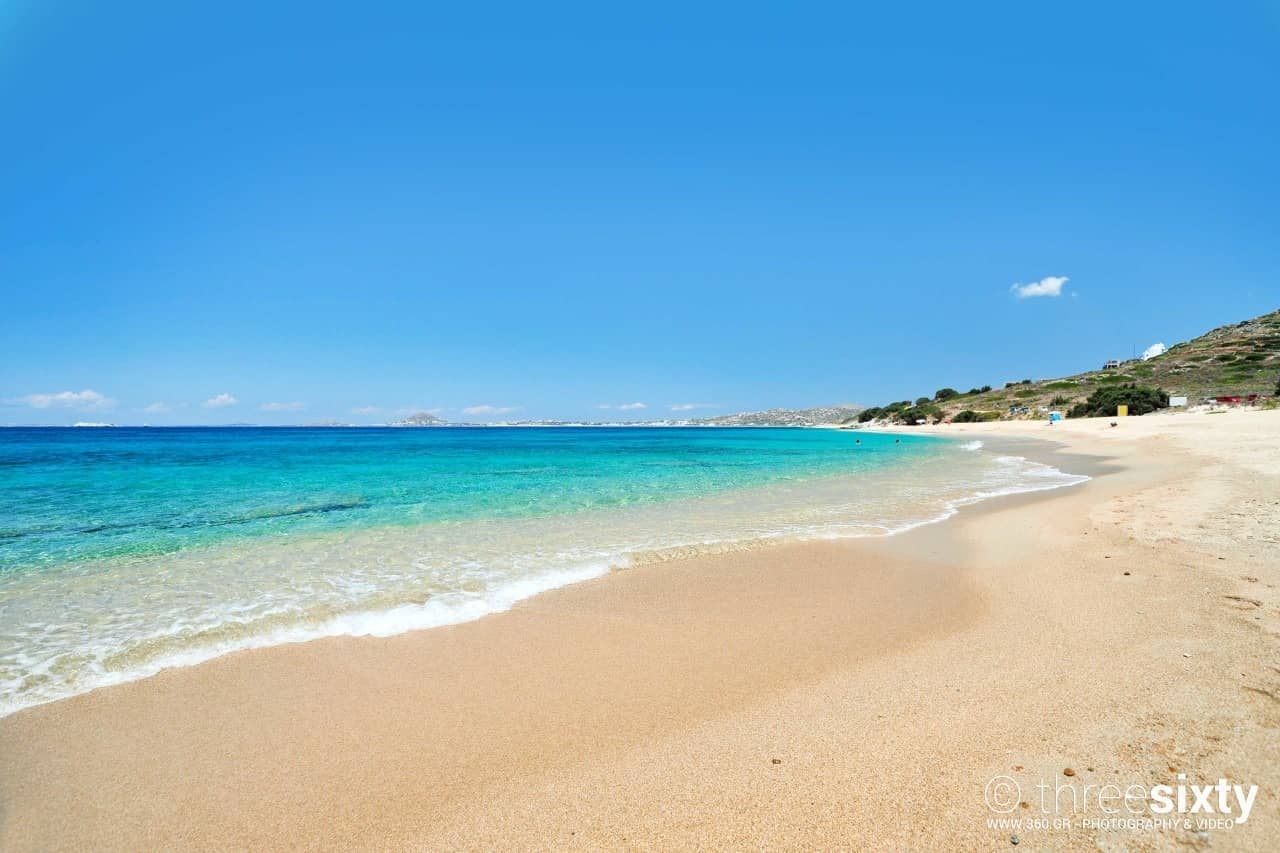
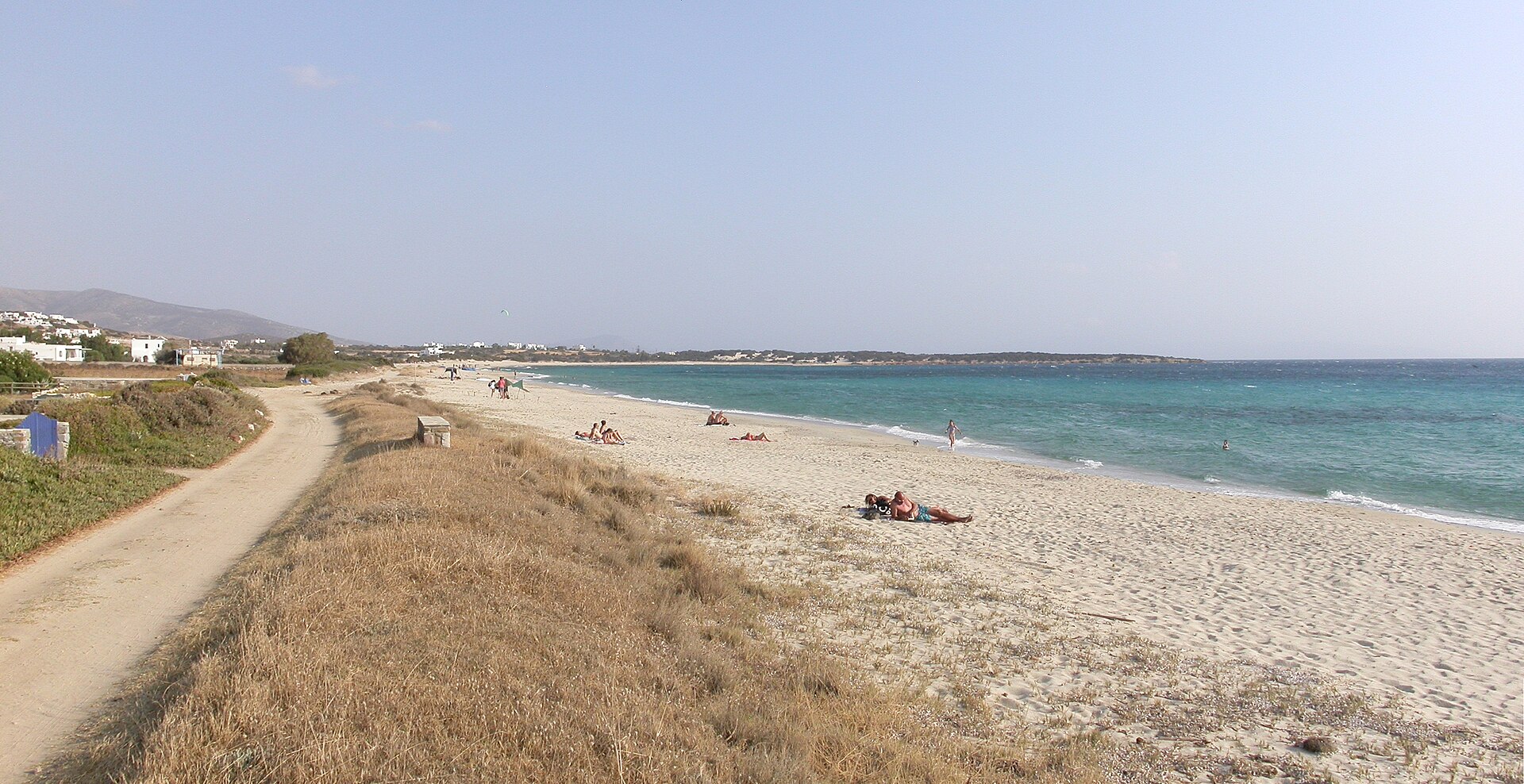
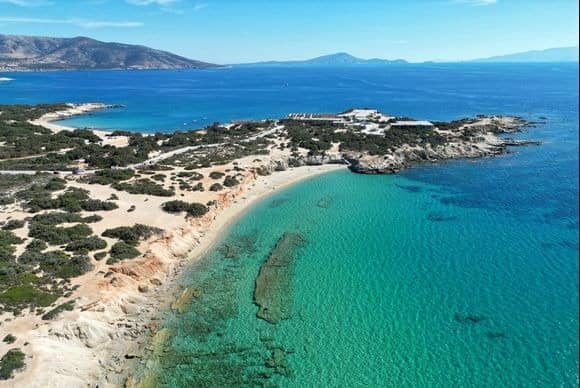
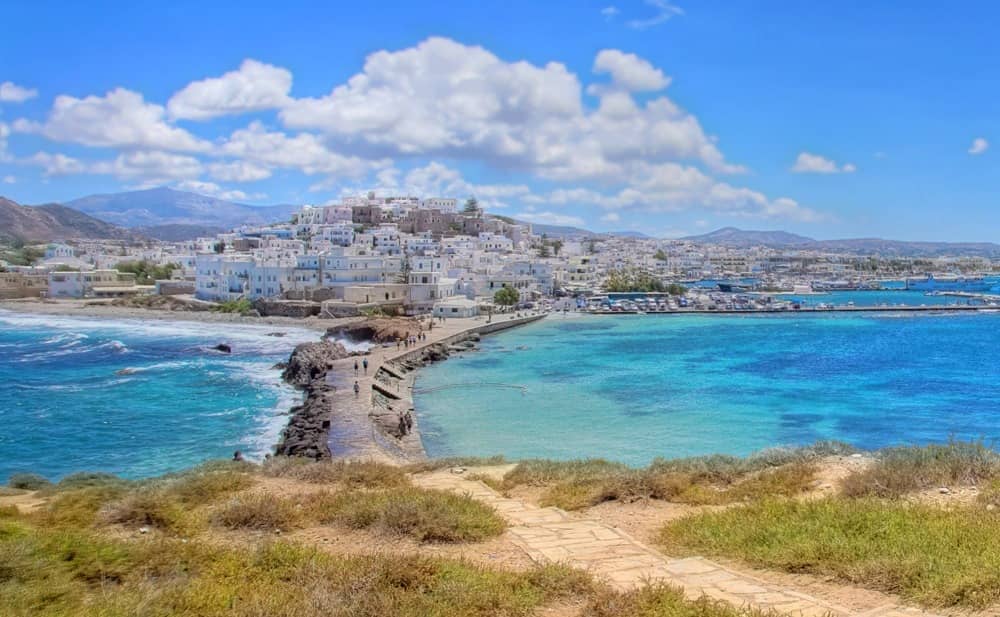
Naxos is the largest Cyclades island in Greece, with fertile landscapes, long sandy beaches like Plaka, and the iconic Portara marble gateway. Just 3.5 hours by ferry from Athens (Piraeus to Naxos), it combines culture, food, and beaches better than any other island in the group. From neighbouring Paros the Paros to Naxos ferry takes as little as 25 minutes. Piraeus to Naxos ferry durations: 3–3.5h high-speed, 4–5.5h conventional.
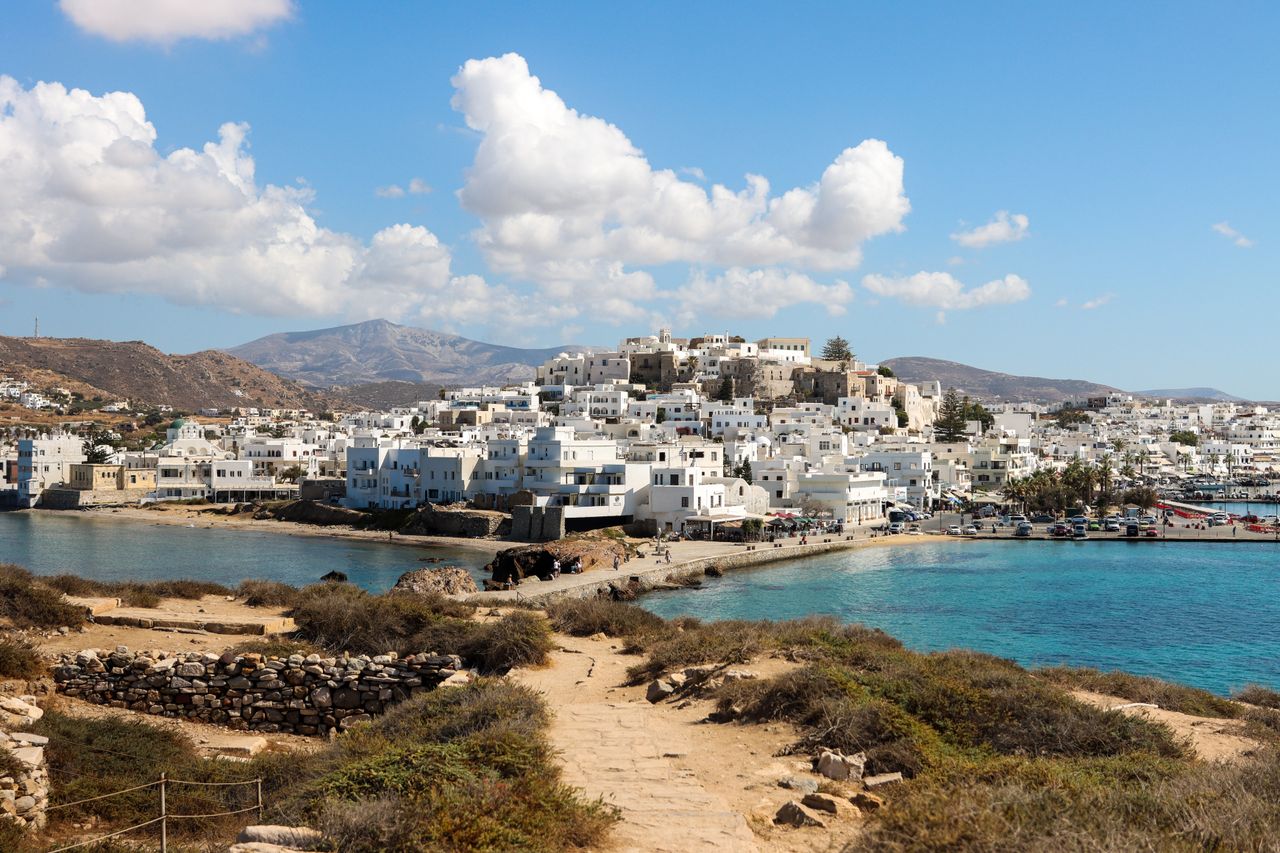
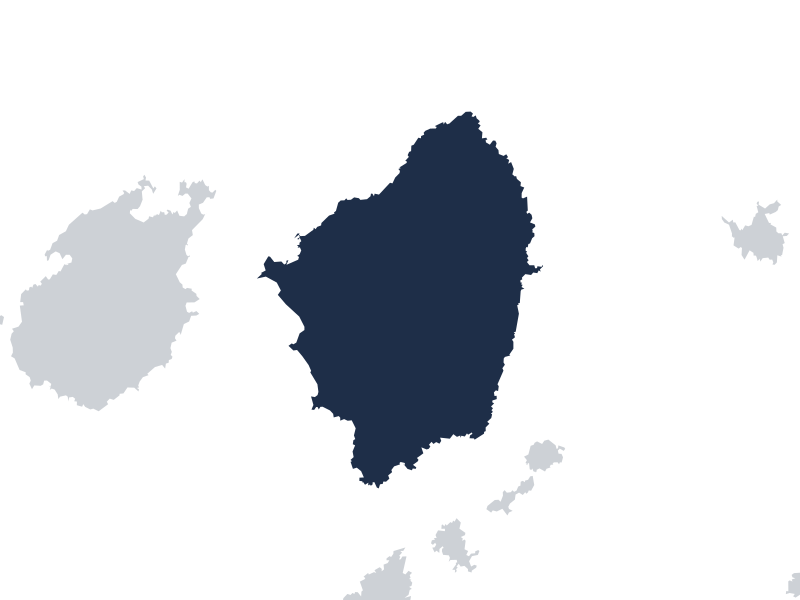
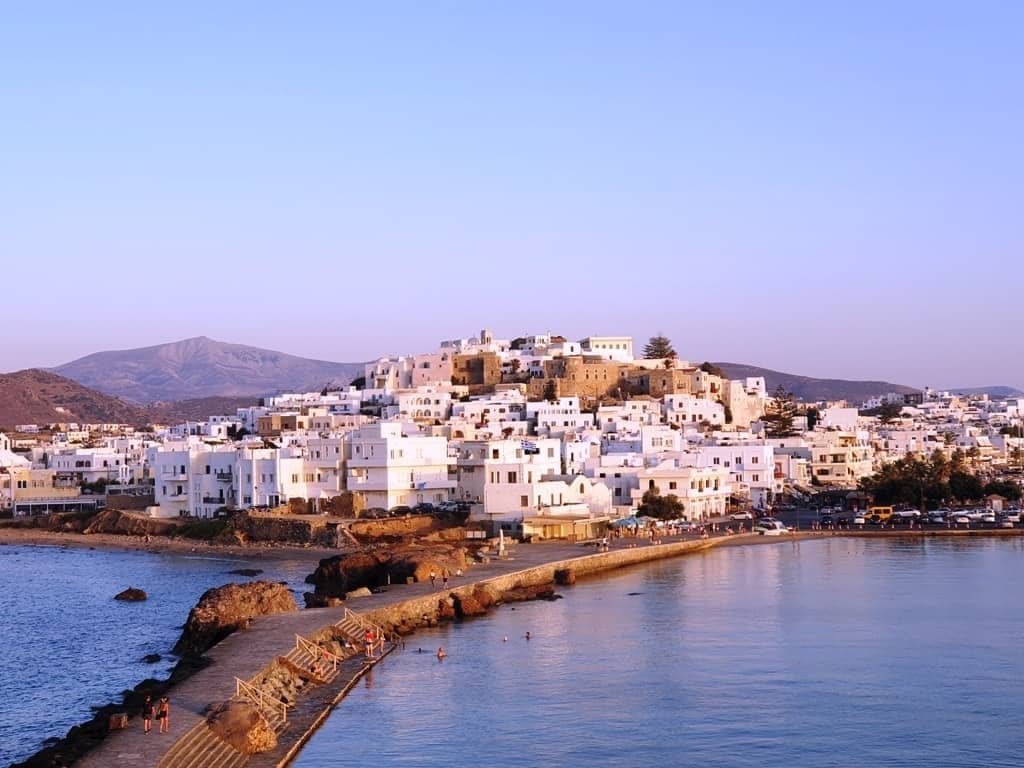
Naxos is the giant of the Cyclades, and it earns that title in every way. At 430 square kilometres it dwarfs its neighbours, rising from some of the longest sandy beaches in Greece to the cloud-capped summit of Mount Zas (1,004 m), the highest peak in the Cycladic chain. The harbour town has a 13th-century Venetian castle. The inland valleys grow the finest potatoes, cheese, and citrus in the Aegean. And the mountain villages feel like they've been measuring time in centuries rather than years.
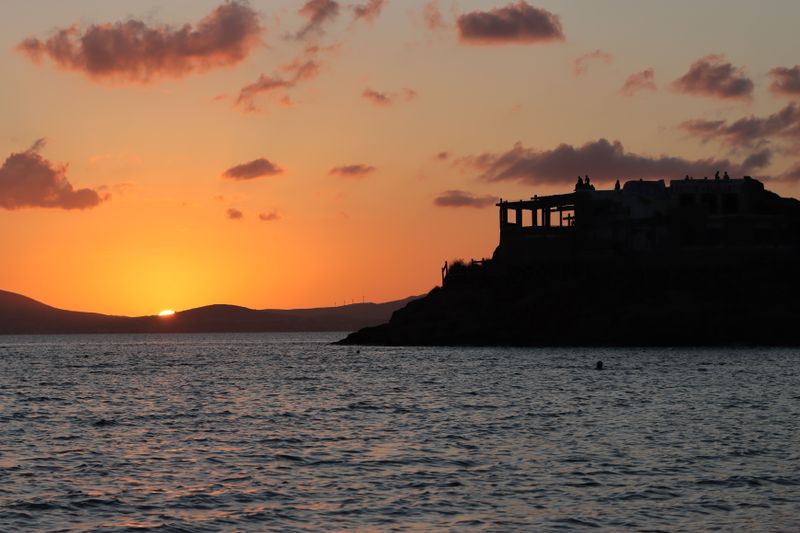
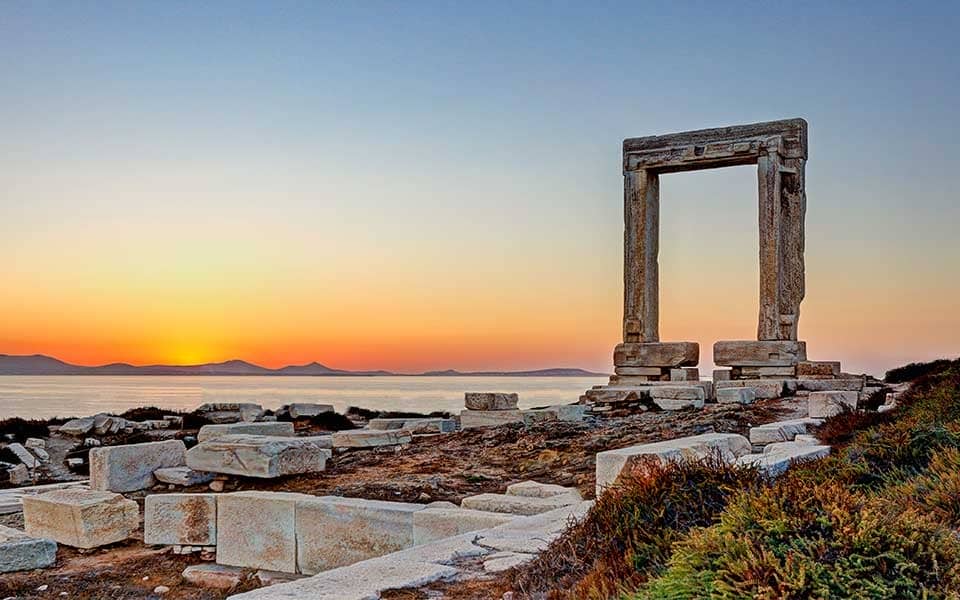
The ancient Greeks considered Naxos the most blessed of islands. In mythology, Dionysus found Ariadne here after Theseus abandoned her and rewarded the island with eternal fertility. That fertility shows up everywhere: in olive and citrus groves carpeting the Tragea valley, in the marble quarries that supplied sculptors across the ancient world, and in the enormous Portara. This massive marble doorway, the entrance to a 6th-century BC Temple of Apollo begun by the tyrant Lygdamis, has stood for 2,500 years. It frames the sunset over Paros every evening.
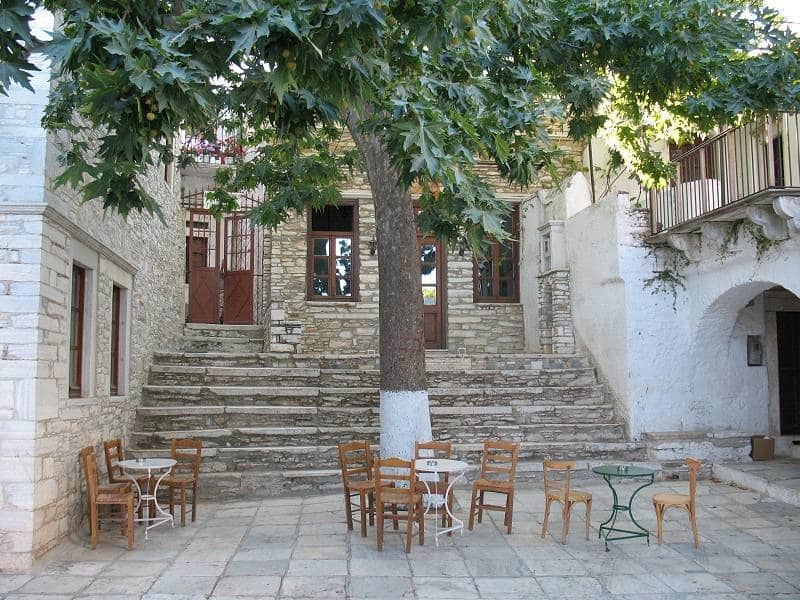
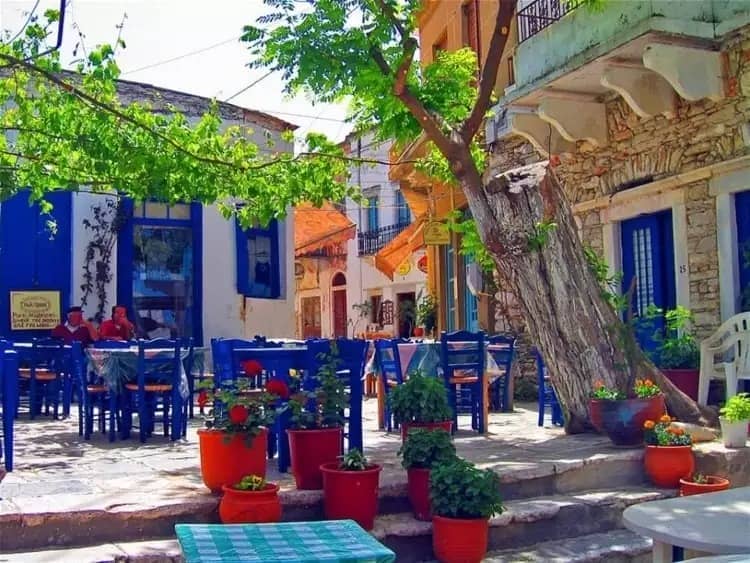
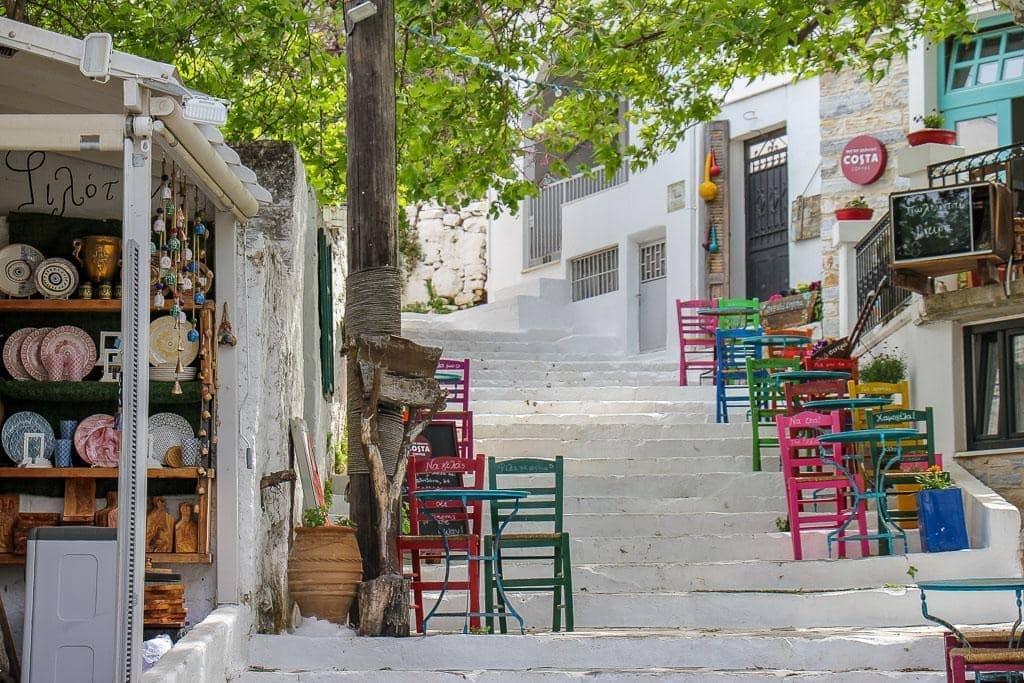
Modern Naxos has become the Cyclades' most complete family destination without losing any authenticity. The west coast offers kilometres of golden sand and shallow turquoise water: Agios Prokopios, Agia Anna, and Plaka are consistently ranked among Greece's finest beaches. Inland, villages like Apeiranthos (the "marble village"), Filoti, and Halki preserve a mountain culture of stone towers, folk music, and artisan traditions. Then there's the food. Naxian graviera cheese holds PDO status, Arseniko is aged in caves for at least six months, the tiny local potatoes grow in volcanic soil, and Kitron liqueur is distilled from citron leaves grown nowhere else in the Cyclades.

 Area 01