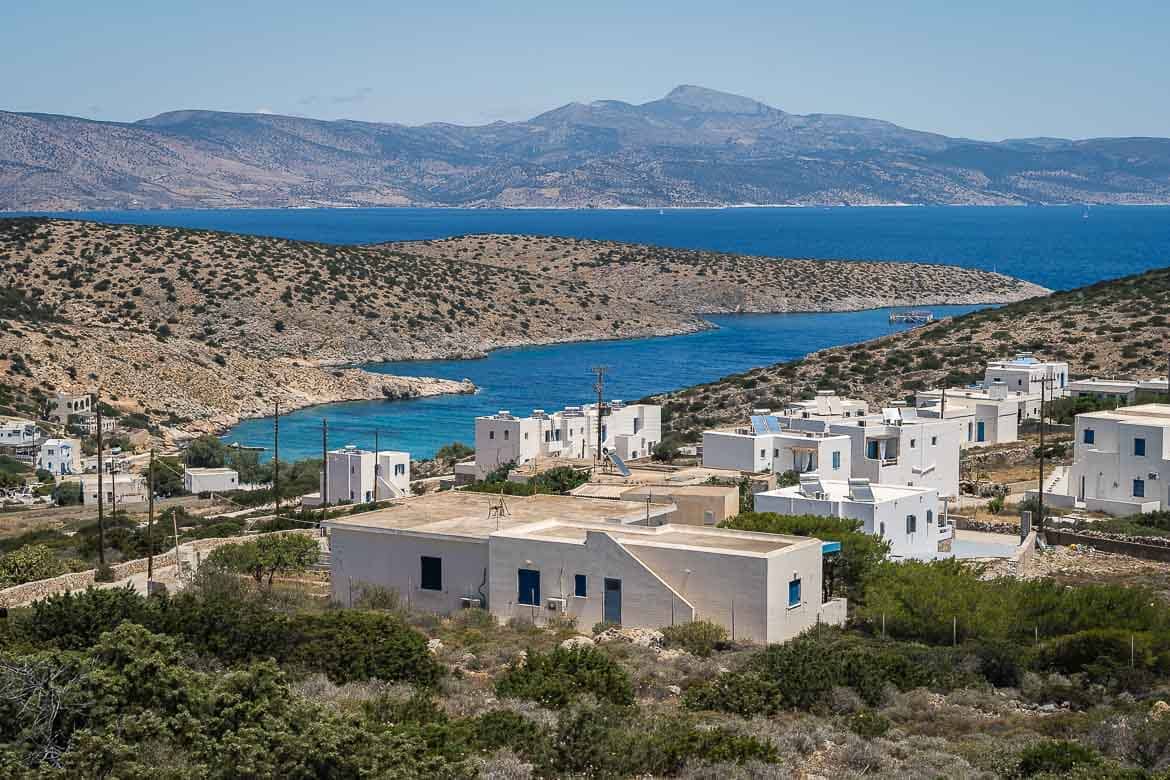
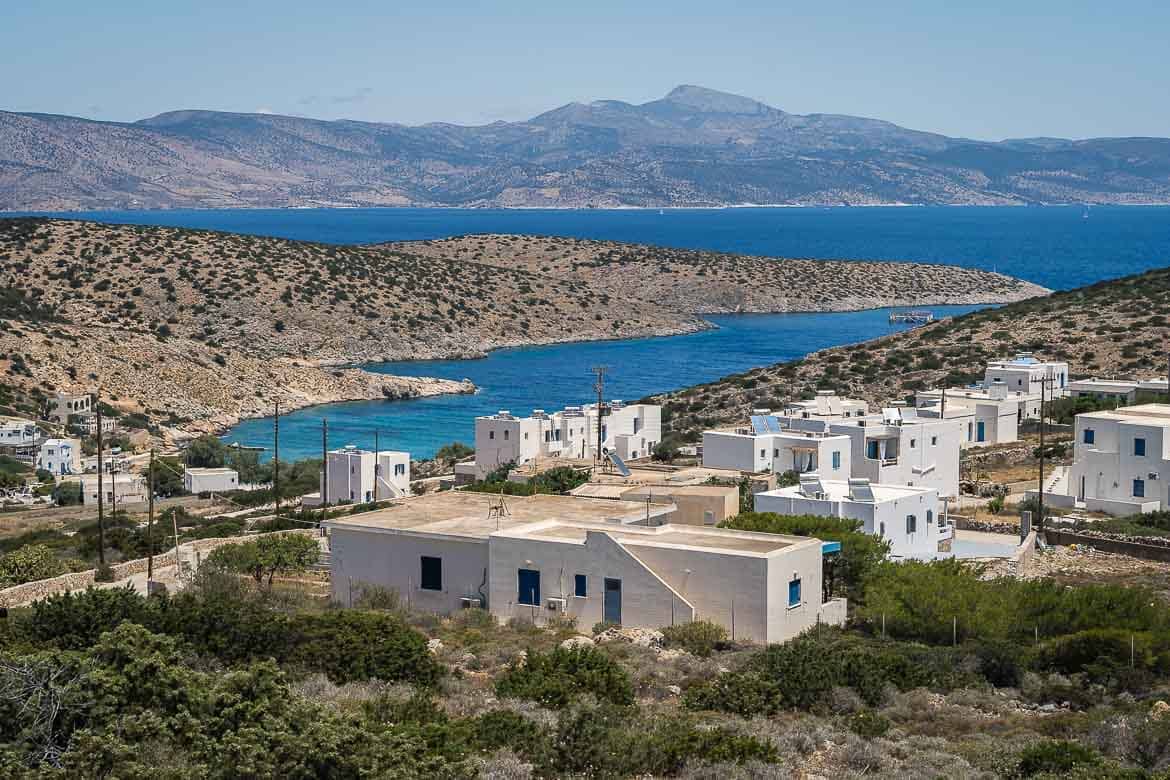
The tiniest inhabited island of the Small Cyclades where caves, wildflowers, and genuine solitude await discovery
Iraklia is the smallest permanently inhabited island in the Small Cyclades, a cluster of tiny islands between Naxos and Amorgos that together form one of the last frontiers of truly unspoiled Greek island life. With just 150 year-round residents, no cars to speak of, and a landscape of aromatic hillsides, hidden coves, and ancient footpaths, Iraklia offers an experience that feels decades removed from modern tourism.
The island's two settlements — the port village of Agios Georgios and the hilltop Chora of Panagia — are connected by a winding path through terraced countryside. The star attraction is the Cave of Agios Ioannis, a vast and mysterious underground chamber decorated with stalactites, stalagmites, and centuries of religious devotion. Every August 28th, the cave hosts one of the most extraordinary panigiri festivals in Greece.
Iraklia is not for those seeking luxury or organized entertainment. It is for walkers, swimmers, readers, and dreamers — people who want to slow down to the rhythm of the tides and the goat bells, eat whatever the taverna cooked that day, and fall asleep to absolute silence. It is the kind of island that changes the way you think about what you actually need.
On Iraklia, you don't check the time — you check the tide, the wind, and whether the bread has arrived on the ferry.
The island takes its name from Herakles (Hercules), who according to myth passed through the Small Cyclades during his labors. Archaeological evidence shows habitation since at least the Early Cycladic period (3rd millennium BC), and ancient graves and pottery fragments have been found across the island.
The Cave of Agios Ioannis (St. John) is Iraklia's most famous landmark — a vast cavern with multiple chambers filled with stalactites and stalagmites. A small church was built inside the cave entrance, and every August 28th, the Feast of Agios Ioannis draws pilgrims and visitors for a panigiri with liturgy inside the cave followed by feasting and dancing in the village.
Like all the Small Cyclades, Iraklia suffered centuries of pirate raids. The island's hilltop Chora (Panagia) was built inland and on high ground specifically to be invisible from the sea. The dense cluster of houses provided mutual protection, and the villagers could spot approaching ships from the heights.
For much of the 20th century, the Small Cyclades were among the most isolated communities in Greece, reachable only by irregular caïque services. The introduction of the small ferry Express Skopelitis in the 1980s, connecting the islands to Naxos and Amorgos, began Iraklia's slow emergence from total isolation.
Explore the heart of Iraklia
Iraklia's tiny harbor village is where the ferry docks and where most visitors stay. A crescent of sand-colored houses wraps around a small bay with a beautiful sandy beach right at the port. There are a handful of tavernas, a mini-market, a couple of rooms-to-let, and the Church of Agios Georgios. Life revolves around the ferry schedule and the daily rhythm of the sea.
The island's historic capital sits on a hilltop in the island's interior, deliberately hidden from sea view as protection against pirates. The village is a tight cluster of whitewashed houses around the Church of the Panagia (Virgin Mary), with sweeping views of the surrounding islands. Fewer than 30 people live here year-round, and in the quiet of the afternoon, you might have the entire village to yourself.
The best shores of Iraklia
The island's most famous beach — a long stretch of golden sand backed by dunes and tamarisk trees, with shallow turquoise water that rivals the Caribbean
A remote pebble-and-sand beach on the island's south coast, reached by a scenic coastal path with views of Schinoussa and Koufonisia
A tiny secluded cove tucked into the rugged coastline, completely natural with no development of any kind — often completely deserted
A dramatic dark sand beach on the less-visited western coast, surrounded by rugged cliffs and accessible only on foot or by boat
The sandy beach right at the port village, with calm water, tamarisk shade, and tavernas steps away — perfect for relaxed morning swims
Ultra-simple island cooking from whatever the land and sea provide that day
Free-range goat braised slowly with tomatoes, oregano, and potatoes — the island's signature dish, made from animals that graze the hillsides
Whatever the local fishermen brought in that morning — often small reef fish, grilled whole and served with nothing but lemon, oil, and sea salt
Foraged wild greens from the island's hillsides, boiled and dressed with olive oil and lemon — a taste of the land itself, available spring through early summer
Small-batch goat and sheep cheese made on the island — creamy, tangy, and served as a meze with bread and tomatoes from the garden
Hand-rolled pasta made by island women, typically served with goat sauce or a simple tomato sauce from sun-dried tomatoes
Preserved fruits and thyme honey from the island's beehives, offered with coffee as a gesture of welcome
From sunrise to sunset in Iraklia
Start the day with a dip in the calm, crystal-clear water right at Agios Georgios beach. The morning light on the water is beautiful, and you'll likely have the beach to yourself before the village wakes up.
45 minThe island's must-do experience: follow the trail from Panagia up to the Cave of Agios Ioannis, a vast limestone cavern filled with stalactites and a tiny chapel at the entrance. The hike passes through fragrant hillsides with expansive views.
3-4 hoursTake the old stone path connecting Agios Georgios to the hilltop Chora of Panagia, passing through terraced countryside with dry-stone walls, wildflowers, and views of the surrounding islands.
1 hourWalk to the stunning beach of Livadi, spread your towel on the golden sand, and spend the morning swimming in impossibly clear turquoise water. Bring a book, water, and snacks — there are no facilities but the beauty is extraordinary.
3-4 hoursReturn to Agios Georgios for a long, lazy lunch at one of the waterfront tavernas. Order whatever they cooked that day — it will be simple, fresh, and delicious. Goat stew, grilled fish, village salad, local wine.
2 hoursWander the narrow lanes of the hilltop Chora, visit the Church of the Panagia, and sit on the village's small plateia watching the light change over the Small Cyclades. The afternoon quiet here is profound.
1.5 hoursHike the coastal trail southward to the remote beach of Tourkopigado for a late-afternoon swim in deep blue water, with views of Schinoussa and the open Aegean.
2.5 hoursFind a spot along the port waterfront or on the Panagia hilltop and watch the sun dip below the horizon, painting the sea gold. A glass of house wine from the taverna completes the moment perfectly.
1 hourJoin locals and fellow travelers at one of the port tavernas for a long dinner under the stars. The conversation flows easily, the raki appears after dessert, and the stars above are astonishing in the absence of light pollution.
2-3 hoursFind the perfect time for your Iraklia trip
Ferry routes and travel connections
Curated tours and activities
Guided hike to the famous cave with geological and historical commentary, exploring the stalactite chambers and the tiny cave chapel.
Day trip by local boat to neighboring Schinoussa and Koufonisia, with swimming stops and lunch at a seaside taverna.
Insider tips for your Iraklia trip
Everything you need to know about Iraklia
Our AI travel assistant knows everything about Iraklia
Escape to the smallest inhabited island of the Small Cyclades — where caves hold ancient secrets, beaches gleam untouched, and the silence is the most beautiful sound you'll hear.