Sponsored by Booking.com

Updated 20 August 2026 · 11 minute guide by the Discover Cyclades editorial team
Quick answer: The route matters, but the hull beneath you matters more. Choose the right vessel, departure and seat before trying to solve a rough crossing with ginger sweets.
The short answer: choose stability first
Best single decision: Book the largest conventional vessel available, sit low and near the middle, face forward, and keep your eyes on the horizon.
If you are prone to motion sickness, prefer a large conventional ferry over a small high-speed catamaran, especially when strong northerly Meltemi winds are forecast. A larger displacement hull usually moves more slowly and predictably; a light fast craft can feel sharper as it meets short Aegean chop.
Do not treat “fastest” as “best”. A 90-minute high-speed crossing that leaves you ill can be a worse travel day than a calmer three-hour conventional sailing with outside air, more space and an open horizon. Use our live ferry search to compare operators and departure times, then check the vessel name before paying.
Conventional ferry vs high-speed catamaran
| Vessel | Ride in wind | Best for | Trade-off |
|---|---|---|---|
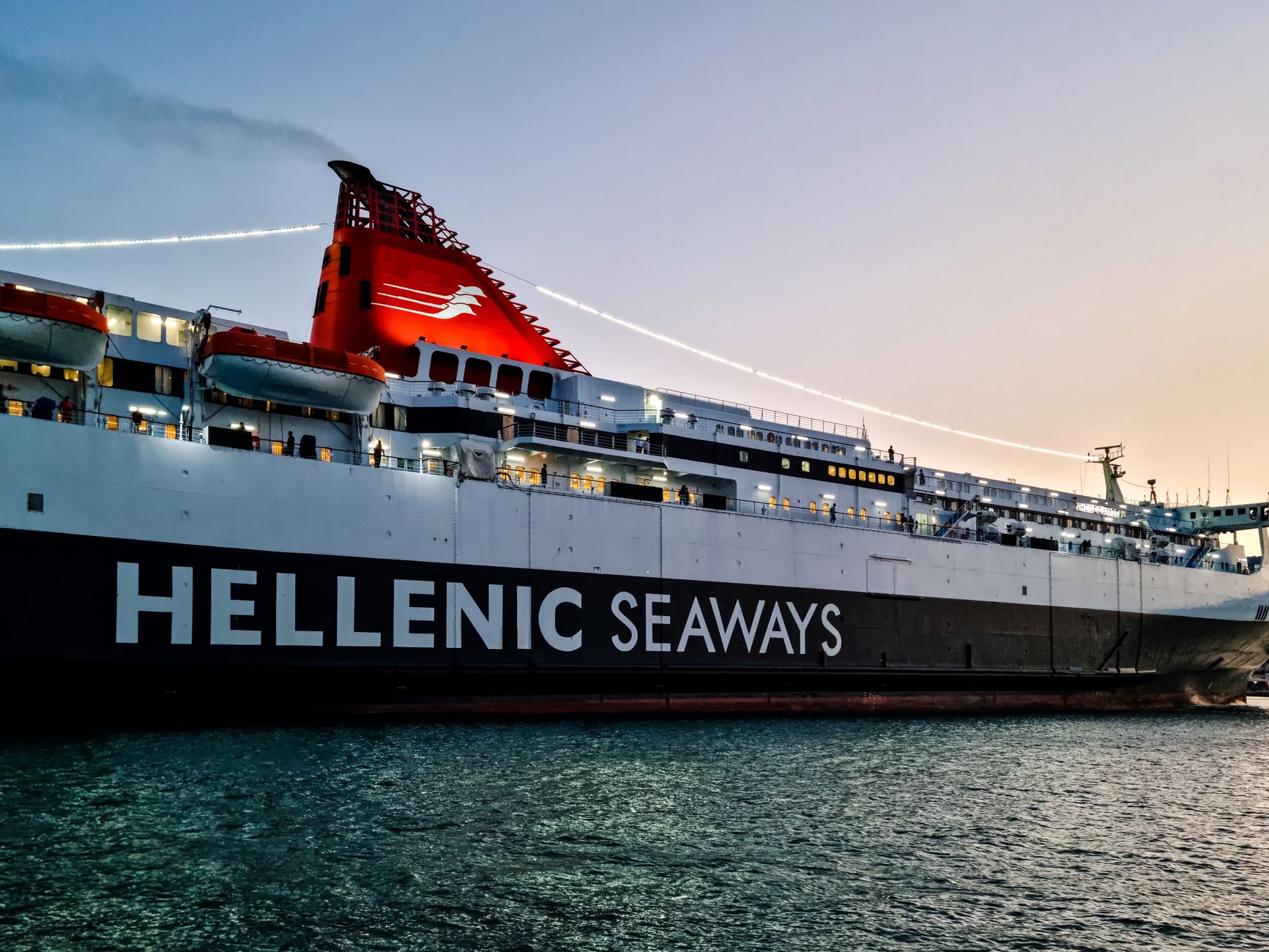
| Large conventional ferry | Slower, broader movement; usually the most predictable | Sensitive travellers, families, open-deck access | Longer journey |
| Large high-speed ferry | Faster with moderate motion | A compromise when time matters | Outside access may be limited |
| Small high-speed catamaran | Sharper pitching and slamming in short seas | Calm days and confident sailors | Highest discomfort risk |
| Small passenger boat | Most exposed to local chop | Very short sheltered hops | Weather dependent |
Where to sit on a Greek ferry
Motion increases toward the bow and at the highest decks. The calmest practical zone is normally close to the vessel’s centre of gravity: amidships, on a lower passenger deck. Choose a forward-facing seat and avoid reading or scrolling if the sea is moving.
On conventional ferries, an outside deck can help because fresh air and a fixed horizon give your brain matching visual and balance signals. Stay clear of exhaust areas and follow crew instructions. On enclosed high-speeds, reserve a central seat rather than accepting whatever remains.
- Best: lower deck, amidships, forward-facing.
- Avoid: the bow, high lounges, backward-facing seats and windowless corners.
- Cabin: useful for a long crossing only if lying down helps you; choose a midship cabin if possible.
- Car deck: never remain there during sailing unless crew explicitly permit it.
How the Meltemi changes the calculation
The Meltemi is the dry northerly summer wind that can strengthen across the central Aegean. It does not make every ferry unsafe—operators and port authorities make that decision—but it can make a technically normal sailing uncomfortable. North–south routes crossing open water may feel different from short, sheltered hops.
A morning departure can sometimes be calmer than a later one, but this is a planning preference, not a guarantee. Leave connection buffers, particularly before an international flight. Our Cyclades ferry guide explains cancellations, delays and missed-connection strategy in detail.
Before boarding and during the crossing
- Eat a light, familiar meal; neither fasting nor a heavy greasy breakfast is ideal.
- Hydrate, sleep properly and limit alcohol the night before.
- Ask a pharmacist or clinician about suitable medication and timing; some products cause drowsiness or interact with other medicines.
- Board early enough to find the right seat without rushing.
- Look outside, keep your head still, breathe slowly and move to fresh air if allowed.
- Tell crew early if you feel unwell—they manage this every day.
When to change the ferry rather than endure it
Change the booking when comfort is central to the trip: pregnancy, a previous severe reaction, young children who struggle with motion, or a same-day event you cannot afford to lose. If the only small high-speed departure is forecast to face strong winds, an earlier conventional ferry—or a night on the departure island—may be the premium choice.
Never self-diagnose persistent dizziness, repeated vomiting or symptoms that continue well after travel. Seek medical advice, especially when dehydration, severe headache, chest pain or neurological symptoms are present.
Frequently Asked Questions
Which Greek ferry is best for seasickness?
A large conventional ferry is usually the most comfortable choice because its movement tends to be slower and more predictable than a small high-speed catamaran.
Where is the least movement on a ferry?
Choose a lower passenger deck near the middle of the vessel, facing forward. Avoid the bow and high decks.
Are morning ferries calmer in Greece?
They can be, because summer winds often strengthen later, but conditions vary. Check the forecast and do not treat morning as a guarantee.
Can a ferry still sail in rough weather?
Yes. A sailing can be safe and legal while still uncomfortable. Operators and authorities decide whether conditions require delay or cancellation.
Plan the Trip
Athina Luxury Suites
Caldera-view suites in Fira with an infinity pool and fine dining.
Topics covered
Part of the Discover Cyclades editorial team, locals who ferry, hike, eat and write about these islands every season.