由 Booking.com 赞助
Santorini Wineries Guide: Best Tastings, Tours & Assyrtiko in 2026

Santorini doesn't just make wine, it grows it in a way that exists almost nowhere else on earth. Vines are basket-trained on the ground (the famous kouloura), the soil is volcanic ash and pumice, the rain is barely 350 mm a year, and the indigenous Assyrtiko grape produces a bone-dry, mineral, citrus-driven white that wine writers compare to top-tier Chablis or Sauvignon Blanc but with a salinity entirely its own. This guide tells you which wineries are actually worth your time, how the tours work, what they cost in 2026, and the smart way to taste your way around the island.
Quick Answer: Best Wineries to Visit

If you only have time for one: Estate Argyros. If you can do two: add Santo Wines for the view. If you can do three: add Domaine Sigalas for the modern winemaking and the Oia setting.
| Winery | Why visit | Tasting cost (2026) |
|---|---|---|
| Estate Argyros | Family estate, oldest vines on the island, serious wine education | €25 – €45 |
| Santo Wines | Spectacular caldera-view tasting terrace, cooperative scale, sunset bookings | €18 – €38 |
| Domaine Sigalas | Modern Oia-area estate, biodynamic, excellent food pairings | €35 – €65 |
| Venetsanos Winery | First industrial winery in Greece (1947), gravity-fed cellars, dramatic location | €28 – €50 |
| Gavalas Winery | Small, family-run, ancient varieties (Voudomato, Mavrotragano) | €18 – €30 |
| Vassaltis | Boutique, contemporary, barrel-aged Assyrtiko | €25 – €45 |
| Hatzidakis | Cult biodynamic estate (advance booking essential) | €30 – €55 |
Most wineries open from late March to late October.
What Makes Santorini Wine Different
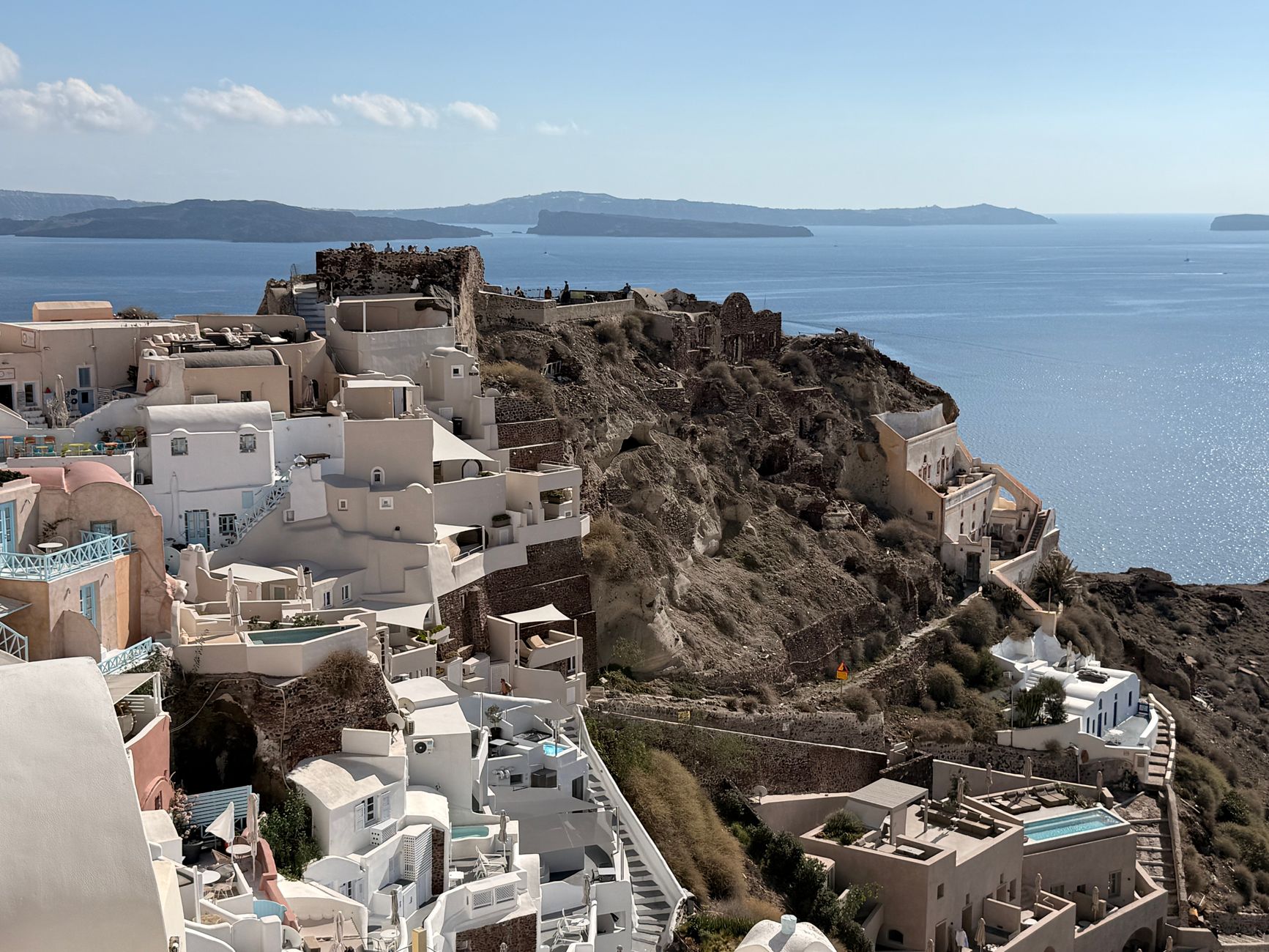
Three factors that don't exist together anywhere else:
- Volcanic soil (pumice, ash, lava) gives wines minerality, salinity and a smoky edge
- Kouloura vine training: vines are woven into low basket shapes that protect grapes from wind and concentrate sugars without irrigation
- Phylloxera-free: Santorini's sandy volcanic soil prevented the 19th-century phylloxera louse from establishing, so most vines are ungrafted on their original European rootstock, a near-extinct configuration globally
The pre-eminent grape is Assyrtiko (~80 % of plantings). Other native grapes worth tasting:
- Athiri: softer, often blended with Assyrtiko
- Aidani: floral, perfumed
- Mavrotragano: bold red, almost extinct 30 years ago, now revived
- Voudomato: light red, increasingly hard to find
The most famous Santorini wine style is Vinsanto: a sun-dried sweet wine PDO that ages for years in oak. Even non-dessert-wine drinkers usually love it.
Half-Day vs. Full-Day Wine Tour
| Half-day (4 hours) | Full-day (7 hours) | |
|---|---|---|
| Wineries visited | 2 (sometimes 3) | 3–4 |
| Cost (per person) | €85 – €120 | €145 – €220 |
| Includes lunch | No | Usually yes |
| Includes transfer | Yes | Yes |
| Best for | Couples, time-pressed travellers | Wine enthusiasts, full-day immersion |
Honest take: half-day is enough for most travellers. After 3 wineries in heat, palate fatigue is real. A half-day tour at 10:00–14:00 visiting two wineries plus lunch on your own is the sweet spot.
Self-Drive Wine Tasting (Cheaper, More Flexible)
If you've a rental car (and a designated driver), you can DIY for a fraction of the cost. Drive yourself to wineries, pay only the tasting fees:
- 2 wineries + tasting fees: €36 – €90 per person
- vs. half-day group tour: €85 – €120 per person
Saves €50–80 per person but requires a sober driver. Wineries are spread across the island. Santo Wines (Pyrgos area), Estate Argyros (Episkopi), Sigalas (north of Oia), Venetsanos (Megalochori), Hatzidakis (Pyrgos), so plan a logical loop. Renting an ATV or car through partners like Santorini Rent Me is the easiest way to navigate the rural vineyard roads.
Best Sunset Winery: Santo Wines
Santo Wines, located just outside Pyrgos village, is the island's premier sunset wine destination. Its multi-tiered tasting terrace overlooks the entire caldera and is engineered specifically for sunset viewing. As a cooperative of over 1,200 local growers, they showcase the widest selection of volcanic Assyrtiko, Nykteri, and Vinsanto on the island.
Reservations for the sunset slot (typically 19:30–21:00 in summer) are essential and should be made 4–6 weeks ahead in July/August. Alternatively, you can book our guided Santorini Wine Tasting & Vineyard Tour (€135) to combine Santo Wines with two other boutique cellars and include round-trip hotel transfers.
Runners-up:
- Venetsanos Winery: also caldera-view, slightly more dramatic architecture, smaller crowd.
- Domaine Sigalas: different angle (north of Oia), evening light is gorgeous, less of a sunset spectacle but better wine flights.
What You'll See at a Tasting
A typical Santorini winery tasting:
- Vineyard walk (15–25 minutes), the kouloura vines and volcanic soil are explained.
- Cellar/winery tour (10–15 minutes), gravity flow, stainless steel, oak ageing.
- Seated tasting (45–60 minutes), usually 4–6 wines, often with bread, olives, cheese, and tomato keftedes.
- Optional: bottle purchase, often shipped or held for airport pickup.
A "premium" tasting upgrades to 6–8 wines including the Vinsanto and a barrel-aged single-vineyard Assyrtiko.
When to Visit
- Best months: late April through late October (most wineries close in winter).
- The Harvest (Vendema): Late August to early September is the busiest, most exciting time. You'll see grapes arriving at the wineries and the smell of fermenting must is in the air.
- Hour of day: 10:00–12:00 for serious tasting; 18:00–sunset for views. Avoid the 14:00–16:00 heat.
Frequently Asked Questions
Which is the best winery to visit in Santorini? For serious wine quality and estate tours, Estate Argyros is the best. For sunset views and cooperative scale, Santo Wines near Pyrgos is unmatched. For boutique biodynamics, try Hatzidakis or Gavalas.
How much does wine tasting cost in Santorini? Tastings range from €18 to €45 per person for a flight of 4 to 6 wines. Guided tours with wine tasting and hotel transfers start at €85 to €120 per person.
Is Santo Wines worth visiting? Yes, Santo Wines offers one of the most famous caldera sunset views in Santorini. Because of its popularity, you must book weeks in advance for a sunset table.
Can you walk between wineries in Santorini? No. Santorini's wineries are spread across different inland villages. You will need a rental vehicle (ATV or car), a taxi, or to join a guided wine tour.
→ Pyrgos village guide | Things to do in Santorini → Santorini hotels | Santorini boat tours
What to Buy and How to Bring It Home
- A bottle of Assyrtiko (~€18–35 at the winery) and a small bottle of Vinsanto (€25–45 for 500 ml) cover the essential souvenirs
- Most wineries can ship internationally (€35–65 for a 6-bottle case to EU, €70–120 to US/UK/Canada)
- Greek customs allow up to 2 litres of wine per traveller duty-free returning to most EU countries; 4–5 litres for non-EU travellers depending on destination
- Wine ages well. Assyrtiko at 5–8 years can be transformative
Etiquette Notes
- Spit if tasting more than two wineries. Greek tasting pours are generous
- Tasting fees are paid even if you buy bottles afterwards (no "fee waived if you purchase" tradition like California)
- Lunch reservations at wineries with restaurants (Sigalas, Santo Wines) often need to be made when booking the tasting
- Children are usually welcome at family wineries (grape juice tastings sometimes offered for kids 8+)
Pairing Santorini Wineries with the Rest of Your Trip
Smart pairings:
- Half-day wine tour morning + Pyrgos lunch: Pyrgos village is in winery country and has the best non-touristy lunches on the island
- Wine tour afternoon → Oia sunset: finish a Sigalas tasting and drive 6 km north for sunset
- Santo Wines sunset + Megalochori dinner: Megalochori has excellent tavernas 5 minutes from Santo
Books Worth Reading Before You Go
If you want depth: Konstantinos Lazarakis's The Wines of Greece covers Santorini extensively and is the canonical reference. For lighter reading, Karen MacNeil's chapter on Santorini in The Wine Bible is excellent.
Final Take
Santorini's wineries aren't just a sideshow, they're one of the strongest reasons to visit the island. The wine is genuinely world-class, the kouloura vines are unique, and the tastings are a serious cultural experience, not a tourist gimmick. Plan at least one half-day winery experience into a 3-day trip; serious enthusiasts should plan two. For more on planning your trip, see our 3-day Santorini itinerary.
FAQ
What are the best wineries to visit in Santorini?
The top three are Estate Argyros (best wine education, oldest vines), Santo Wines (best caldera view and sunset tasting), and Domaine Sigalas (most modern, biodynamic, brilliant food pairings near Oia). Honourable mentions: Venetsanos for architecture, Gavalas for ancient varieties, and Hatzidakis for biodynamic cult bottles.
What's Assyrtiko and why is it special?
Assyrtiko is Santorini's flagship indigenous white grape, bone-dry, high-acid, mineral and saline, often compared to top-tier Chablis but with a volcanic edge. It thrives on Santorini's volcanic soil with virtually no irrigation, and most vines are ungrafted on original European rootstock (phylloxera never reached the island), making them a globally rare survivor.
How much does a wine tour in Santorini cost?
A half-day group wine tour runs €85–120 per person and covers 2 wineries plus transport (no lunch). A full-day tour is €145–220 per person and covers 3–4 wineries plus lunch. Self-drive with tasting fees only costs €36–90 per person but requires a sober driver.
Where is the best winery for sunset in Santorini?
Santo Wines is the standout sunset winery, its tasting terrace is engineered for caldera views and the sunset slot books up 4–6 weeks ahead in peak season. Venetsanos Winery and Domaine Sigalas are excellent runners-up with smaller crowds.
Can I taste Santorini wines without a tour?
Yes, most wineries welcome walk-in or pre-booked individual tastings. Self-drive between 2–3 wineries lets you control pace and costs. Always reserve the major estates (Sigalas, Hatzidakis, Santo Wines sunset slot) in advance, especially July to early September.
What's the difference between Santorini white wine and Vinsanto?
Dry Santorini white (mostly Assyrtiko) is bone-dry, citrusy and mineral. Vinsanto is a sun-dried sweet PDO wine made from late-harvest Assyrtiko, Aidani and Athiri, aged for years in oak, rich, raisined, caramelised, with an acidity that prevents it from feeling cloying. Both styles are made from the same indigenous grapes.
规划实用行程
规划您的 Santorini 行程日期
在热门日期售罄前安排船票、住宿和岛上交通。