Most Popular
Cultural & Northern
Hidden Gems
Discover the Cyclades
Explore 24 unique islands, from popular hotspots to hidden gems.
Explore All IslandsExplore 24 unique islands, from popular hotspots to hidden gems.
Explore All Islands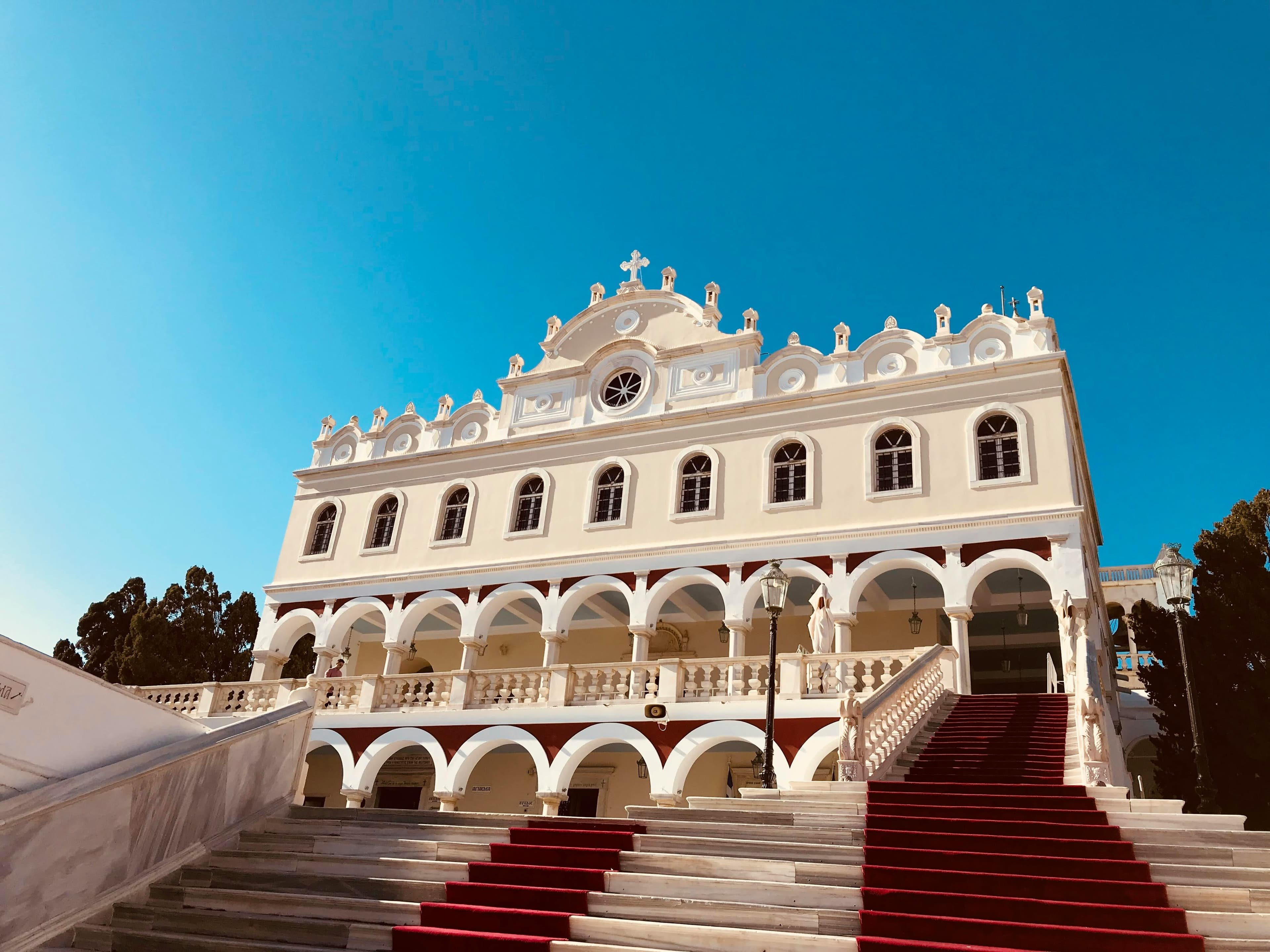
A thousand dovecotes, marble-carving villages, and Greece's holiest pilgrimage site — the island where artistry and faith sculpt every hillside
Tinos is a sacred Cyclades island and major Greek pilgrimage site, home to the revered Panagia Evangelistria church and hundreds of ornate marble-carved dovecotes. Located 3 hours from Athens by ferry, it blends deep religious tradition with excellent beaches and Cycladic cuisine.
Tinos is the Cycladic island that art, faith, and nature conspired to make extraordinary. Every August 15, tens of thousands of Greek pilgrims descend upon the port town to crawl on their knees up the broad marble avenue to the Church of Panagia Evangelistria, one of the holiest sites in Orthodox Christianity. But pilgrimage is just one dimension of an island whose cultural depth is staggering — from over 1,000 ornate dovecotes scattered across the landscape to the marble-carving villages of the interior where artisans continue a tradition that helped build the Parthenon.
The village of Pyrgos, high in Tinos's mountainous north, is the marble capital of Greece. Generations of master craftsmen from this tiny village have produced the sculptures and decorative work adorning cathedrals, mansions, and monuments across the country. Walking through Pyrgos is like entering an open-air museum: marble fountains, carved lintels, ornate door frames, and the renowned School of Fine Arts all reflect a community where stone-carving is as natural as breathing.
Beyond the pilgrimage and the marble, Tinos reveals a landscape of uncommon beauty. Over 40 traditional villages — many barely touched by tourism — dot the mountainous interior, each with its own character, festivals, and culinary traditions. The island produces exceptional artisan cheeses, wild capers, and local wines. Its beaches range from organized sandy stretches to wild, windswept coves. And the iconic dovecotes — elaborate stone towers decorated with geometric patterns — stand as living monuments to an era when pigeon farming was both livelihood and art form.
On Tinos, marble speaks, dovecotes sing, and every village holds a secret that rewards the curious traveler.
In 1823, during the Greek War of Independence, a nun named Pelagia had repeated visions leading to the discovery of a miraculous icon of the Virgin Mary buried in a field. The Church of Panagia Evangelistria was built over the discovery site and became Greece's most important Orthodox pilgrimage destination, drawing hundreds of thousands annually.
Tinos has produced master marble craftsmen since antiquity. Tinian artisans worked on the Temple of Poseidon at Delos and later contributed to buildings across Greece and beyond. The village of Pyrgos formalized this tradition with its School of Fine Arts, founded in 1955, which continues to train sculptors and artisans today.
Between the 16th and 19th centuries, Venetian and local landlords built over 1,000 elaborate dovecotes across Tinos — more than any other Cycladic island. These stone towers, decorated with intricate geometric sunburst and diamond patterns, housed pigeons raised for fertilizer, food, and trade. Today they stand as a unique architectural heritage.
On August 15, 1940, the Italian submarine Delfino torpedoed the Greek cruiser Elli in Tinos harbor during the Assumption Day celebrations — a provocative act that preceded Italy's invasion of Greece. The tragedy, which occurred during a day of peace and prayer, is commemorated annually and holds deep significance in Greek national memory.
Explore the heart of Tinos
Tinos Town is dominated by the broad marble avenue leading uphill to the Church of Panagia Evangelistria, the island's spiritual heart. But beyond the pilgrimage route, the town has a lively waterfront with excellent restaurants, a vibrant market selling local cheeses and preserves, and the fascinating Archaeological Museum with finds from the ancient sanctuary of Poseidon at Kionia.
Set high in the mountains of northern Tinos, Pyrgos is an open-air museum of marble artistry. Every doorway, fountain, and lintel showcases the village's legendary stone-carving tradition. The Museum of Marble Crafts, the Yannoulis Chalepas Museum (Greece's greatest sculptor), and working artisan studios make Pyrgos an essential cultural destination.
One of the most surreal villages in the Cyclades, Volax sits in a valley strewn with enormous, smooth, rounded boulders — a geological mystery that scientists attribute to volcanic activity millions of years ago. The tiny village is famous for its basket-weaving tradition and has a small open-air amphitheater set among the rocks.
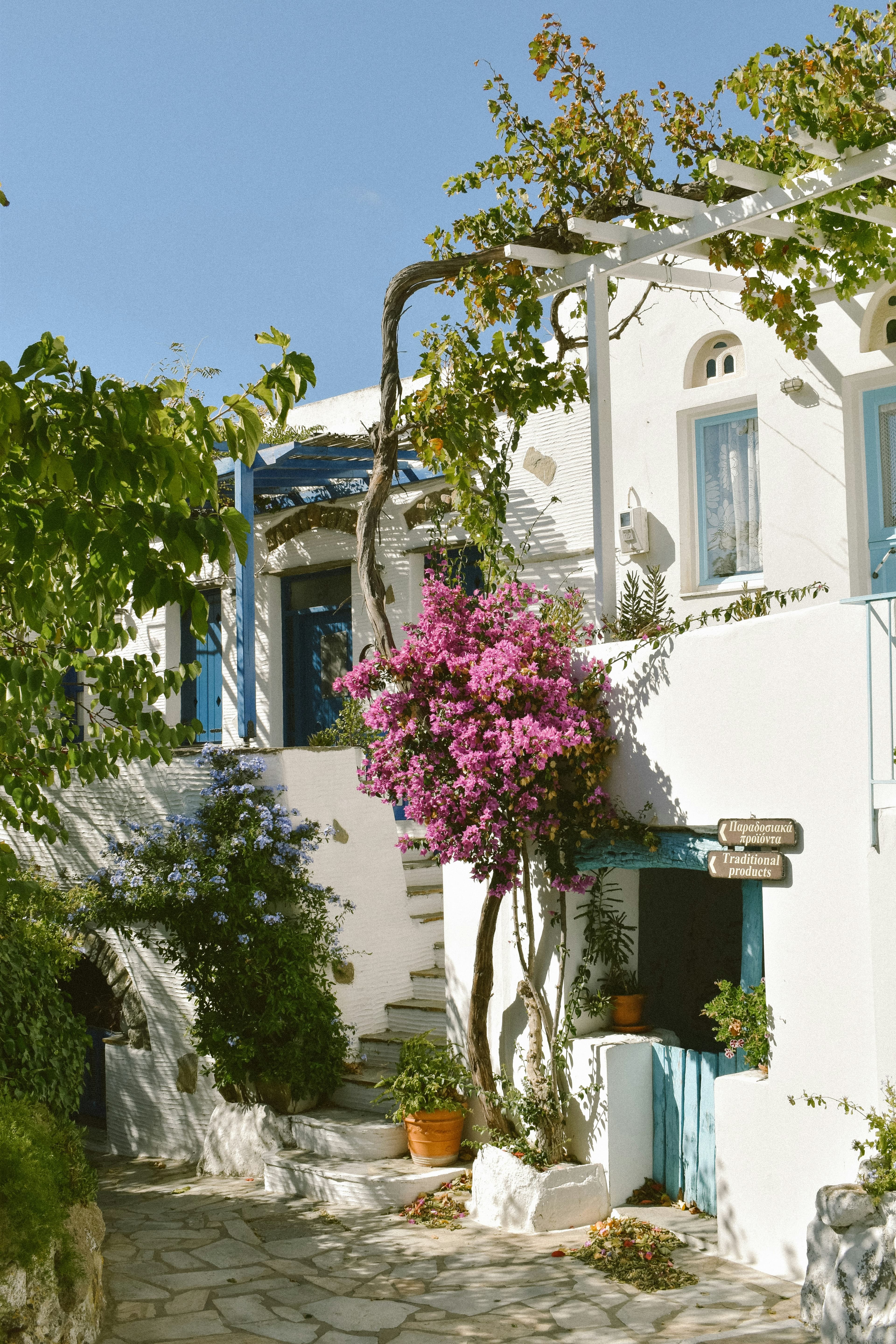
Perched on the island's western slopes with sweeping views over the Aegean and the neighboring island of Syros, Kardiani is a beautifully preserved village of whitewashed houses, flowering courtyards, and narrow lanes. The village has a peaceful, almost meditative atmosphere and outstanding sunset views.
Another marble-carving village in the island's northwest, Isternia clings to a mountainside with dramatic sea views. The village is known for its artists, its elegant marble-decorated public buildings, and the beautiful Isternia Bay below — a small beach with excellent tavernas reached by a winding road.
Boutique villas, cave hotels, and sea-view suites — all in one place.
The best shores of Tinos
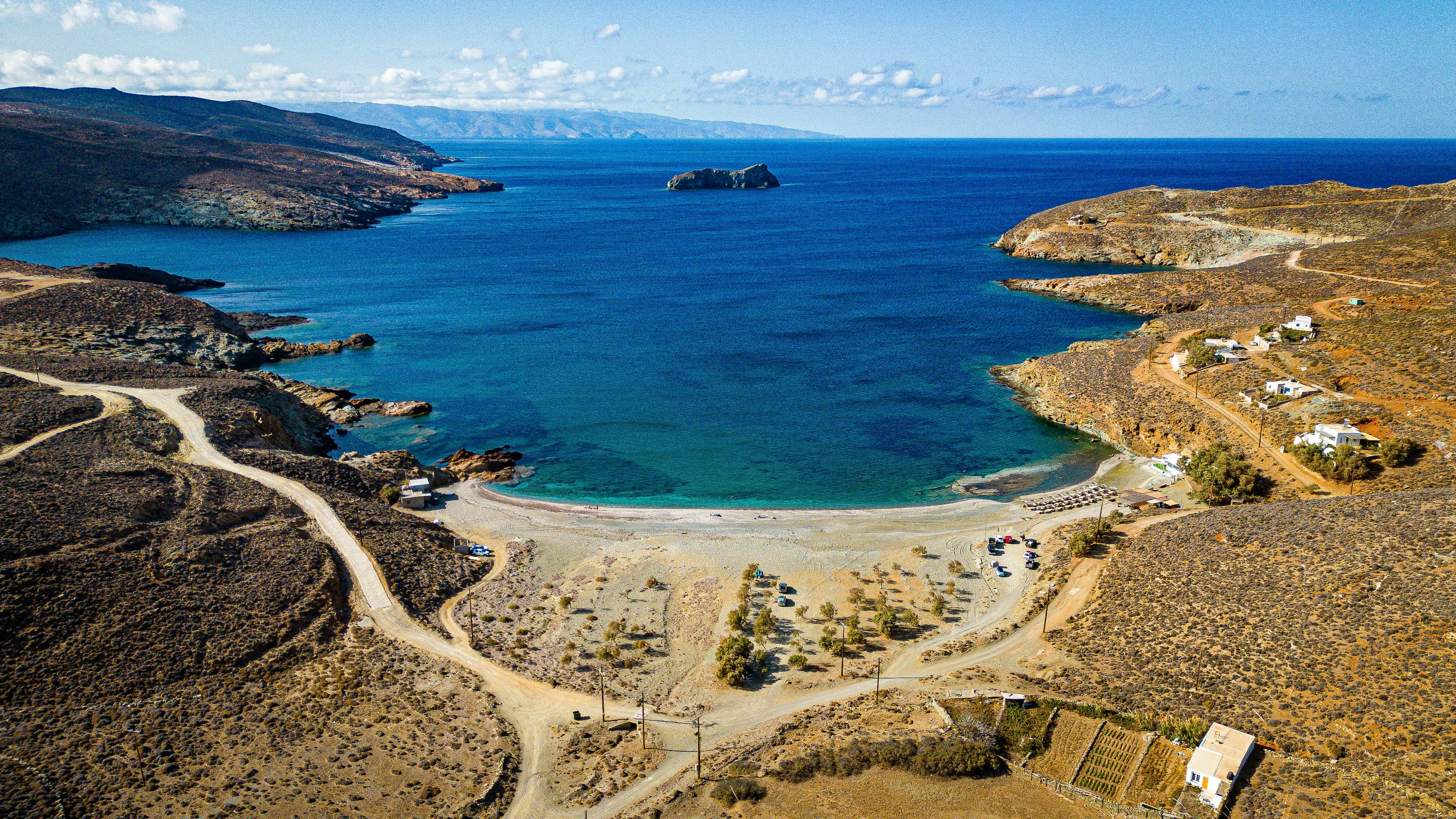
Two stunning sandy bays on the north coast — the large bay with organized facilities and the small bay with dramatic rock formations, both offering some of the finest swimming on Tinos
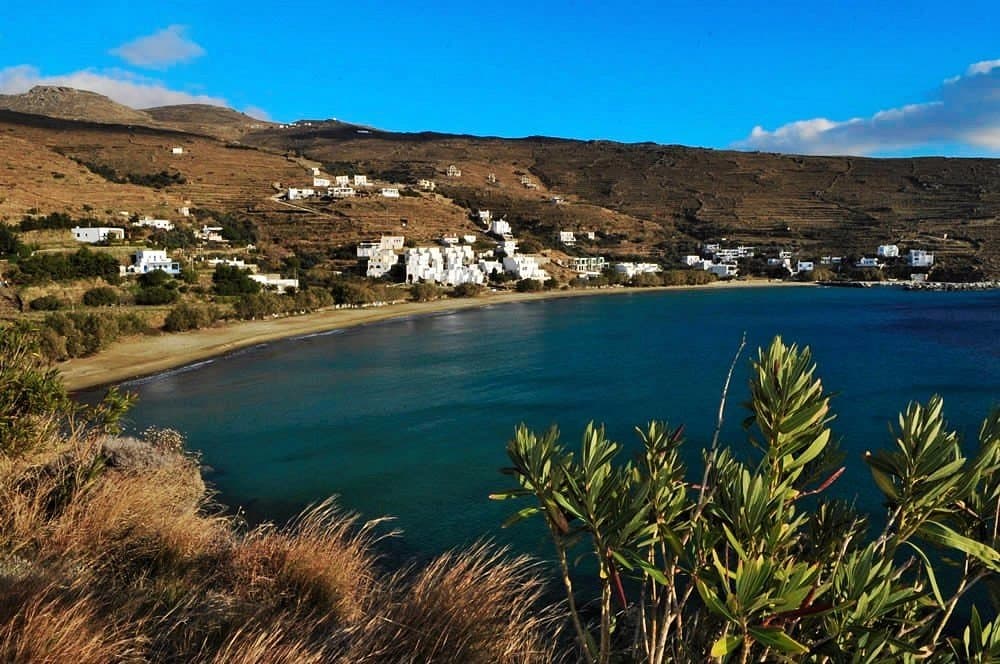
A long, sandy beach on the south coast with a gentle slope into the water, beach bar, and reliable facilities — one of the most family-friendly beaches on Tinos
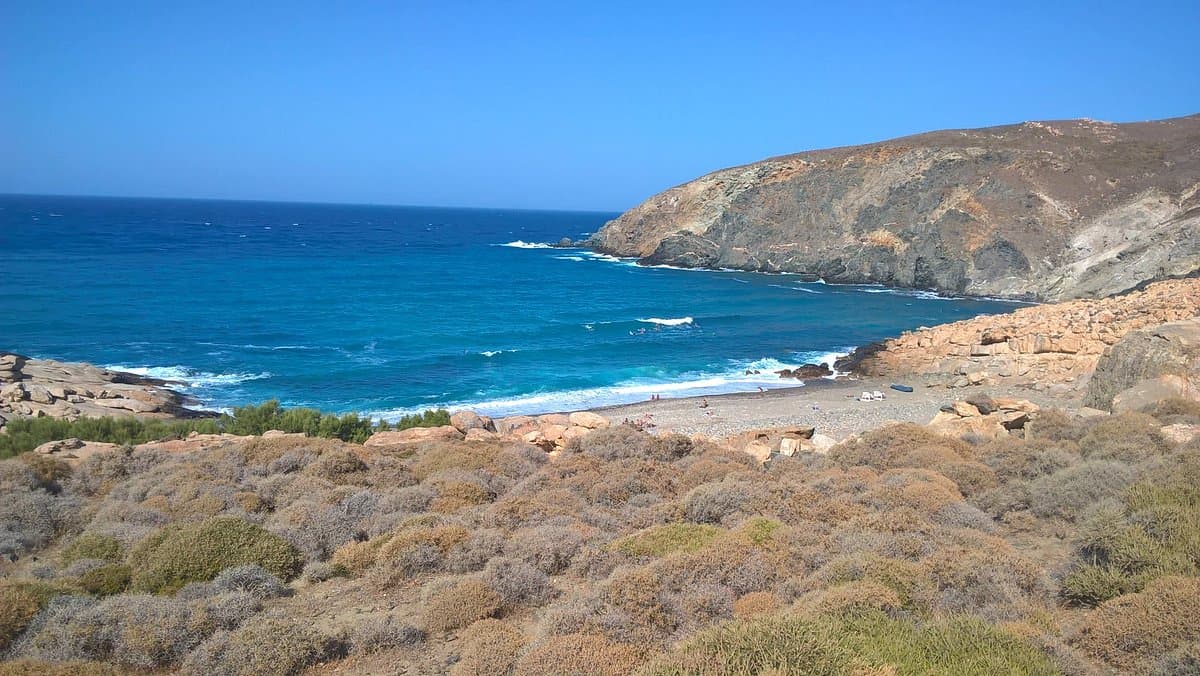
A beautiful sandy beach on the east coast backed by green hillsides, with calm waters and a beach bar serving excellent food — a hidden favorite among return visitors
A pebbly beach below the marble village of Isternia, set in a dramatic bay with excellent fish tavernas — the perfect combo of swimming and waterfront dining
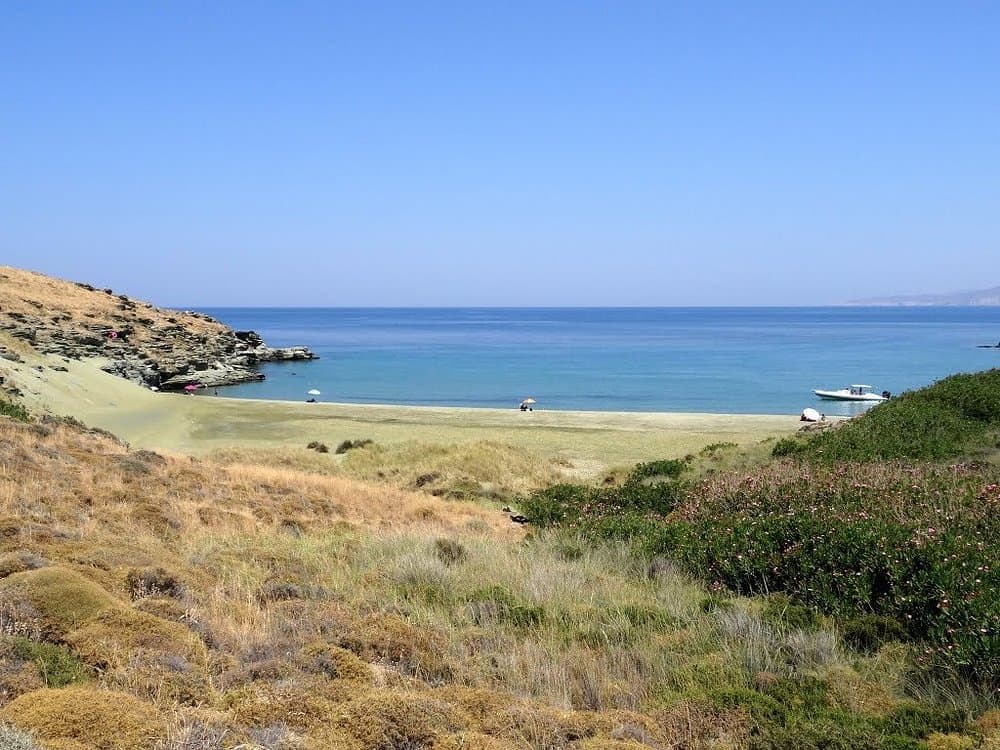
A generous stretch of sand on the east coast, less visited due to its remoteness — rewarding those who make the drive with golden sand and uncrowded swimming
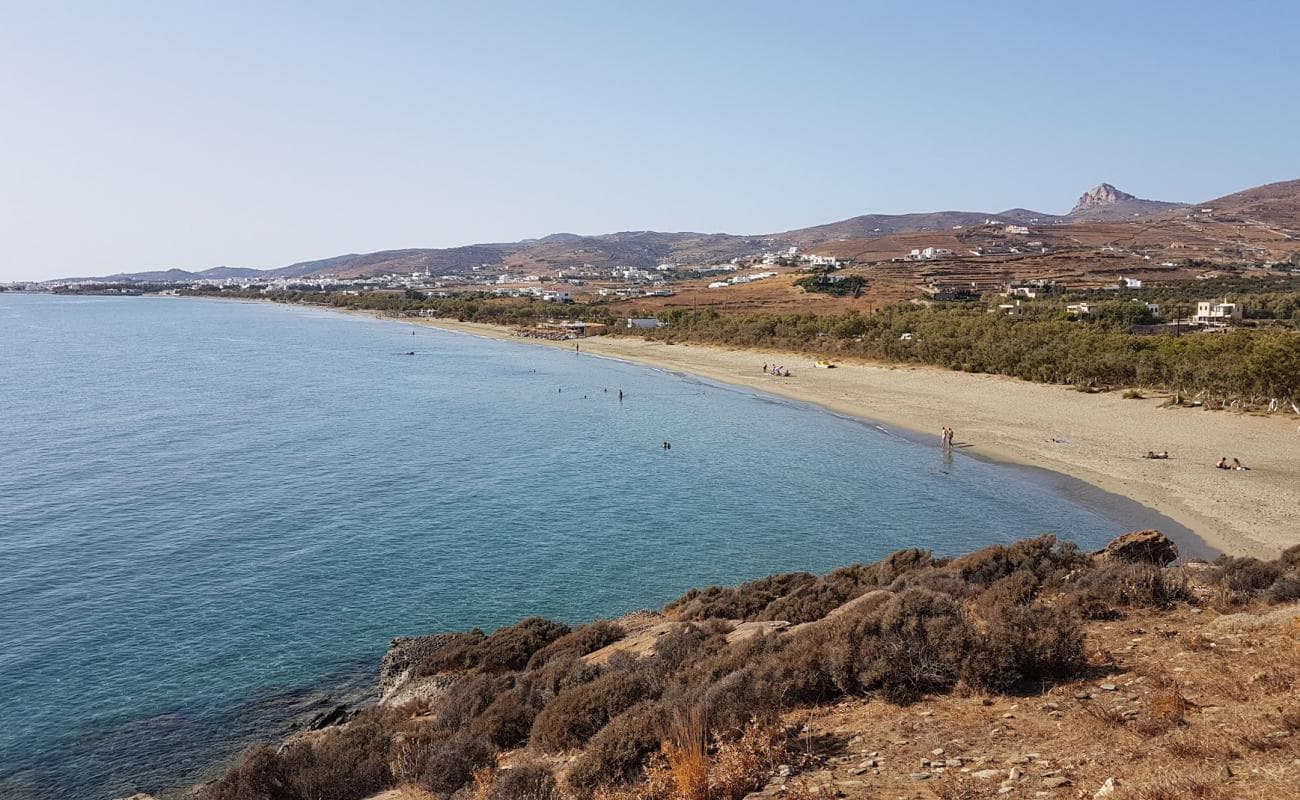
The closest organized beach to Tinos Town, with sunbeds, a beach bar, and reliable swimming — a quick and easy option when you want a dip without a long drive
Explore every beach and hidden village at your own pace.
An island of artisan producers — where cheese, capers, and sun-dried flavors are crafted with the same precision as marble sculptures
Air-cured pork loin seasoned with pepper and allspice, thinly sliced — Tinos's signature charcuterie, aged in the mountain wind and served with local cheese and bread
Small, round balls of tangy sheep's milk cheese aged in brine — a Tinian specialty produced in tiny quantities and protected by its village origins
Tinos is renowned for its artichokes, braised with broad beans, stuffed with rice and herbs, or served raw in salads — a springtime delicacy that draws food lovers to the island
A Tinian omelet loaded with local sausage, potatoes, and seasonal greens — a hearty village breakfast or meze that showcases the island's farm-fresh ingredients
Tomatoes dried in the Aegean sun and pounded into a concentrated paste with olive oil — a pantry staple that adds intense flavor to pastas, breads, and stews
Wild capers harvested from the island's rocky hillsides, brined and served whole or as caper leaves — the sharp, salty bite that defines Tinian summer salads
From sunrise to sunset in Tinos
Walk up the broad marble avenue from the port to the Church of Panagia Evangelistria in the early morning light. Whether or not you share the faith, the church's art collection, the peaceful courtyard garden, and the weight of centuries of devotion make this a profoundly moving experience.
1 hourDrive to the mountain village of Pyrgos and immerse yourself in Greece's marble heritage. Visit the Museum of Marble Crafts, the Chalepas Museum, and working workshops where artisans shape stone by hand. The village square under ancient plane trees is perfect for a coffee break.
3 hoursFollow the network of paths through the Tinian countryside to discover the island's famous dovecotes. The area around Tarabados has the highest concentration — ornate stone towers decorated with geometric sun and diamond motifs, set against a dramatic landscape of terraced hillsides.
3-4 hoursVisit the surreal village of Volax, surrounded by enormous rounded boulders deposited by ancient volcanic activity. Watch basket weavers at work, explore the tiny amphitheater among the rocks, and try to wrap your mind around the geological forces that created this extraordinary landscape.
1.5 hoursHead to the twin bays of Kolymbithra on the north coast for a day of exceptional swimming. The large bay has organized facilities and occasional surf, while the smaller bay is sheltered, with dramatic rock formations and emerald water perfect for snorkeling.
4 hoursSpend an afternoon driving between Tinos's 40+ villages, stopping for artisan cheese tastings, louza sampling, and coffee in village squares. Kardiani, Isternia, and Arnados each offer a different slice of authentic Tinian life.
3-4 hoursTime your village exploration to watch the sunset from Kardiani, perched on the western slopes with unobstructed views across the Aegean to Syros. The golden light on the whitewashed village and the vast sea below create a scene of extraordinary beauty.
1 hourDescend the winding road to Isternia Bay for a waterfront seafood dinner. The tavernas here serve fresh-caught fish, Tinian capers, and local cheese with the sound of waves and a canopy of stars above — the perfect end to a day of exploration.
2.5 hoursSailing trips, sunset cruises, diving, cooking classes and more.
Find the perfect time for your Tinos trip
Ferry routes and travel connections
Fast booking, instant confirmation. Compare operators and prices.
Curated tours and activities
Guided tour of Pyrgos and Isternia's marble heritage, including museum visits, artisan demonstrations, and village exploration.
Guided walk through the Tarabados dovecote area with stories of the island's Venetian heritage and architectural traditions.
Village-hopping tour with cheese tastings, local produce markets, and a traditional lunch — a deep dive into Tinian gastronomy.
Insider tips for your Tinos trip
Everything you need to know about Tinos
Our AI travel assistant knows everything about Tinos
From the marble artistry of Pyrgos to the sacred steps of Panagia Evangelistria, from the boulder fields of Volax to the thousand dovecotes dotting the hills — Tinos is the Cyclades' deepest cultural treasure.