
Most Popular
Cultural & Northern
Hidden Gems
Discover the Cyclades
Explore 24 unique islands, from popular hotspots to hidden gems.
Explore All IslandsExplore 24 unique islands, from popular hotspots to hidden gems.
Explore All Islands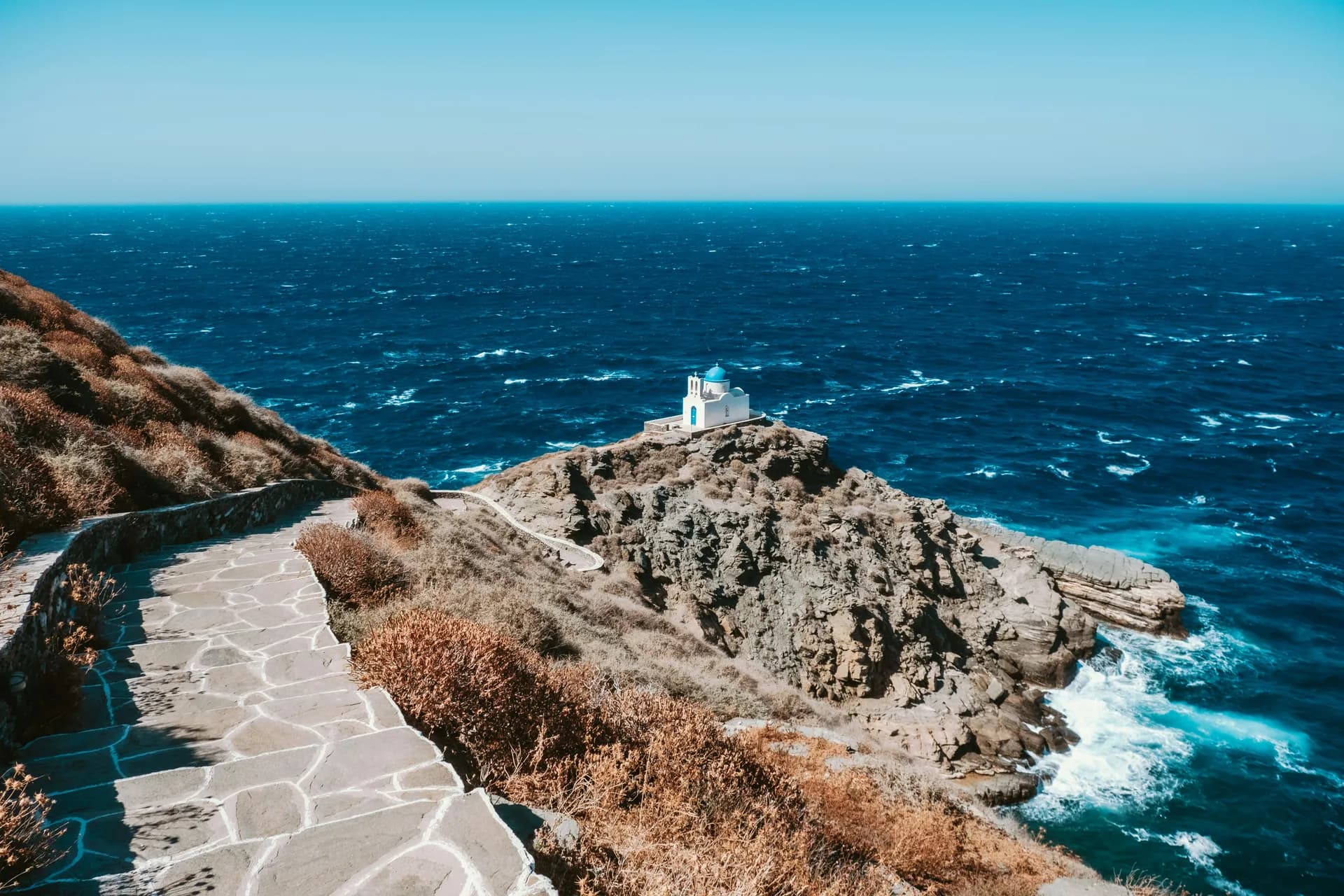
A feast for all senses — world-class cuisine, ancient pottery, and whitewashed paths winding through fragrant hillsides — the island where Greek flavors reach their finest
Sifnos is a western Cyclades island and Greece's culinary capital, known for its traditional pottery, hiking trails between 365 chapels, and exceptional local cuisine. Just 2 hours by high-speed ferry from Piraeus, it offers an authentic, crowd-free alternative to busier islands.
Sifnos is the island that Greeks themselves travel to when they want to eat extraordinarily well. Renowned across the country as the gastronomic capital of the Cyclades, this lush, terraced island has been nurturing culinary traditions for centuries — from slow-cooked revithada chickpea stew baked overnight in wood-fired ovens to mastelo lamb simmered in local wine and dill. Legendary chef Nikolaos Tselementes, who wrote Greece's first modern cookbook, was born here, and the island's culinary DNA runs deeper than any other in the archipelago.
Beyond the table, Sifnos seduces with a landscape of extraordinary beauty. Over 360 churches and chapels dot the hillsides like scattered pearls, connected by a network of ancient Byzantine flagstone paths that wind through olive groves, past watchtowers, and along ridgelines with sweeping Aegean views. The pottery tradition stretches back millennia — workshops in Kamares and Vathi still produce the distinctive terracotta pots that have made Sifnos ceramics famous throughout Greece.
The island's main villages — sophisticated Apollonia, medieval Kastro perched above the sea, and elegant Artemonas with its neoclassical mansions — form a constellation of Cycladic beauty that rewards slow exploration. Unlike more touristic neighbors, Sifnos maintains a rhythm dictated by seasonal harvests, saint's day festivals, and the gentle clinking of coffee cups in village squares. This is an island where the journey between lunch and dinner is a hike through wildflowers, and where every meal feels like a homecoming.
In Sifnos, cooking is not just tradition — it is the island's love language, spoken in every kitchen and shared at every table.
In antiquity, Sifnos was one of the wealthiest islands in the Aegean thanks to its gold and silver mines. The Siphnian Treasury at Delphi, built around 525 BC, was among the richest offerings to Apollo and showcased the island's extraordinary prosperity. When the mines flooded, Sifnos reinvented itself through agriculture, pottery, and seamanship.
Sifnos has been a center of ceramic production since prehistoric times. The island's distinctive red clay and traditional kiln techniques produced household pottery exported throughout Greece. The craft continues today in family workshops, where artisans create the iconic flaounes baking pots and decorative chimney tops that crown Sifnian rooftops.
For over two millennia, the clifftop village of Kastro served as the island's capital. Venetian rulers fortified it in the 14th century, creating a labyrinth of narrow passages and integrated house-walls that doubled as defensive ramparts. Ancient columns and carved stones are built into church walls, creating an open-air archaeological palimpsest.
Sifnos gave Greece its most influential chef: Nikolaos Tselementes, whose 1910 cookbook standardized Greek recipes and introduced French techniques to the national cuisine. The island's culinary traditions — revithada, mastelo, local cheeses — remain fiercely guarded and celebrated. Since 2015, the annual Cycladic Gastronomy Festival has further cemented Sifnos as Greece's food capital.
Explore the heart of Sifnos
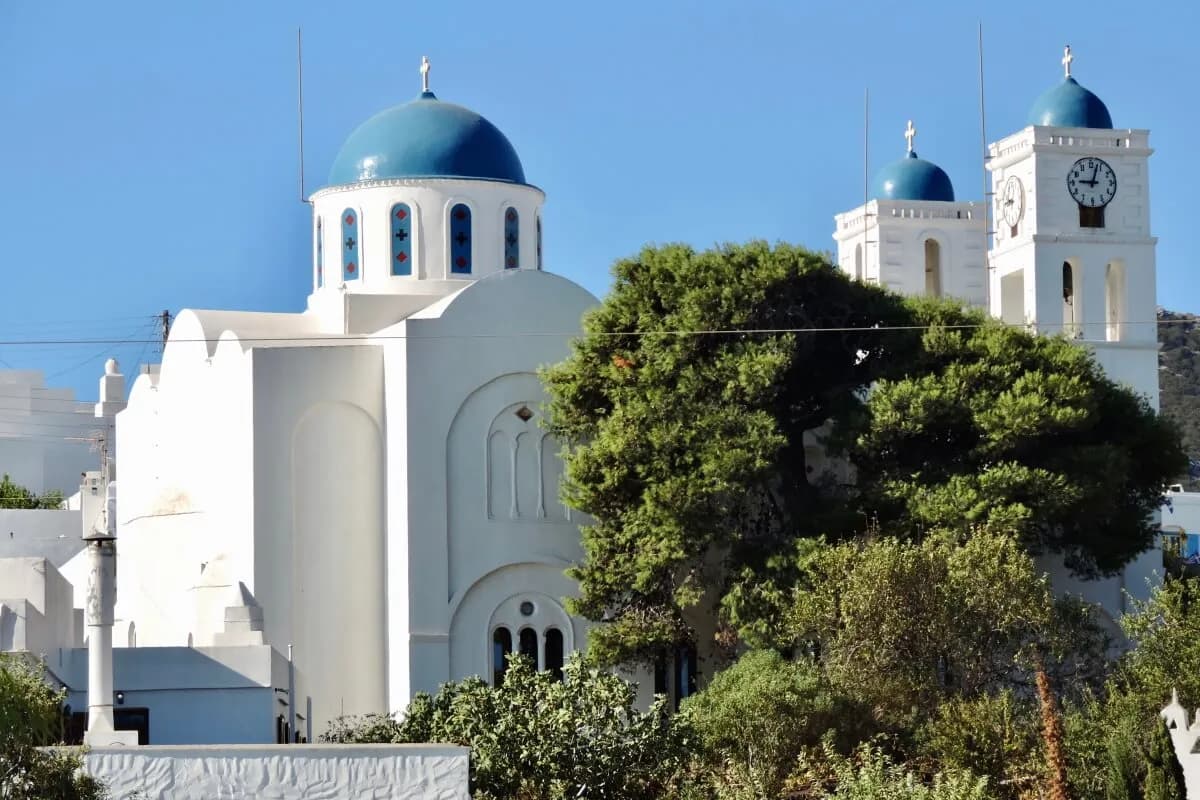
Spread across three hills in the island's center, Apollonia is a sophisticated village of boutiques, excellent restaurants, and lively squares that come alive after sunset. Named after an ancient temple to Apollo, the village seamlessly blends traditional Cycladic charm with a cosmopolitan dining and nightlife scene that surprises visitors expecting a sleepy island capital.
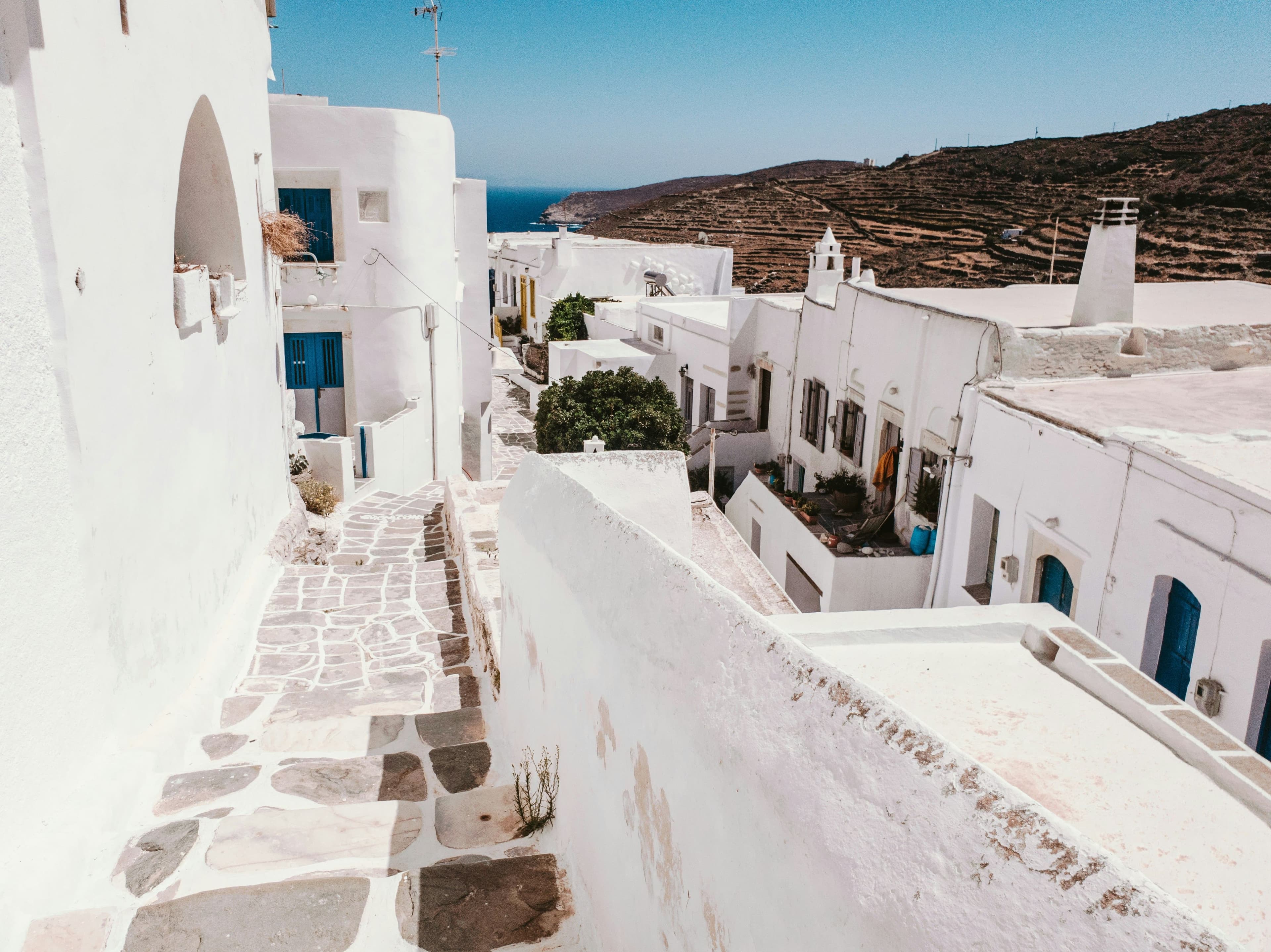
Perched on a dramatic cliff above the eastern sea, Kastro is a living medieval monument where ancient columns are embedded in Venetian walls and blue sea vistas appear through narrow stone archways. The village was Sifnos's capital for over 2,000 years, and its labyrinthine layout — with houses forming the outer defensive wall — remains remarkably intact.
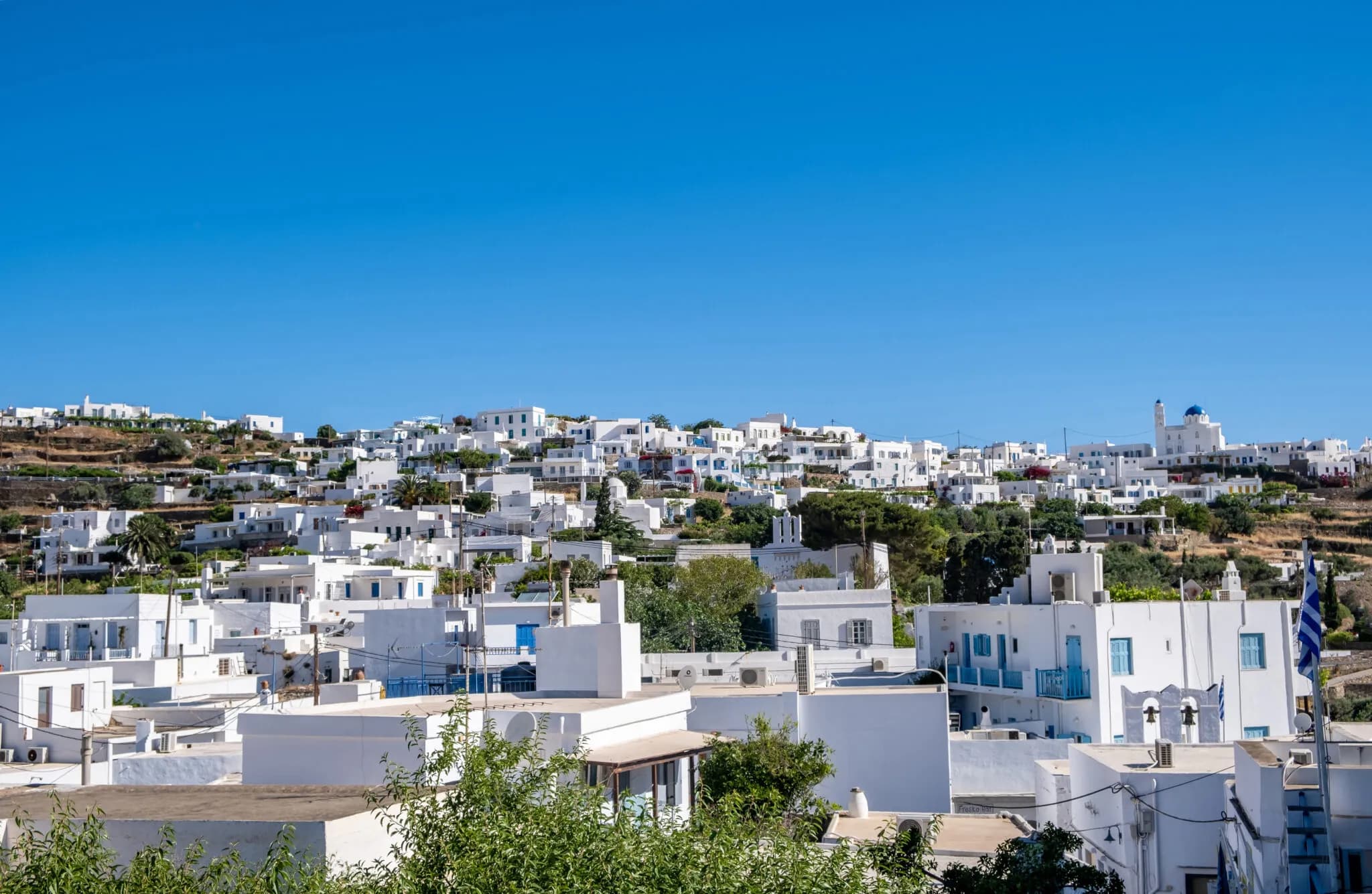
Just north of Apollonia, Artemonas is the island's wealthiest village, distinguished by elegant neoclassical mansions, ornate bell towers, and manicured gardens. The village has a refined, unhurried atmosphere with traditional pastry shops serving almond sweets and local specialties in leafy squares.
The island's main port, Kamares sits in a sheltered bay surrounded by dramatic hillsides. The waterfront is lined with pottery workshops, seafood tavernas, and a long sandy beach that makes arriving by ferry an immediately pleasant experience. The village has a relaxed, beach-town character that contrasts with the hilltop sophistication of Apollonia.
Tucked into a sheltered bay on the southwest coast, Vathi is a dreamy collection of whitewashed houses, a sandy beach, and several of the island's finest restaurants. Accessible by a winding road or beautiful coastal footpath, this tiny settlement feels like a world apart — the kind of place where lunch stretches into sunset.
Boutique villas, cave hotels, and sea-view suites — all in one place.
The best shores of Sifnos
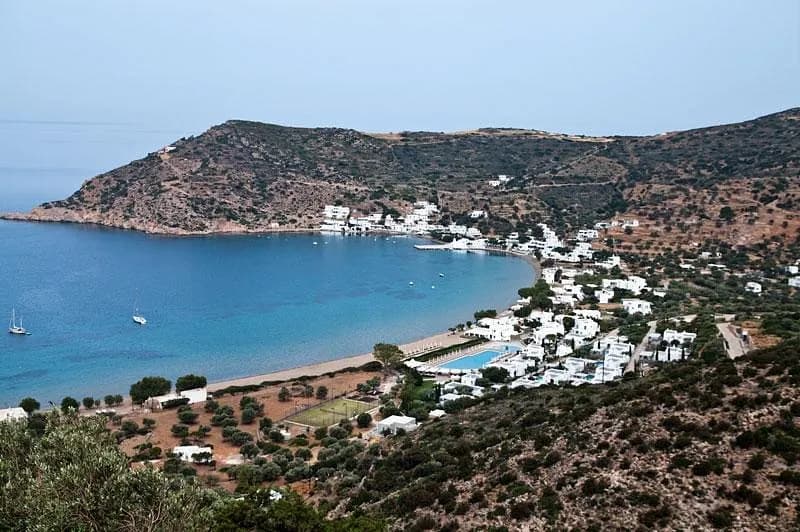
A sheltered sandy bay framed by tamarisk trees and a handful of waterfront tavernas — the ultimate combination of swimming and slow dining
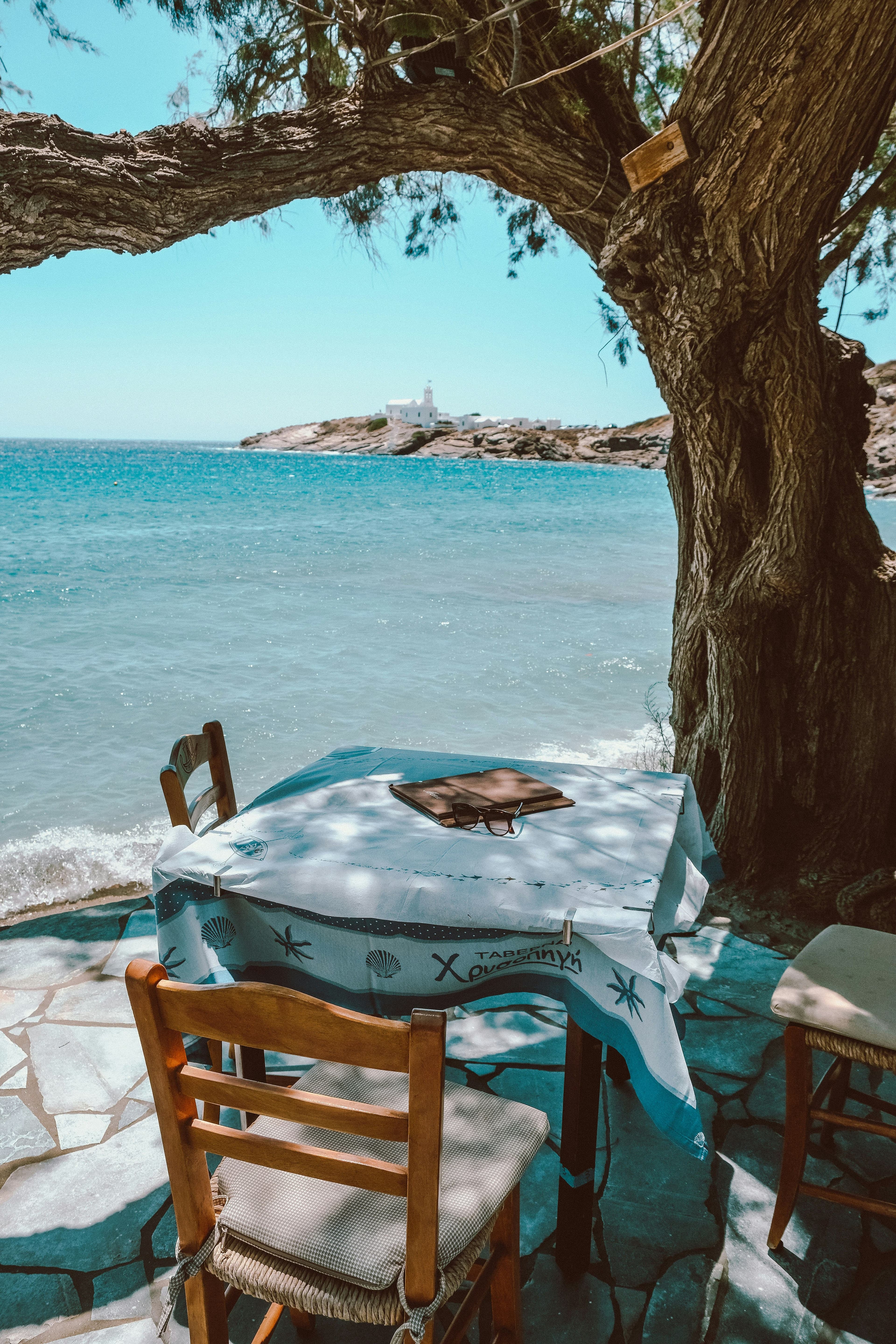
A double-sided beach flanking the famous Chrissopigi monastery — one of the most photographed spots in the Cyclades, with azure water on both sides of a rocky peninsula
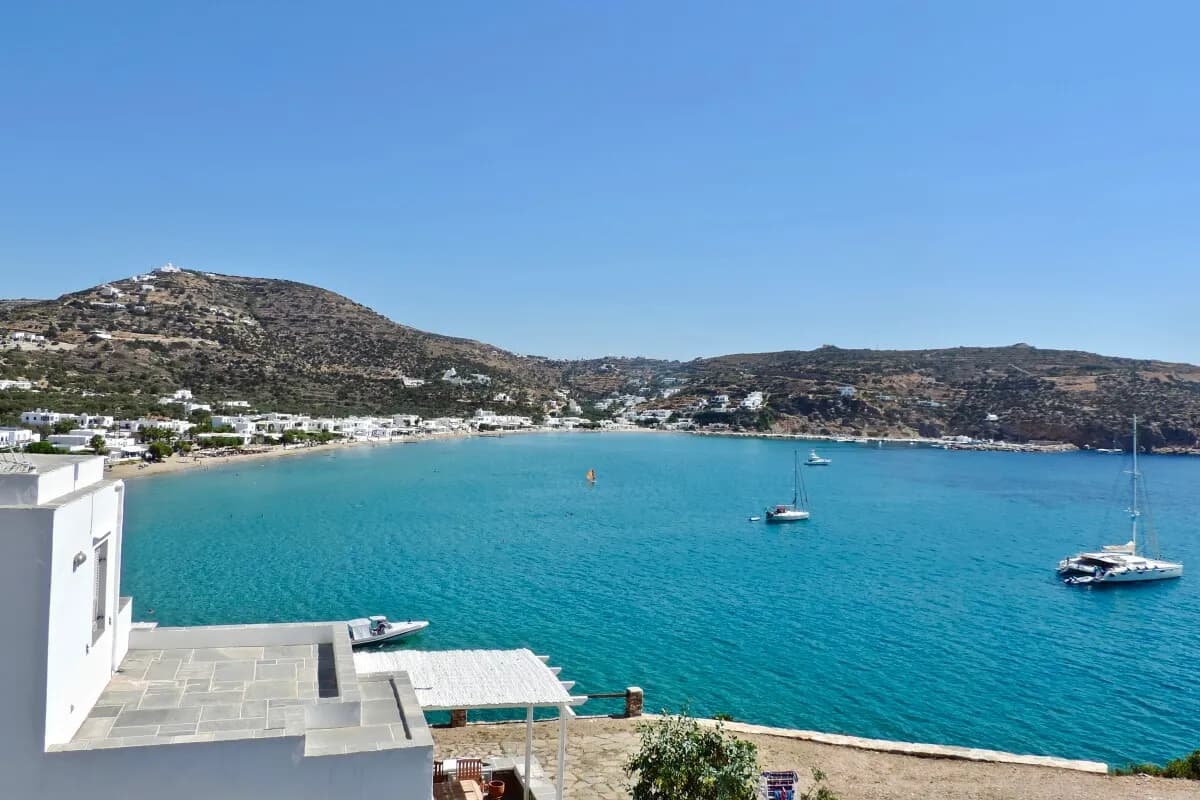
The longest sandy beach on Sifnos, backed by tamarisk trees and a row of tavernas — the island's liveliest beach with sunbeds, calm water, and a social atmosphere
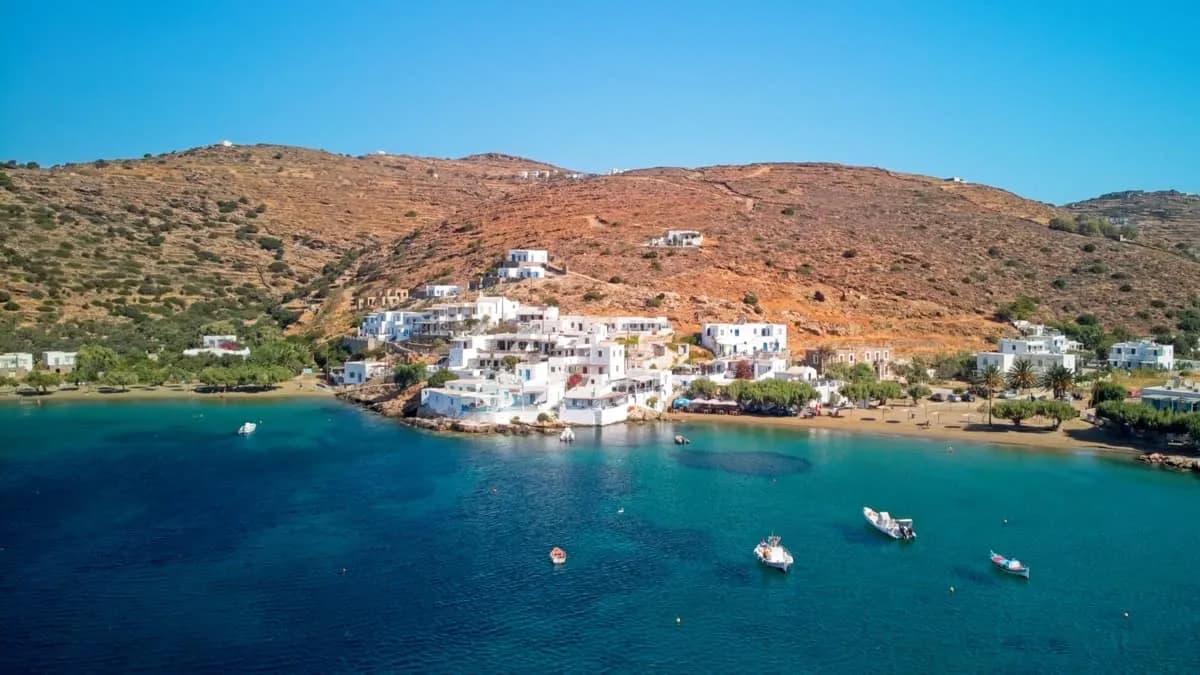
A charming fishing hamlet with three small beaches around its headland — traditional tavernas, fishing boats, and an unhurried pace that epitomizes old-world Sifnos
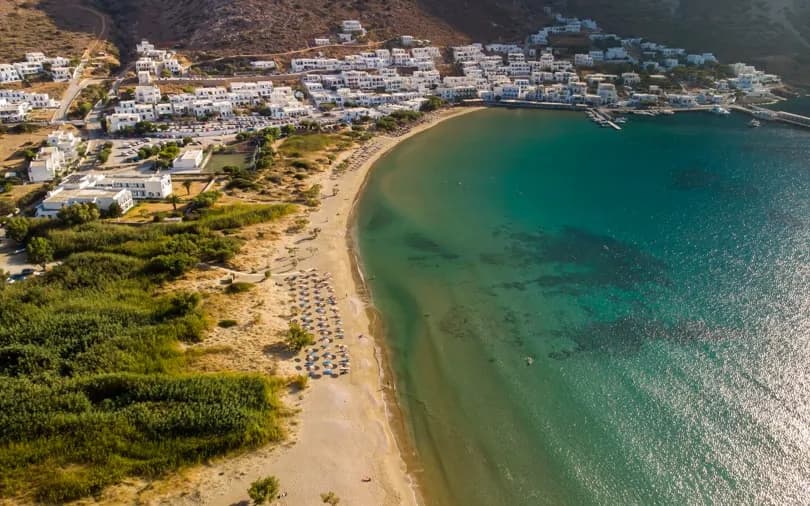
A generous stretch of sand right at the port — the most accessible beach on Sifnos with full facilities, making it a great first or last stop
A tiny, protected cove near Chrissopigi with remarkably calm water, a handful of sunbeds, and a single excellent taverna at the water's edge
Explore every beach and hidden village at your own pace.
Greece's undisputed culinary island — where every dish tells a story passed down through generations
The island's signature dish: chickpeas slow-baked overnight in a clay pot with onions, olive oil, and lemon — traditionally prepared on Saturday evenings and served for Sunday lunch after church
Lamb or kid goat braised with dill and red wine in a sealed clay pot until fork-tender — a Sifnian Easter specialty that has become a year-round culinary icon
A semi-hard local cheese aged in wine lees, giving it a distinctive rosy hue and tangy depth — served as a table cheese or grilled with honey
A robust salad of local capers, tomatoes, and onions dressed in sharp olive oil and vinegar — the perfect accompaniment to grilled fish on a Sifnian waterfront
Delicate almond-paste cookies dusted with powdered sugar and scented with rose water — Artemonas's pastry shops are legendary for these melt-in-your-mouth sweets
Myzithra cheese baked with local thyme honey, cinnamon, and phyllo — a traditional dessert that showcases the island's extraordinary honey and dairy
From sunrise to sunset in Sifnos
Follow the ancient flagstone path from Artemonas to the monastery of Profitis Ilias at the island's highest point. The panoramic views at dawn stretch across the entire Cycladic chain, and the wild herb-scented air makes every step a sensory experience.
2 hoursVisit a traditional Sifnian pottery workshop and try your hand at the wheel. Learn about the island's 3,000-year ceramic tradition, see the characteristic red clay being shaped into flaounes pots and chimney ornaments, and take home a handmade piece.
2 hoursExplore Sifnos's acclaimed network of over 100 km of ancient paths. The trail from Apollonia to Kastro passes through olive groves and past countless chapels, while the route to Vathi descends through a lush valley to a turquoise bay perfect for a post-hike swim.
3-4 hoursWander through the labyrinthine lanes of Kastro, the island's fortified medieval capital. Discover ancient columns built into Venetian walls, peer through archways at the glittering sea below, and visit the Archaeological Museum housed in a former Catholic church.
1.5 hoursSettle into a waterfront table at one of Vathi's celebrated tavernas for a leisurely feast. Order revithada, grilled octopus, and fresh fish while the bay's turquoise water laps just meters from your table — this is Sifnian dining at its most magical.
2.5 hoursWalk out to the iconic whitewashed monastery of Panagia Chrissopigi, connected to the coast by a small bridge over the sea. The 17th-century monastery is one of the most photographed in the Cyclades, and the surrounding coves offer excellent swimming.
1 hourJoin a hands-on cooking class and learn to prepare authentic Sifnian recipes — revithada, mastelo, and traditional sweets. Using local ingredients and clay pots, you'll discover why Sifnos earned its reputation as Greece's culinary island.
3 hoursStroll along the Steno, Apollonia's atmospheric pedestrian street, as the village comes alive. Browse boutiques and galleries, settle into a cocktail bar, and choose from a constellation of restaurants serving everything from traditional Sifnian to contemporary Greek cuisine.
3 hoursSailing trips, sunset cruises, diving, cooking classes and more.
Find the perfect time for your Sifnos trip
Ferry routes and travel connections
Fast booking, instant confirmation. Compare operators and prices.
Curated tours and activities
Hands-on cooking class preparing revithada, mastelo, and Sifnian sweets with a local chef, followed by a feast with local wine.
Visit a traditional ceramics workshop, try the potter's wheel, and explore the villages of Apollonia, Kastro, and Artemonas.
Guided hike along ancient flagstone paths connecting monasteries, chapels, and villages with panoramic Aegean views.
Insider tips for your Sifnos trip
Everything you need to know about Sifnos
Our AI travel assistant knows everything about Sifnos
From slow-cooked revithada to ancient hiking trails, from clifftop Kastro to sunset pottery workshops — Sifnos invites you to taste, walk, and fall in love with the real Cyclades.