Most Popular
Cultural & Northern
Hidden Gems
Discover the Cyclades
Explore 24 unique islands, from popular hotspots to hidden gems.
Explore All IslandsExplore 24 unique islands, from popular hotspots to hidden gems.
Explore All Islands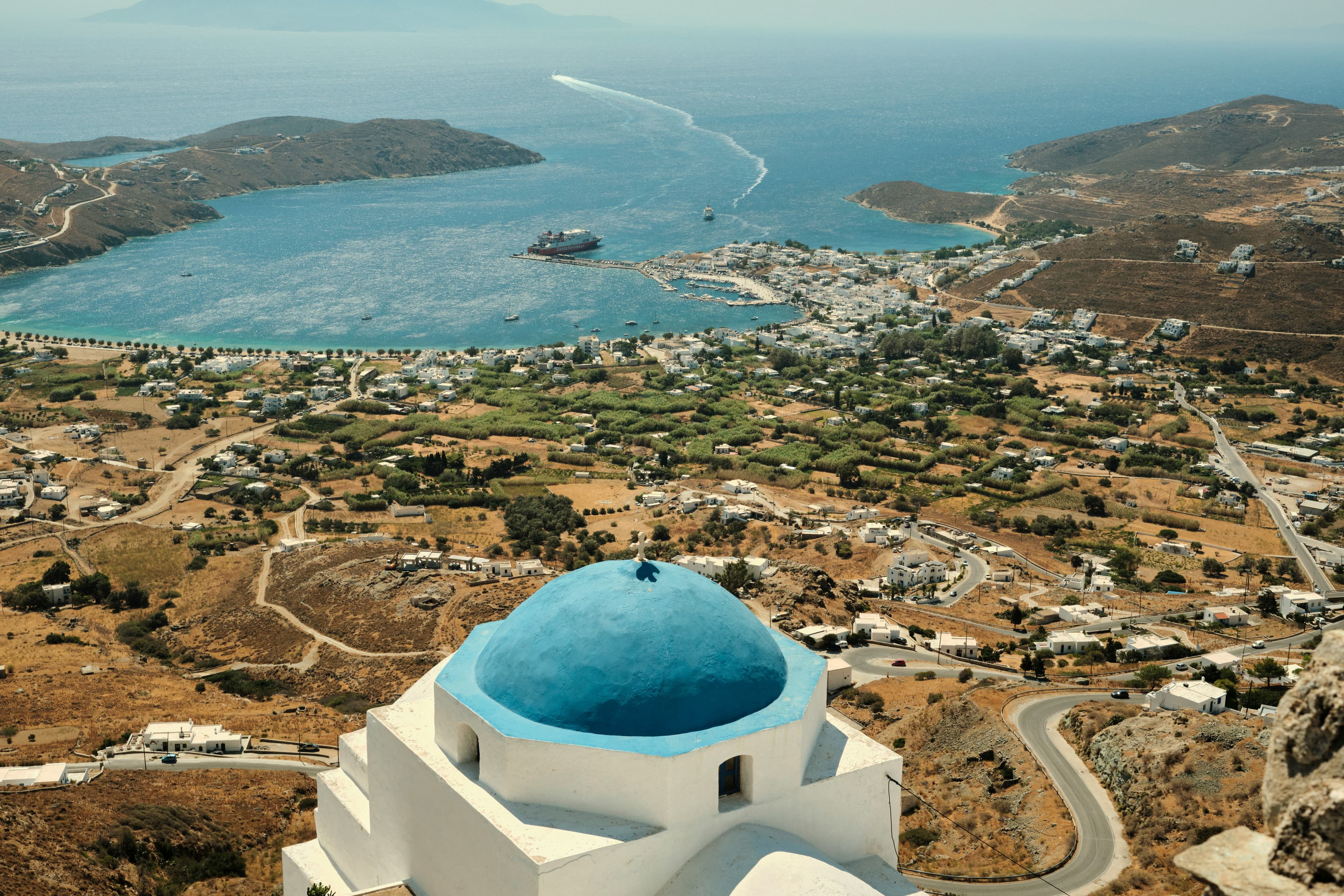
A hilltop Chora crowned by castle ruins, windswept beaches with barely a footprint, and mining heritage carved into the landscape — the island where raw Cycladic beauty remains unpolished
Serifos is a quiet western Cyclades island with a dramatic Chora perched on a rocky hill and beautiful unspoiled beaches. Only 2-3 hours by ferry from Piraeus, it remains one of the most authentic and undiscovered islands in the Cyclades.
Serifos arrives like a revelation for travelers weary of over-touristed islands. As your ferry rounds the headland into Livadi bay, a dramatic hilltop Chora cascades down the mountainside like a frozen avalanche of white cubes, crowned by the ruins of a Venetian castle perched on the summit. It is one of the most striking first impressions in the Cyclades — an island that wears its rugged beauty without a trace of pretense.
The island's character has been shaped by its mining past. For centuries, Serifos was renowned for its iron ore deposits, and the remnants of this industrial heritage — abandoned mine shafts, oxidized loading docks at Mega Livadi, and the haunting ruins of the ore processing facilities — add a layer of gritty authenticity that sets the island apart from its more polished neighbors. The 1916 miners' strike at Mega Livadi was a landmark event in Greek labor history, and the landscape still bears the marks of that tumultuous era.
Yet Serifos's defining gift is its beaches. Over 70 beaches ring the island's indented coastline, many of them completely deserted even in August. Psili Ammos, regularly ranked among Greece's finest, is a crescent of golden sand backed by dunes and juniper trees, while Livadakia, Ganema, and Lia offer pristine swimming without a sunbed in sight. For travelers seeking the authentic, unglamorous, stunningly beautiful Cyclades that existed before Instagram discovered it, Serifos is the answer.
Serifos doesn't polish itself for visitors — and that rough-edged honesty is exactly its most irresistible quality.
Greek mythology holds that Perseus grew up on Serifos, raised by the fisherman Diktys. It was from this rocky island that the hero set out on his quest to slay Medusa. According to legend, Perseus returned with the Gorgon's head and turned the island's hostile king Polydectes and his court to stone — which some say explains Serifos's rocky terrain.
Since antiquity, Serifos has been prized for its iron and copper deposits. Mining intensified under foreign concessions in the 19th century, bringing workers, infrastructure, and a unique industrial landscape. The oxidized reds and rusts of the mining areas contrast dramatically with the white Cycladic architecture above.
In August 1916, miners at the Mega Livadi operations staged a historic strike against brutal working conditions. The violent suppression of the strike by company guards became a defining moment in Greek labor history and is commemorated annually. The abandoned mining installations at Mega Livadi remain a powerful monument to this era.
As mines closed in the mid-20th century, Serifos experienced severe depopulation. Unlike tourism-driven islands, Serifos developed slowly and organically, which paradoxically preserved its authenticity. Today, the island attracts travelers specifically seeking the unvarnished Cycladic experience that other islands have outgrown.
Explore the heart of Serifos
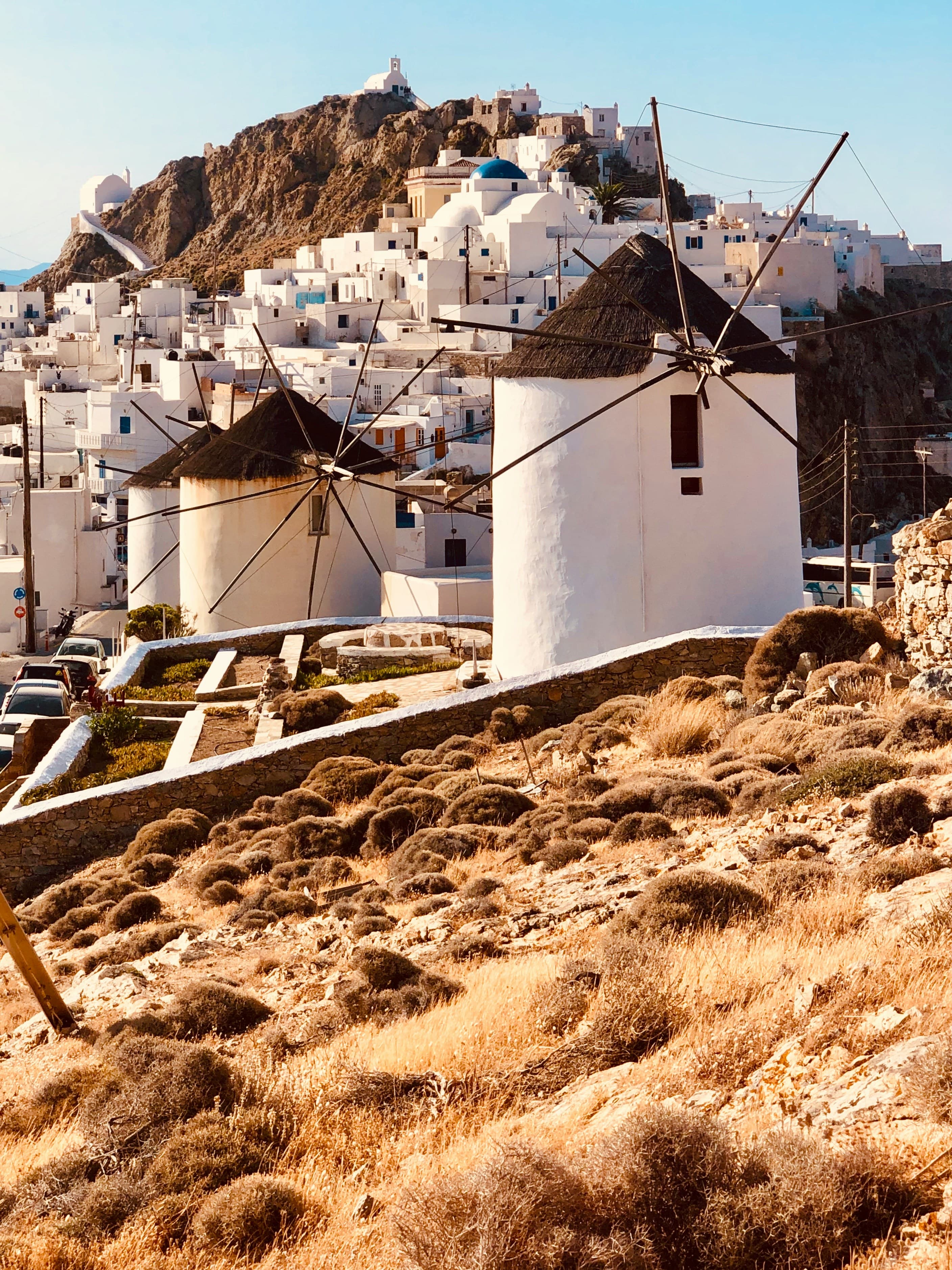
Serifos's Chora is among the most dramatically sited in the Cyclades — a cascade of whitewashed houses tumbling down a steep hillside to the summit, where the ruins of a 15th-century Venetian castle command panoramic views in every direction. The village's upper reaches reward the climb with traditional tavernas, the town hall square, and a peace that feels far from any tourist trail.
The island's port town occupies a sheltered bay with a long sandy beach, waterfront tavernas, and the majority of the island's accommodation. Livadi has a relaxed, unpretentious atmosphere — the kind of place where you can swim from the town beach, lunch on fresh fish, and watch ferries come and go from your seaside table.
A tiny settlement in the island's center, Panagia is home to one of the oldest churches in the Cyclades — a 10th-century Byzantine church built on ancient foundations. The surrounding landscape of terraced fields and wild herbs feels timeless, and the quiet lanes see almost no tourist traffic.
On the southwest coast, the once-bustling mining settlement of Mega Livadi is now a hauntingly beautiful ghost of its former self. Rusting ore loaders stretch into the sea, abandoned neoclassical company buildings stand in silent dignity, and a single taverna serves meals with views of one of the Cyclades' most unusual and atmospheric landscapes.
Scattered across the island's interior, these tiny settlements preserve a way of life barely touched by modernity. Stone farmhouses, threshing circles, and ancient footpaths connect these communities to the landscape in a way that feels unchanged for centuries.
Boutique villas, cave hotels, and sea-view suites — all in one place.
The best shores of Serifos
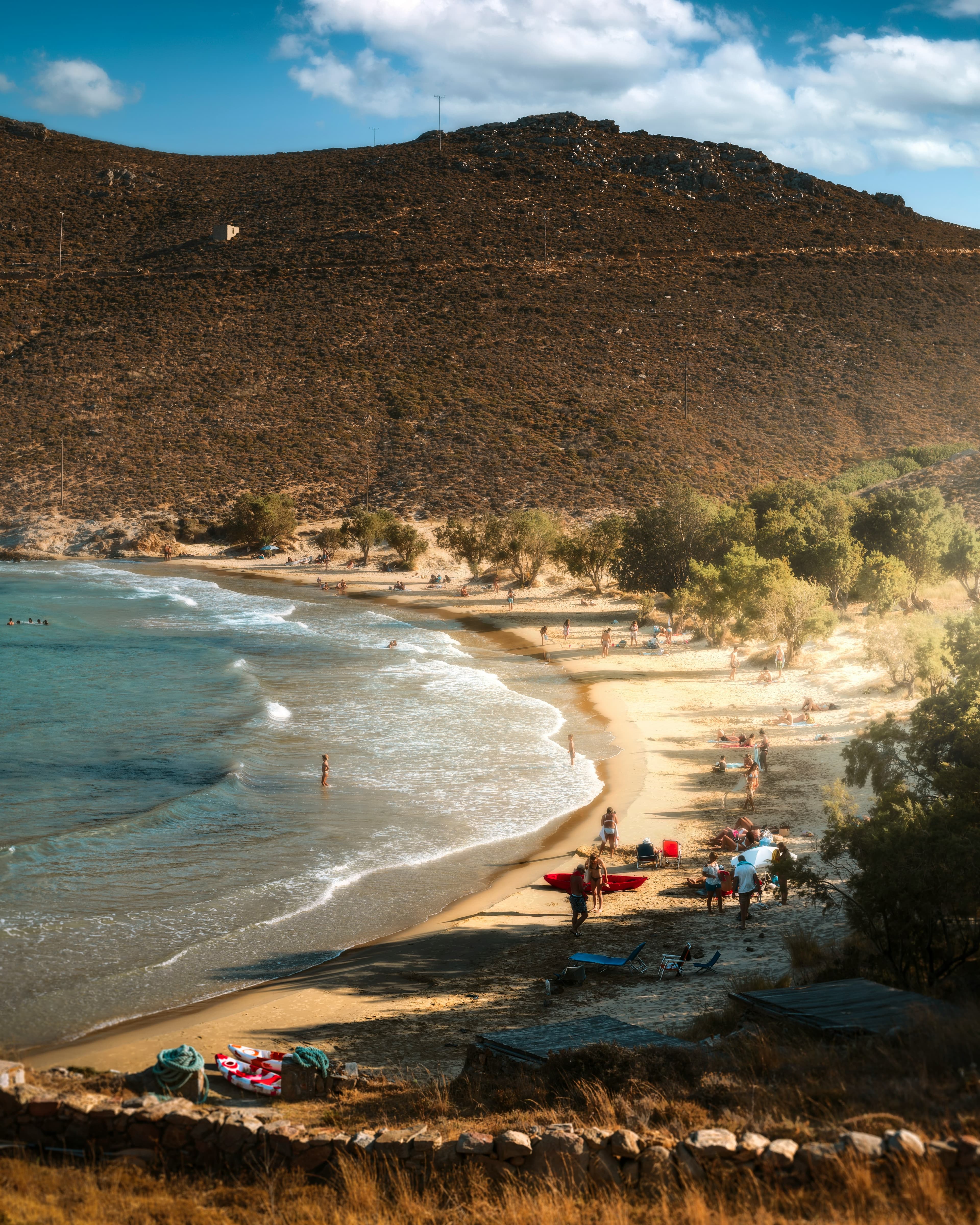
A crescent of fine golden sand backed by dunes and juniper trees — consistently ranked among Greece's most beautiful beaches and mercifully uncrowded
A lovely sandy beach just a short walk from Livadi port — golden sand, tamarisk shade, and excellent swimming without needing transport
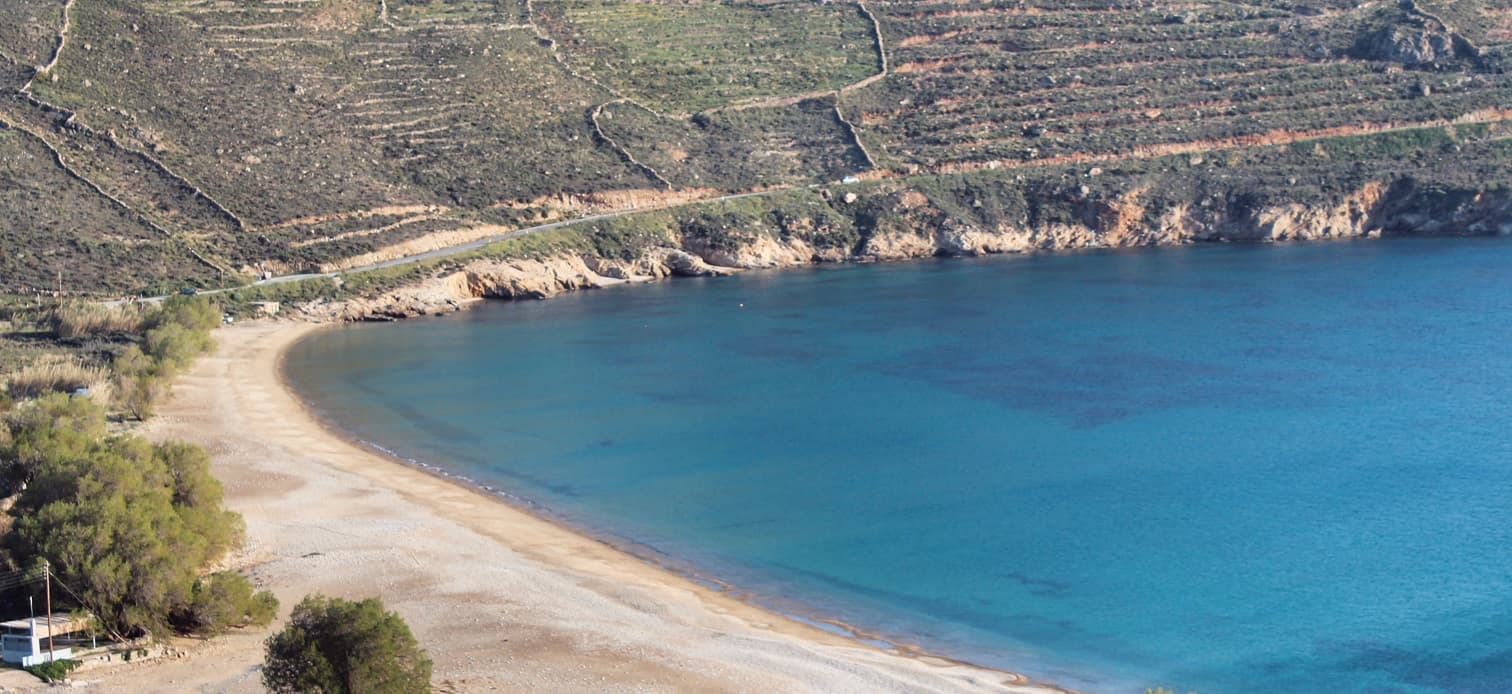
A wide, sandy beach on the north coast with beautiful dunes — exposed to meltemi winds but stunningly atmospheric and usually deserted
A protected sandy cove on the southwest coast near the mining area — a beautiful, calm swimming spot surrounded by dramatic rocky terrain
A pristine sandy beach on the south coast accessible only by boat or rough trail — the definition of a deserted paradise
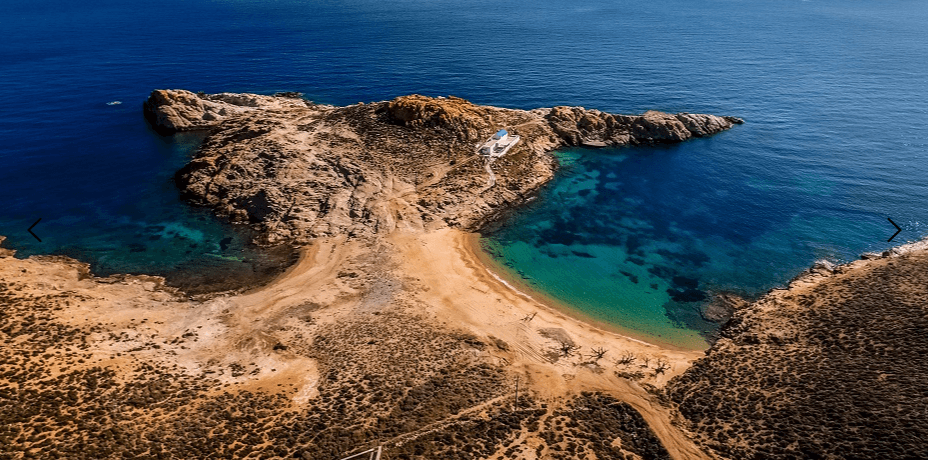
A small, sheltered cove with a picturesque chapel on the headland — intimate and wind-protected, with excellent swimming
Explore every beach and hidden village at your own pace.
Honest, hearty island cooking — the Cycladic table at its most rustic and rewarding
A savory pie filled with wild fennel greens and local cheese wrapped in thin handmade phyllo — a traditional Serifian recipe that celebrates the island's wild herbs
Crispy chickpea fritters seasoned with onion, mint, and cumin — a classic meze served at every traditional taverna, golden and satisfying
Octopus hung in the Aegean breeze until concentrated in flavor, then grilled over charcoal and dressed with olive oil and vinegar — simple perfection
Free-range goat slow-braised with tomatoes, potatoes, and wild oregano until falling off the bone — Serifos's quintessential mountain dish
A tangy, soft whey cheese produced in small quantities on the island — spread on barley rusks with tomatoes and olive oil for the ultimate Cycladic snack
Air-cured pork loin seasoned with pepper and spices, thinly sliced — a Cycladic charcuterie tradition that pairs perfectly with local wine
From sunrise to sunset in Serifos
Climb through the sleeping streets of upper Chora to the ruined Venetian castle at the summit. At sunrise, the panorama unfolds in every direction — the Aegean, the scattered Cycladic islands, and the village below still draped in shadow. You'll likely have it entirely to yourself.
1 hourDrive to the abandoned mining settlement of Mega Livadi on the southwest coast. Walk among the rusting ore loaders stretching into the sea, explore the crumbling neoclassical company buildings, and visit the memorial to the 1916 miners' strike — a haunting and powerful experience.
2 hoursMake the journey to Psili Ammos, arguably the finest beach in the western Cyclades. After a short walk through juniper-scented paths, you emerge onto a crescent of golden sand lapped by impossibly blue water. Bring food and water — there are no facilities, just pure, unspoiled beauty.
4-5 hoursFollow the network of old mule paths and mining trails that crisscross the island's mountainous interior. Routes connecting Chora to Mega Livadi or Panagia to Kentarchos pass through wild, herb-scented landscapes with sweeping coastal views and virtually no other hikers.
4 hoursRent a car or ATV and explore the island's 70+ beaches. Start with Livadakia for a morning swim, head to Vagia or Ganema for midday solitude, and finish at Agios Sostis for a late-afternoon dip by the chapel. Each beach has a distinct personality and most will be virtually empty.
5-6 hoursSettle into a waterfront taverna at Livadi port for a leisurely lunch of grilled octopus, fried calamari, and fresh fish. The pace is unhurried, the view of the bay is serene, and the prices are refreshingly un-touristy.
2 hoursExplore the atmospheric lanes of Chora during the golden hour, when the steep white streets glow warm and the views from the upper village are at their most dramatic. Discover tiny churches, peek into traditional homes, and find the perfect spot for sunset.
1.5 hoursDine at one of the traditional tavernas in the upper Chora, where the food is honest, the portions generous, and the night sky above the castle ruins is brilliant with stars. Serifos doesn't do fine dining — it does real food in extraordinary settings.
2.5 hoursSailing trips, sunset cruises, diving, cooking classes and more.
Find the perfect time for your Serifos trip
Ferry routes and travel connections
Fast booking, instant confirmation. Compare operators and prices.
Curated tours and activities
Guided tour of Mega Livadi's abandoned mining complex, the 1916 strike memorial, and the iron-stained landscapes of Serifos's industrial past.
Small boat excursion to the island's most remote and inaccessible beaches, including Lia and secret coves unreachable by road.
Guided walk through Chora's historic lanes to the Venetian castle, with stories of myth, mining, and the island's resilient spirit.
Insider tips for your Serifos trip
Everything you need to know about Serifos
Our AI travel assistant knows everything about Serifos
From the eagle's nest Chora to golden Psili Ammos beach, from the haunting mining ruins of Mega Livadi to sunsets over the castle — Serifos is the wild, authentic Cyclades waiting to be explored.