Sponsored by Booking.com
Updated: 16 September 2026
Short answer: Santorini is an active volcanic system, but a travel guide should not translate that scientific fact into either panic or a blanket “there is no risk” claim. The Smithsonian Global Volcanism Program records Santorini's last known eruption in 1950. In 2026, Greek authorities continued active monitoring, and a 27 April 2026 Joint Ministerial Decision reassessed access and stay restrictions in specific parts of the Santorini volcanic complex because of geodynamic phenomena. Check the latest official instructions before any volcano visit rather than relying on an old blog post or tour description.
If your goal is to book a volcano experience rather than research the geology and current visit context, go directly to our Santorini volcano tours page. This guide owns the informational decision: what the caldera is, what Nea Kameni and Palea Kameni are, what a visit actually involves, and how to verify current conditions.
Santorini volcano in 60 seconds: what visitors need to know now
| Question | Practical answer |
|---|---|
| Is Santorini volcanic? | Yes. Santorini is part of the Hellenic Volcanic Arc and the caldera contains post-caldera volcanic islands. |
| When was the last confirmed eruption? | The Smithsonian Global Volcanism Program lists 1950 as the last known eruption. |
| Can visitors go to Nea Kameni? | Nea Kameni is a visitor destination reached by boat, but access rules can change. Verify official instructions and your operator's current route before departure. |
| Are the Palea Kameni hot springs a spa? | No. Expect an open-water swim in a volcanically influenced coastal area, not a controlled thermal pool. Conditions vary. |
| Should I book a volcano tour or a caldera cruise? | Choose a volcano-focused trip if walking on Nea Kameni is the priority; choose a broader cruise if swimming, scenery and time on the water matter more. |
| Where should I check safety/status? | Start with Greek Civil Protection and OASP, not social media or an undated travel article. |
The most important 2026 planning rule is simple: separate scientific status from visitor access. A volcano can be scientifically active while a specific trail, anchorage or zone has its own temporary operating rules.
Current 2026 access and status: what the official sources actually say
On 27 April 2026, Greece's Ministry of Climate Crisis and Civil Protection announced a new Joint Ministerial Decision (B' 2332/27-04-2026). According to the ministry, the decision incorporated unanimous scientific recommendations and reassessed access and stay restrictions in specific areas of the Santorini volcanic complex due to geodynamic phenomena.
That wording matters. It does not justify a travel site saying “the volcano is completely safe,” “there is no imminent threat,” or “all areas are open.” It also does not mean tourists should assume the entire caldera is closed. The correct travel advice is to verify the current rule for the exact place and activity you intend to visit.
OASP, Greece's Earthquake Planning and Protection Organization, also reported fieldwork on Santorini from 31 March to 2 April 2026 with INGV scientists, including gas-flow measurements on Kameni and maintenance of gas-monitoring systems. OASP explicitly describes the work in the context of 24-hour monitoring of the Hellenic volcanic arc and volcanic-risk assessment.
Before a Nea Kameni or caldera trip, check:
- Greek Civil Protection for official measures and protective guidance;
- OASP for scientific monitoring and authority updates;
- your licensed boat/tour operator for the route that is actually operating that day;
- port or local authority instructions when weather or access rules affect departures.
Do not use the absence of a new alert as proof of “zero risk.” Volcanic, seismic, marine and weather conditions are different questions and can change independently.
What is the Santorini caldera?
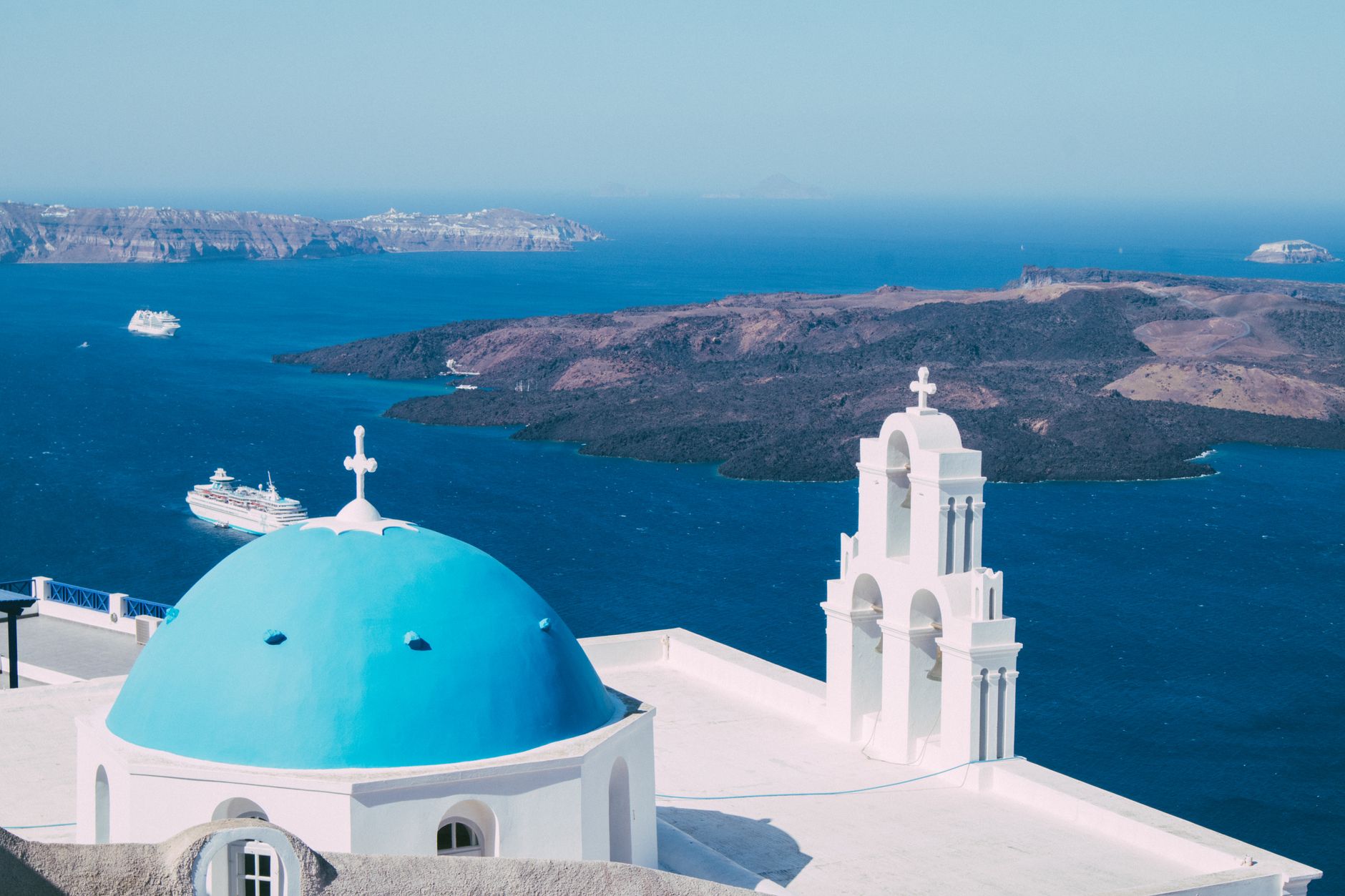
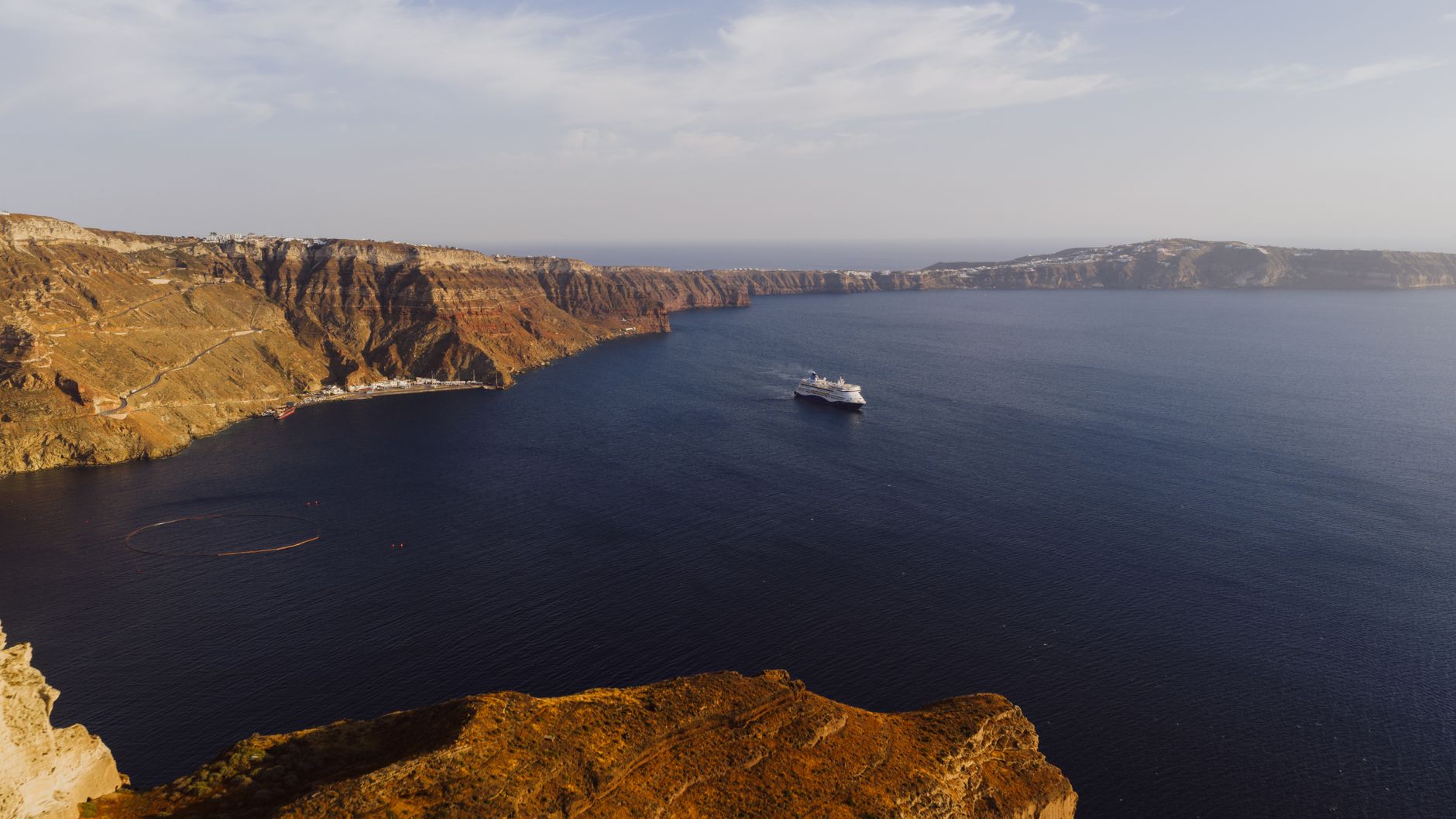
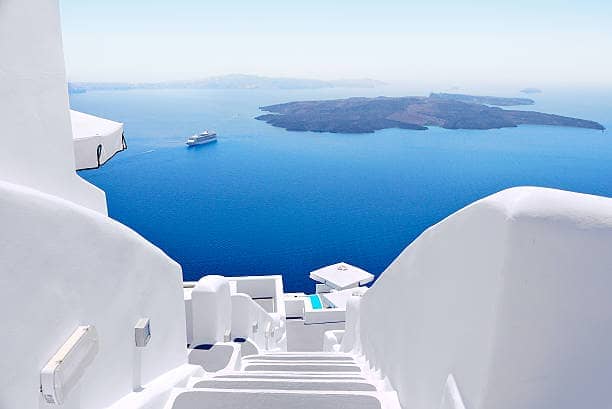
The view from Fira, Firostefani, Imerovigli and Oia is the edge of a complex volcanic landscape, not one simple crater. The Smithsonian Global Volcanism Program describes Santorini as a group of overlapping volcanic structures cut by multiple calderas. The youngest major caldera formed during the Late Bronze Age Minoan eruption, roughly 3,600 years ago, while later eruptions built the Kameni islands inside the caldera.
The modern geography is easier to understand if you split it into four pieces:
- Thira/Santorini: the main inhabited island forming much of the caldera rim;
- Thirasia: another major fragment of the caldera rim across the bay;
- Nea Kameni: the dark volcanic island where visitors follow the geological trail;
- Palea Kameni: an older volcanic island associated with the caldera's thermal-water swimming stop.
Kolumbo is different again: it is a submarine volcano northeast of Santorini, not the crater you walk on at Nea Kameni. Treating “Santorini volcano,” “Nea Kameni” and “Kolumbo” as interchangeable creates confusion in both travel planning and safety information.
For a research-grade eruption chronology, use the Smithsonian Global Volcanism Program's Santorini profile. It records the most recent confirmed eruptive period at Nea Kameni in 1950 and provides the longer eruptive history behind the islands you see today.
Nea Kameni: what the volcano walk is actually like
Nea Kameni is the part most travellers mean when they say, “I want to walk on the Santorini volcano.” Access is by boat. The terrain is volcanic, exposed and largely without meaningful shade, so this is a very different experience from walking through a village or along a paved promenade.
The National and Kapodistrian University of Athens has worked with GEOTHIRA and the Municipality of Thira on the Santorini Volcano App, a scientific visitor guide for the Nea Kameni Geological Park. The university describes a volcanic trail with multiple geological points of interest and notes that access to the island is by boat from Santorini.
Bring the right things
- sturdy footwear with grip rather than beach flip-flops;
- water appropriate to the heat and length of your outing;
- sun protection and a hat;
- any medication you normally need for heat, motion sickness or exertion;
- enough time in your itinerary that a marine/weather change does not ruin a tightly timed onward connection.
We deliberately do not publish a universal walking time, entrance fee or operating timetable here. Those are precisely the details that become stale and misleading. Confirm the current visit format and any local fee with the official operator/source attached to your date.
Palea Kameni hot springs: what to expect before you book
The “hot springs” stop is often misunderstood. This is not a tiled thermal spa with a fixed temperature. It is a swim in a natural marine environment influenced by volcanic hydrothermal activity.
In practice, many caldera excursions approach the Palea Kameni area by boat and include a swimming stop when conditions and access allow. The key question is not “what exact temperature will the water be?” but whether you are comfortable with the swimming conditions required by your chosen boat and route.
Before booking, ask the operator:
- how guests enter and exit the water;
- whether flotation support is available;
- what swimming ability is expected;
- whether the stop changes in wind or sea conditions;
- what the cancellation/substitution policy is if that stop cannot operate.
If you are not a confident open-water swimmer, choose the experience for the boat and caldera views rather than assuming the thermal-water stop is suitable for everyone.
Volcano tour vs caldera cruise vs private boat: choose by experience, not headline price
There is no useful “average volcano tour price” that stays accurate across dates, boat types, group sizes and inclusions. Compare the experience design first, then the live price.
| Experience | Best for | What to verify live |
|---|---|---|
| Volcano-focused excursion | Travellers whose priority is walking on Nea Kameni and learning the geology | Current Nea Kameni access, guide format, walking time, footwear advice, any local admission charge |
| Caldera cruise / catamaran | Couples, families and travellers who prioritise swimming, scenery and time on the water | Actual stops, swimming requirements, meals/drinks, transfer inclusion, departure point |
| Private boat | Groups wanting control over pace and stops | Route permissions, weather alternatives, fuel/inclusions, skipper terms, cancellation policy |
For bookable options, availability and current commercial terms, use Santorini volcano tours. For the wider decision between sailing formats, continue to our Santorini tours and cruises guide.
Do you need a tour to visit the volcano?
You need boat access to reach Nea Kameni. An organised excursion is the simplest option because transport, timing and the visit sequence are packaged together. Independent arrangements may be possible through legitimate marine transport, but “independent” should never mean ignoring a current access rule or entering a restricted area.
For most first-time visitors, the practical choice is therefore between:
- a volcano-first group excursion;
- a broader caldera cruise that includes volcanic points when operating;
- a private marine itinerary with current route confirmation.
Book based on the part you would regret missing, not on the longest list of inclusions.
Is Santorini's volcano active?
Yes, in the scientific sense. The Smithsonian profile describes an active volcanic island within the caldera and lists the last known eruption in 1950. Greek Civil Protection's own general volcano guidance notes that scientists commonly consider a volcano active when it shows forms of contemporary activity, while OASP maintains monitoring and volcanic-risk assessment work across the Hellenic Volcanic Arc.
That does not tell you whether a specific tourist stop is open today. “Active volcano” is a geological classification; visitor status is an operational question. Check both.
When did Santorini last erupt?
The Smithsonian Global Volcanism Program records the latest confirmed eruption from 10 January to 2 February 1950 at Nea Kameni. It included phreatic explosions, formation of a small lava dome and small lava flows.
The much larger Late Bronze Age Minoan eruption shaped the youngest major caldera and is a separate event thousands of years earlier. If the geology is part of why you are visiting, the distinction matters: the dramatic caldera landscape reflects a long volcanic history, while the dark Kameni islands record later post-caldera activity.
Best time of day: plan for heat, wind and marine conditions
There is no universally “best” departure that applies every day. Nea Kameni is exposed, so heat and sun can make a midday walk materially harder. Wind and sea state can also affect marine itineraries independently of the temperature on land.
Use this decision logic:
- Heat-sensitive traveller: favour a cooler departure window when one is operating;
- Cruise-ship day visitor: avoid building a volcano excursion so tightly around ship all-aboard time that one delay creates a problem;
- Photographer: choose light and viewpoint priorities first, but do not trade away safe marine logistics;
- shoulder-season traveller: verify that the exact experience operates on your date rather than assuming summer frequency.
For land-based caldera scenery, the Fira to Oia hike gives you a completely different perspective without needing a boat. For sunset planning, compare the best Santorini sunset viewpoints.
How to combine the volcano with the rest of Santorini
A good Santorini itinerary does not need to stack every famous experience into one day.
If the volcano is the priority
Keep the boat excursion as the day's fixed point. Add a flexible Fira/Firostefani walk or dinner afterward rather than another timed activity.
If geology is the priority
Pair Nea Kameni with Akrotiri on a different day. That gives you both the volcanic landscape and the archaeological consequences of the Late Bronze Age eruption without rushing either experience.
If scenery is the priority
Choose one marine experience, then use the caldera rim for the second perspective. The volcano looks completely different from Imerovigli or the Fira–Oia trail.
If you have only one full day
Decide whether your “one thing” is walking on volcanic terrain or sailing the caldera. Trying to optimise for every stop, sunset, village and beach usually creates more transport than experience.
Getting to your Santorini experience without creating a logistics problem
Where your boat departs matters. Do not assume every volcano or caldera product starts from the same port, and do not copy a departure point from an old article into your travel day.
If you are staying without a car, read the Santorini public transport guide and verify current KTEL service close to travel. If your itinerary genuinely benefits from flexible road transport, compare live local options on rent a car in Santorini.
Still choosing a base? Start with Santorini hotels and our where to stay in Santorini guide. Fira can be useful for travellers who value public-transport connections; caldera villages may make sense when the view and walkable evening experience matter more than road access.
Arriving by sea? Search your current sailing on Cyclades ferry tickets rather than relying on a static schedule in an article.
Safety checklist before you leave for Nea Kameni or the caldera
On the morning of the trip:
- Check your operator's latest departure message and meeting point.
- Check Greek Civil Protection/OASP if there has been any recent volcanic, seismic or access update.
- Confirm whether your planned stops are operating, rather than assuming a route is unchanged.
- Check wind/sea conditions and follow the skipper/authority decision if the itinerary changes.
- Carry suitable footwear, water and sun protection for an exposed volcanic landscape.
- Do not enter signed or officially restricted areas for a photo.
The useful goal is not to promise “zero risk.” It is to make a current, informed decision using the authority responsible for the risk.
Frequently asked questions
Is Santorini volcano safe to visit in 2026?
There is no responsible evergreen yes/no answer. Greek authorities continued monitoring in 2026 and the 27 April Joint Ministerial Decision reassessed access/stay restrictions in specific volcanic-complex areas. Check current Civil Protection/OASP guidance and the operating status of your exact excursion before visiting.
Can you walk on Nea Kameni?
Nea Kameni is a recognised geological visitor destination reached by boat, with a volcanic trail described by the University of Athens/GEOTHIRA visitor project. Access and visit conditions can change, so verify the current operating rules for your date.
How long does the Nea Kameni walk take?
Do not plan around one fixed number from an old blog. Walking time depends on the operating route, stops, pace and conditions. Use your current excursion's published itinerary and allow extra margin if heat affects your pace.
Are the Santorini hot springs actually hot?
They are natural marine waters influenced by volcanic hydrothermal activity, not a temperature-controlled spa. The perceived temperature and exact swim experience can vary; book it as an open-water volcanic swim, not as a guaranteed hot bath.
What is the difference between Nea Kameni, Palea Kameni and Kolumbo?
Nea Kameni is the central volcanic island visitors commonly walk on; Palea Kameni is associated with the thermal-water swimming area; Kolumbo is a separate submarine volcano northeast of Santorini.
When did Santorini last erupt?
The Smithsonian Global Volcanism Program lists 1950 as Santorini's last known eruption, at Nea Kameni.
Sources checked for this 2026 refresh
For volatile safety or access information, primary sources outrank a travel article — including this one.
- Greek Civil Protection — 27 April 2026 Santorini volcanic-complex measures
- OASP — March/April 2026 Santorini geochemical monitoring fieldwork
- Smithsonian Global Volcanism Program — Santorini profile and eruptive history
- National and Kapodistrian University of Athens — Santorini Volcano App / Nea Kameni visitor geology
Next step: if the volcano walk is your priority, compare the currently operating Santorini volcano experiences. If you want the trip built around your hotel, transport and ferry dates, use Touristas AI to structure the itinerary without hard-coding stale schedules.
Build the practical trip
Plan your Santorini dates
Put the crossing, stay and local transport in place before the popular dates disappear.
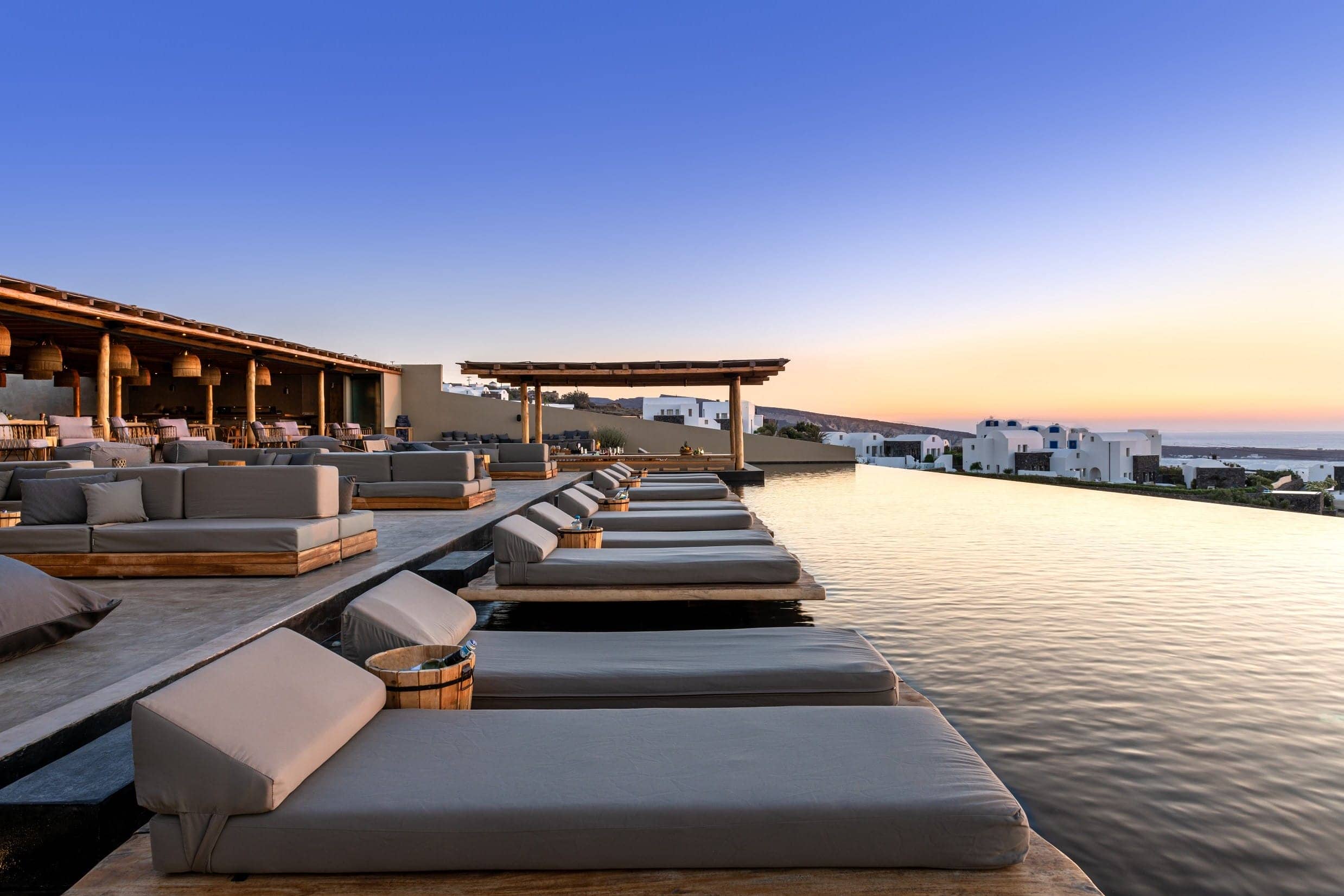
Athina Luxury Suites
Caldera-view suites in Fira with an infinity pool and fine dining.
Topics covered
Part of the Discover Cyclades editorial team, locals who ferry, hike, eat and write about these islands every season.