Sponsored by Booking.com
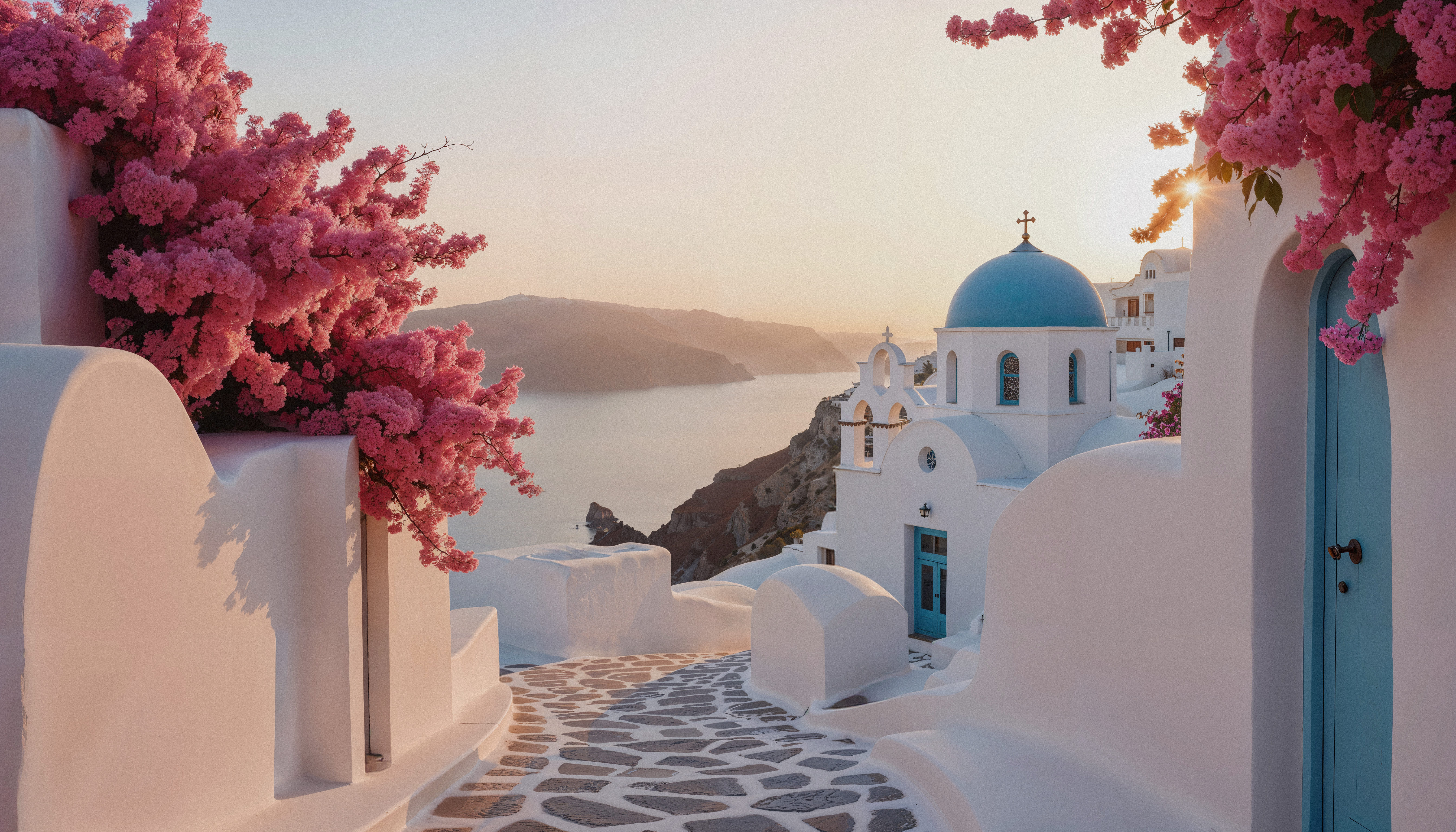
The volcanic Cyclades route links Santorini's caldera, Milos's Sarakiniko moonscape, and Folegandros's clifftop Chora into one 7–9 day island-hopping trip. In summer, ferries run daily: Santorini→Milos takes about 2–4 hours from €38, and Milos→Folegandros about 1–2 hours. Base three nights on Santorini, three on Milos, and two on Folegandros for the ideal balance.
This is a themed alternative to a generic Cyclades island-hopping guide, three islands shaped by the same volcanic geology, yet completely different in mood. Book your hops early through our ferry tickets page.
Table of Contents
- What is the volcanic Cyclades route?
- How do the ferries connect?
- How many days do you need?
- What to do on Santorini
- What to do on Milos
- What to do on Folegandros
- When should you go?
- How much does it cost?
- Frequently Asked Questions
What is the volcanic Cyclades route?
The volcanic Cyclades route is a themed island-hopping itinerary connecting three islands born of volcanic activity: Santorini, the flooded caldera of a Bronze Age eruption; Milos, a horseshoe bay rimmed with mineral-coloured rock; and Folegandros, a dramatic cliff-edged island between them. All three sit in the southwestern Cyclades, so ferries link them directly in summer without backtracking to Athens.
Why combine them? Each shows a different face of the same geology: Santorini's sheer caldera walls, Milos's white Sarakiniko and red Paliochori beaches, and Folegandros's plunging sea cliffs. Together they make a compact, scenically spectacular loop ideal for first-timers who still want to escape the biggest crowds.
How do the ferries connect?
In summer (June–September) all three legs run daily; in shoulder season frequency drops, so check schedules before locking in nights.
- Santorini → Milos: roughly 2–4 hours, from about €38. High-speed catamarans (SeaJets, Golden Star) are fastest; conventional ferries are cheaper and steadier.
- Milos → Folegandros: roughly 1–2 hours, from about €25–€45, mostly high-speed.
- Folegandros → Athens (Piraeus): roughly 4–9 hours depending on vessel, from about €45, to close the loop home.
Reverse the direction if your flights favour it; the route works equally well Folegandros-first. Always leave a buffer of a few hours between an inbound ferry and an onward flight in peak season, when sea conditions can delay high-speed boats. Compare live times on our ferry tickets page and see the wider network on the Cyclades ferry map.
How many days do you need?
Plan 7–9 days for a relaxed loop. A proven split:
- Santorini (3 nights): caldera villages, a catamaran cruise, sunset, plus one beach day.
- Milos (3 nights): you need a full day for boat trips to Kleftiko and at least two for the colour-coded beaches.
- Folegandros (2 nights): small enough to absorb in a couple of slow days, but worth an overnight for the Chora at dusk.
With only 5–6 days, drop Folegandros and do Santorini + Milos. With 10+ days, add Sifnos or Sikinos as a quieter coda. See our Sifnos guide and Sikinos guide.
What to do on Santorini
Santorini is the dramatic opener. Base yourself in Oia or Imerovigli for caldera views, or Fira for transport and nightlife.
- Catamaran caldera cruise: sail past the hot springs and the volcano islet of Nea Kameni.
- Caldera-rim walk: the Fira-to-Oia path (about 10 km, 3–4 hours) is one of Greece's best coastal hikes.
- Beaches: Red Beach and the black sand of Perissa and Kamari, best reached with your own wheels.
- Akrotiri: the "Greek Pompeii", a Bronze Age town buried by the eruption.
For getting around, an ATV or small car makes the south-coast beaches easy, so compare verified partners on our Santorini car rental page and read Santorini ATV vs quad vs car. More beach detail in our best beaches in Santorini guide.
What to do on Milos
Milos is the route's scenic peak, a volcanic island with over 70 beaches in every colour.
- Sarakiniko: brilliant white volcanic rock that looks like the moon; go early or at sunset.
- Kleftiko: sea caves and pinnacles reachable only by boat, so book a full-day sailing trip.
- Paliochori & Firiplaka: red-and-ochre cliffs over clear water.
- Plaka: the hilltop capital for sunset and dinner.
Milos rewards a rental car or quad because its beaches are spread out and some need dirt-road access. See our Milos vs Naxos comparison for context on how it stacks up.
What to do on Folegandros
Folegandros is the quiet finale, a sheer-sided island with one of the most beautiful Choras in Greece.
- Chora: car-free squares strung along a cliff edge, glowing at dusk.
- Church of Panagia: a short uphill walk for panoramic views over the Aegean.
- Katergo & Agali beaches: reached on foot or by small boat.
- Slow evenings: Folegandros is about tavernas and quiet, not nightlife.
It pairs naturally with nearby Sikinos if you have an extra day. Plan your arrival via our Folegandros guide.
When should you go?
- June & September (best): warm seas, daily ferries, fewer crowds and lower prices than peak. Ideal for this route.
- July–August (peak): hottest, busiest and priciest; book ferries and hotels months ahead.
- May & October (shoulder): pleasant but fewer high-speed connections, so verify Milos↔Folegandros frequency before committing.
- Winter: sparse ferries; not recommended for multi-island hopping.
How much does it cost?
Rough per-person budget for the 7–9 day loop (excluding international flights):
- Ferries (3 legs): €110–€180.
- Accommodation: €60–€250+/night depending on island and season (Santorini is dearest).
- Car/ATV rental: €25–€60/day where you take it.
- Food & activities: €40–€80/day, plus €90–€150 for a Milos boat trip.
A mid-range traveller should budget roughly €150–€250 per day. Save by travelling in June or September and pre-booking ferries through our ferry tickets page.
Frequently Asked Questions
Q1: Can you ferry directly between Santorini, Milos and Folegandros?
A: Yes. In summer all three legs run daily — Santorini→Milos (about 2–4 hours), Milos→Folegandros (about 1–2 hours), and Folegandros→Piraeus to close the loop. Frequency drops in shoulder season, so check our ferry tickets page before fixing your nights.
Q2: How many days do you need for the volcanic Cyclades route?
A: Plan 7–9 days: three nights on Santorini, three on Milos and two on Folegandros. With 5–6 days, drop Folegandros and do Santorini plus Milos.
Q3: Which island is best for beaches?
A: Milos, with over 70 beaches including the white volcanic rock of Sarakiniko and the red cliffs of Paliochori. Santorini has dramatic black-sand beaches, while Folegandros has a few quiet coves reached on foot or by boat.
Q4: Do you need a car on this route?
A: A car or ATV is very useful on Santorini and Milos because beaches are spread out; Folegandros is small and partly car-free. Compare verified rentals on our Santorini and island car-rental pages.
Q5: When is the best time to do this itinerary?
A: June and September offer warm seas, daily ferries and fewer crowds than July–August. May and October are cheaper but have fewer high-speed connections between Milos and Folegandros.
Q6: Can you start the route from Athens?
A: Yes. Take a ferry from Piraeus to Santorini (about 5–8 hours) or fly to Santorini, run the loop, and return by ferry from Folegandros to Piraeus. See Athens to Santorini: ferry vs flight.
Ready to plan the volcanic Cyclades route? Book your hops on our ferry tickets page, compare island car rentals, and use our AI Trip Planner to sequence the perfect itinerary.
Build the practical trip
Plan your Santorini dates
Put the crossing, stay and local transport in place before the popular dates disappear.
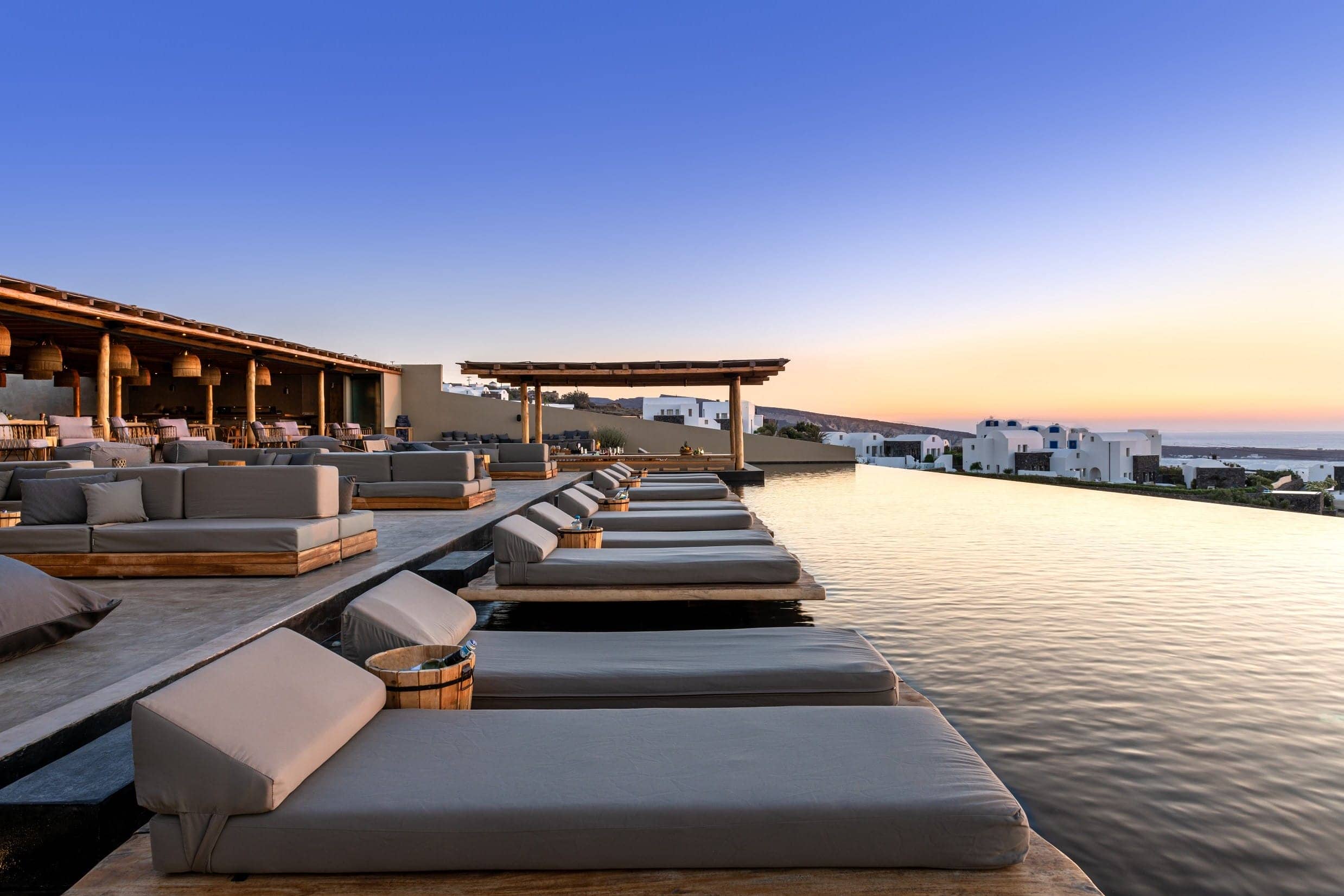
Athina Luxury Suites
Caldera-view suites in Fira with an infinity pool and fine dining.
Topics covered
Part of the Discover Cyclades editorial team, locals who ferry, hike, eat and write about these islands every season.