Sponsored by Booking.com
TL;DR: Key takeaways
- What this list is: Greece’s coastline runs more than 16,000 km across the mainland and islands. This 2026 ranking covers 30 beaches travellers actually ask about — volcanic Cyclades coves, Cretan lagoons, Ionian cliff beaches, and Dodecanese bays.
- Top 5 at a glance: 1. Sarakiniko (Milos) — lunar white volcanic rock. 2. Navagio/Shipwreck Beach (Zakynthos) — Greece's most iconic. 3. Elafonissi (Crete) — pink sand lagoon. 4. Plaka Beach (Naxos) — 4 km of empty golden sand. 5. Porto Katsiki (Lefkada) — dramatic cliff-backed turquoise.
- Best for families: Agios Prokopios (Naxos), Koukounaries (Skiathos), Golden Beach (Paros). Best for couples: Firiplaka (Milos), Agali (Folegandros). Best for adventure: Kleftiko (Milos, boat only), Red Beach (Santorini).
- Cyclades dominate this list with 12 of the 30 entries — volcanic geology and Meltemi-sculpted coastlines create beaches found nowhere else.
- Plan the hop: Pair beach days with the Milos guide, Naxos guide, direct ferry routes, and live ferry tracking. Not sure which island? Take the island quiz.
Table of Contents
- Cyclades beaches (12)
- Crete beaches (6)
- Ionian Islands beaches (5)
- Dodecanese beaches (4)
- Sporades & Mainland beaches (3)
- FAQs
- People Also Ask
Cyclades beaches
1. Sarakiniko Beach, Milos — The Lunar Landscape
Why it's #1: There is no beach on Earth that looks like Sarakiniko. Sculpted white volcanic tuff, turquoise pools, and sea caves — it's an alien moonscape lapped by the Aegean. No sunbeds, no bars — just geological drama.
- Type: Volcanic rock (no sand)
- Crowd level: Medium-high (arrive before 10 AM)
- Access: 10-min drive from Adamas
- Facilities: None — bring water and shade
2. Plaka Beach, Naxos — The Endless Sand
Why it's ranked: 4 kilometres of unbroken golden sand backed by cedar trees. The southern end is nudist and near-empty even in August. Arguably the best sand beach in the Cyclades.
- Type: Fine golden sand
- Crowd level: Low (especially south of the tavernas)
- Access: 8 km south of Naxos Town
- Facilities: 2 beach bars, tavernas at the north end
3. Firiplaka Beach, Milos — The Colour Palette
Why it's ranked: Volcanic cliffs in red, orange, yellow, and white frame a sheltered cove of crystal-clear water. The geology here is extraordinary — sulphur-stained rocks, sea caves, and a sandy seabed.
- Type: Coloured volcanic sand + pebble
- Crowd level: Medium
- Access: 12 km from Adamas (paved road)
- Facilities: 1 beach bar (seasonal)
4. Agios Prokopios Beach, Naxos — Best Family Beach
Why it's ranked: Shallow turquoise water, fine sand, organised sunbeds, and a string of tavernas. It's been voted one of Europe's best beaches multiple years running, and it's genuinely family-friendly.
- Type: Fine golden sand
- Crowd level: Medium-high
- Access: 5 km from Naxos Town
- Facilities: Full — sunbeds, tavernas, water sports
5. Kleftiko, Milos — The Pirate Caves (Boat Only)
Why it's ranked: Enormous sea caves and arches of white volcanic rock, accessible only by boat. Snorkeling inside the caves is otherworldly. Named after the pirates (kleftes) who hid here.
- Type: Rocky coves + snorkeling
- Crowd level: Low (boat access only)
- Access: 45-min boat trip from Adamas
- Facilities: None
6. Kolymbithres Beach, Paros — The Sculpted Granite
Why it's ranked: Smooth granite boulders eroded into abstract shapes create natural pools and hidden coves. The water is shallow and warm — perfect for children splashing among the rocks.
- Type: Sand + granite rock formations
- Crowd level: Medium-high
- Access: Boat from Naoussa (10 min) or road
- Facilities: Sunbeds, 1 cantina
7. Golden Beach (Chryssi Akti), Paros — The Wind Sport Capital
Why it's ranked: 700 metres of consistent cross-shore wind makes this the windsurfing and kitesurfing capital of Greece. The PWA World Cup was held here for years.
- Type: Golden sand
- Crowd level: Medium (wind keeps sunbathers away)
- Access: East coast, 20 min from Parikia
- Facilities: Wind sport centres, tavernas
8. Red Beach, Santorini — The Volcanic Amphitheatre
Why it's ranked: A small cove backed by towering red volcanic cliffs — genuinely dramatic. The contrast of red rock, black pebble, and deep blue water is unique in Greece.
- Type: Red/black pebble
- Crowd level: Very high (small beach, famous)
- Access: Short hike from Akrotiri parking
- Facilities: Minimal
9. Agali Beach, Folegandros — The Romantic Cove
Why it's ranked: A small turquoise cove below Folegandros' clifftop Chora. Two tavernas, zero pretension, and a sunset that rivals Santorini without the crowds.
- Type: Pebble + sand mix
- Crowd level: Low
- Access: 15-min drive from Chora + 100 steps
- Facilities: 2 tavernas, no sunbeds
10. Pori Beach, Koufonisia — The Caribbean of Greece
Why it's ranked: Impossible turquoise water over white sand — this is the closest Greece gets to the Caribbean. Koufonisia is car-free, so you walk or take a boat.
- Type: White sand
- Crowd level: Low-medium
- Access: 20-min walk from Chora
- Facilities: 1 seasonal cantina
11. Prassa Beach, Kimolos — The Secret Twin
Why it's ranked: Kimolos is Milos' quiet neighbour, and Prassa is its best beach — wide, sandy, and almost empty. The view across to Polyaigos (the largest uninhabited island in the Aegean) is stunning.
- Type: Golden sand
- Crowd level: Very low
- Access: 30-min boat from Milos + bus
- Facilities: 1 taverna
12. Vlychada Beach, Santorini — The Grey Moonscape
Why it's ranked: Tall grey-white sculpted cliffs (like a miniature Cappadocia) back a dark volcanic sand beach. It's far from the caldera tourist zone and feels like another planet.
- Type: Dark volcanic sand
- Crowd level: Low-medium
- Access: South coast, 15 min from Fira
- Facilities: 1 beach club, taverna
Crete beaches
13. Elafonissi Beach, Crete — The Pink Sand Lagoon
The most famous beach in Crete. A shallow, warm lagoon with pink-tinged sand (from crushed seashells) and knee-deep turquoise water that extends 50 metres. It's protected as a Natura 2000 site.
- Type: Pink/white sand, lagoon
- Crowd level: Very high (arrive before 9 AM)
- Access: Southwest Crete, 75 km from Chania
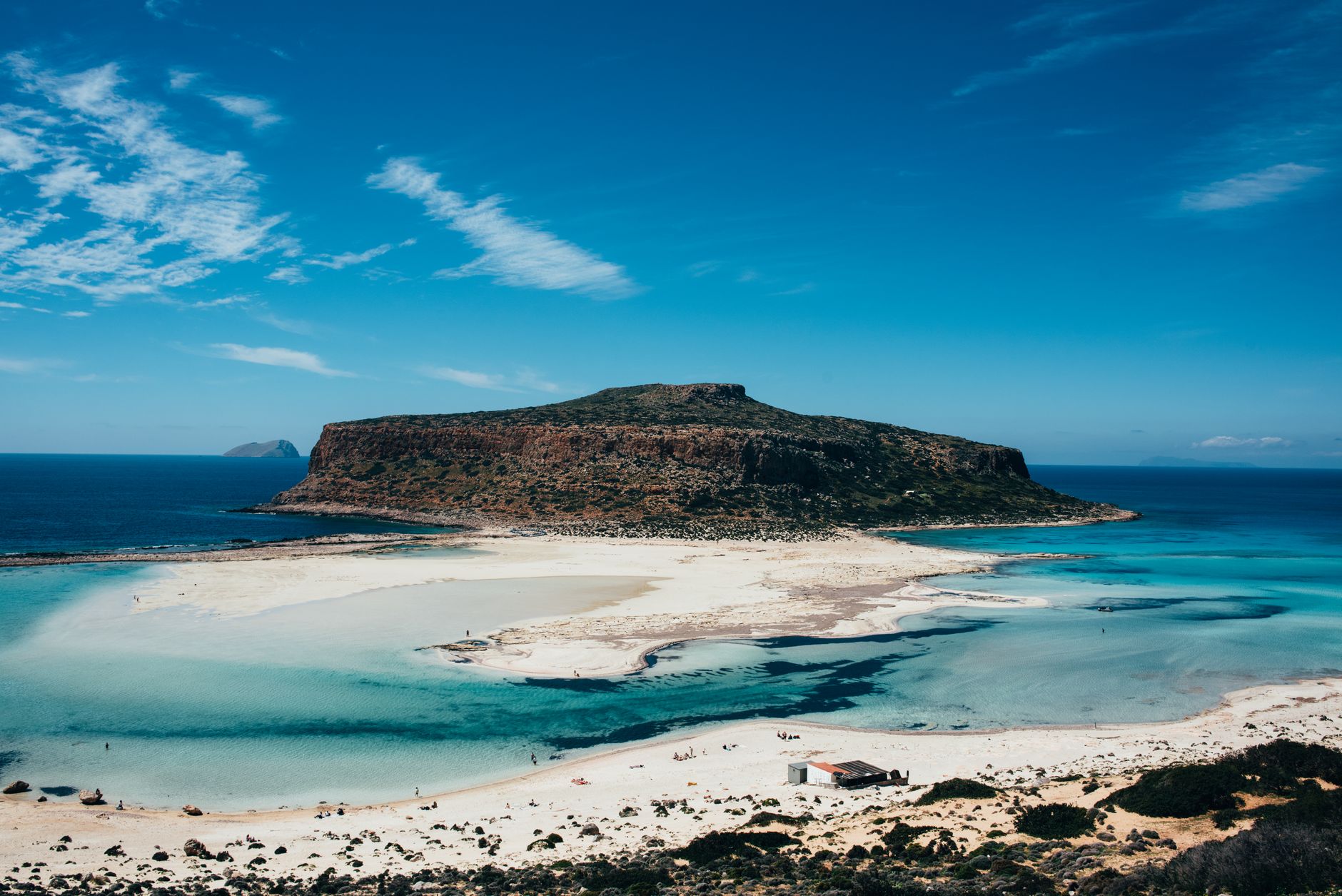
14. Balos Lagoon, Crete — The Postcard
Crete's most photographed spot: a shallow turquoise lagoon connected to the sea by a sandbar, with a Venetian fortress on the hill above. Access by boat from Kissamos or a rough dirt road + 20-min hike.
- Type: Sand + shallow lagoon
- Crowd level: Very high
- Access: Boat from Kissamos or 4WD + hike
15. Preveli Beach, Crete — The Palm Forest River
A palm-lined river flows through a gorge directly into the sea, creating a unique freshwater-meets-saltwater beach. The setting is cinematic.
- Type: Sand + river mouth
- Crowd level: Medium
- Access: South coast, hike down from parking
16. Vai Beach, Crete — Europe's Largest Palm Forest
The largest natural palm forest in Europe backs a wide sandy beach. The palms are endemic Phoenix theophrasti — found nowhere else at this scale.
- Type: Golden sand + palm forest
- Crowd level: Medium-high
- Access: Northeast Crete
17. Seitan Limania, Crete — The Hidden Fjord
A tiny, dramatic cove wedged between steep rocky walls. The descent is steep (rope-assisted in parts), but the setting is worth it.
- Type: Small sandy cove
- Crowd level: Medium
- Access: 20 km east of Chania + steep hike
18. Falassarna Beach, Crete — The Sunset Beach
5 km of wide sandy beach on Crete's west coast. Famous for its spectacular sunsets — the only major Crete beach facing due west.
- Type: Wide golden sand
- Crowd level: Medium
- Access: Northwest Crete
Ionian Islands beaches
19. Navagio (Shipwreck Beach), Zakynthos — Greece's Most Iconic
The most photographed beach in Greece: a rusted smuggler's ship on white sand, enclosed by 200-metre vertical cliffs, and impossibly blue water. Only accessible by boat.
- Type: White pebble/sand
- Crowd level: Very high (boat trips)
- Access: Boat from Porto Vromi or Agios Nikolaos
20. Porto Katsiki, Lefkada — The Cliff-Backed Turquoise
80 steps down a cliff face to a beach of jaw-dropping turquoise. The cliff wall turns golden at sunset. Consistently ranked among Greece's top 3 beaches.
- Type: White pebble
- Crowd level: High
- Access: South tip of Lefkada, stairs
21. Myrtos Beach, Kefalonia — The Grand Amphitheatre
A sweeping crescent of white pebbles framed by towering green cliffs. Captain Corelli's Mandolin was filmed here. The scale is genuinely hard to photograph — the cliffs dwarf everyone on the sand.
- Type: White pebble
- Crowd level: Medium-high
- Access: Northwest Kefalonia
22. Antipaxos Beaches (Voutoumi & Vrika), Antipaxos
Tiny Antipaxos (3 km²) has two beaches with Caribbean-clear water. Day trip from Paxos or Corfu — bring everything you need; facilities are minimal.
- Type: Fine sand + crystal water
- Crowd level: Medium
- Access: Boat from Paxos (30 min)
23. Egremni Beach, Lefkada — The Wild Coast
Before the 2015 earthquake destroyed the access stairs, Egremni was arguably Greece's most beautiful beach. Now accessible only by boat, it's quieter and even more dramatic.
- Type: White pebble
- Crowd level: Low (boat access)
- Access: Boat from Vassiliki
Dodecanese beaches
24. Tsambika Beach, Rhodes — The Golden Bay
A long, wide golden sand beach with shallow, warm water — arguably the best swimming beach in the Dodecanese. Family-friendly with organised facilities.
- Type: Golden sand
- Crowd level: Medium-high
- Access: East coast of Rhodes
25. St. Paul's Bay, Lindos, Rhodes
A heart-shaped cove below the Acropolis of Lindos. The setting — ancient ruins, chapel, and turquoise bay — is uniquely Rhodian.
- Type: Sandy cove
- Crowd level: High
- Access: Lindos, south Rhodes
26. Agios Pavlos Beach, Amorgos — The Big Blue
The beach from the Luc Besson film The Big Blue. Turquoise, sheltered, and overlooked by the Hozoviotissa monastery clinging to a 300-metre cliff.
- Type: Sand + pebble
- Crowd level: Low-medium
- Access: East coast of Amorgos
27. Kamari Beach, Kos — The Volcanic Sand
A long beach of black volcanic sand on the south coast of Kos, with views across to Nisyros volcano. Organised with sunbeds and tavernas.
- Type: Dark volcanic sand
- Crowd level: Medium
- Access: South coast of Kos
Sporades & Mainland beaches
28. Koukounaries Beach, Skiathos — The Pine-Backed Paradise
Dense Aleppo pine forest meets a crescent of golden sand and transparent water. It's the most famous Sporades beach and one of the best in the Mediterranean.
- Type: Golden sand + pine forest
- Crowd level: High
- Access: West end of Skiathos
29. Lalaria Beach, Skiathos — The Marble Pebbles
Smooth white marble pebbles, a natural rock arch, and a sea cave. Only accessible by boat — the approach through the arch is cinematic.
- Type: White marble pebble
- Crowd level: Medium
- Access: Boat from Skiathos Town
30. Simos Beach, Elafonisos — The Peloponnese Secret
A short ferry from the Peloponnese mainland, Elafonisos is a tiny island with one jaw-dropping double beach. Caribbean-clear water, fine white sand, and cedar-backed dunes.
- Type: White sand + dunes
- Crowd level: Medium-high (August)
- Access: 5-min ferry from Pounta, Peloponnese
FAQs
What is the number 1 beach in Greece? Sarakiniko on Milos is consistently ranked as Greece's most unique beach due to its lunar volcanic landscape. For traditional sand beaches, Elafonissi (Crete) and Navagio (Zakynthos) tie for the most iconic.
Which Greek island has the best beaches? Milos has the most diverse and dramatic beaches (70+ beaches including volcanic moonscapes, coloured sands, and pirate caves). Naxos has the longest continuous sand beaches. Crete has the highest total number of beaches.
Are Greek beaches free? Yes — all Greek beaches are public by law. You can lay your towel on any beach for free. Sunbed rental (where available) costs €5–€15/pair. Beach clubs on Mykonos and Santorini charge €30–€200 for premium setups.
People Also Ask
What is the prettiest island in Greece? Santorini is the most visually dramatic (caldera views), but Milos has the most beautiful coastline. Folegandros and Sifnos are considered the prettiest traditional Cycladic islands, with whitewashed villages and unspoiled charm.
Are Greek beaches better than Italian beaches? Greek beaches generally offer clearer water, less crowding, and more variety (volcanic, pink sand, lagoons) than Italian beaches. Italy has better-organised beach clubs (lidi) and more coastal towns. For pure beach beauty, Greece wins — especially the Cyclades and western Crete.
What is the best month for Greek beaches? Late June and September offer the best combination of warm sea temperature (24–26°C), calm winds, and manageable crowds. July–August is hottest (28–30°C sea) but the Meltemi wind can make north-facing beaches choppy and uncomfortable.
Published by the Discover Cyclades editorial team. Last updated September 2026. Explore the Milos and Naxos island guides, compare direct ferry routes, or take the island quiz.
Build the practical trip
Plan your Milos dates
Put the crossing, stay and local transport in place before the popular dates disappear.
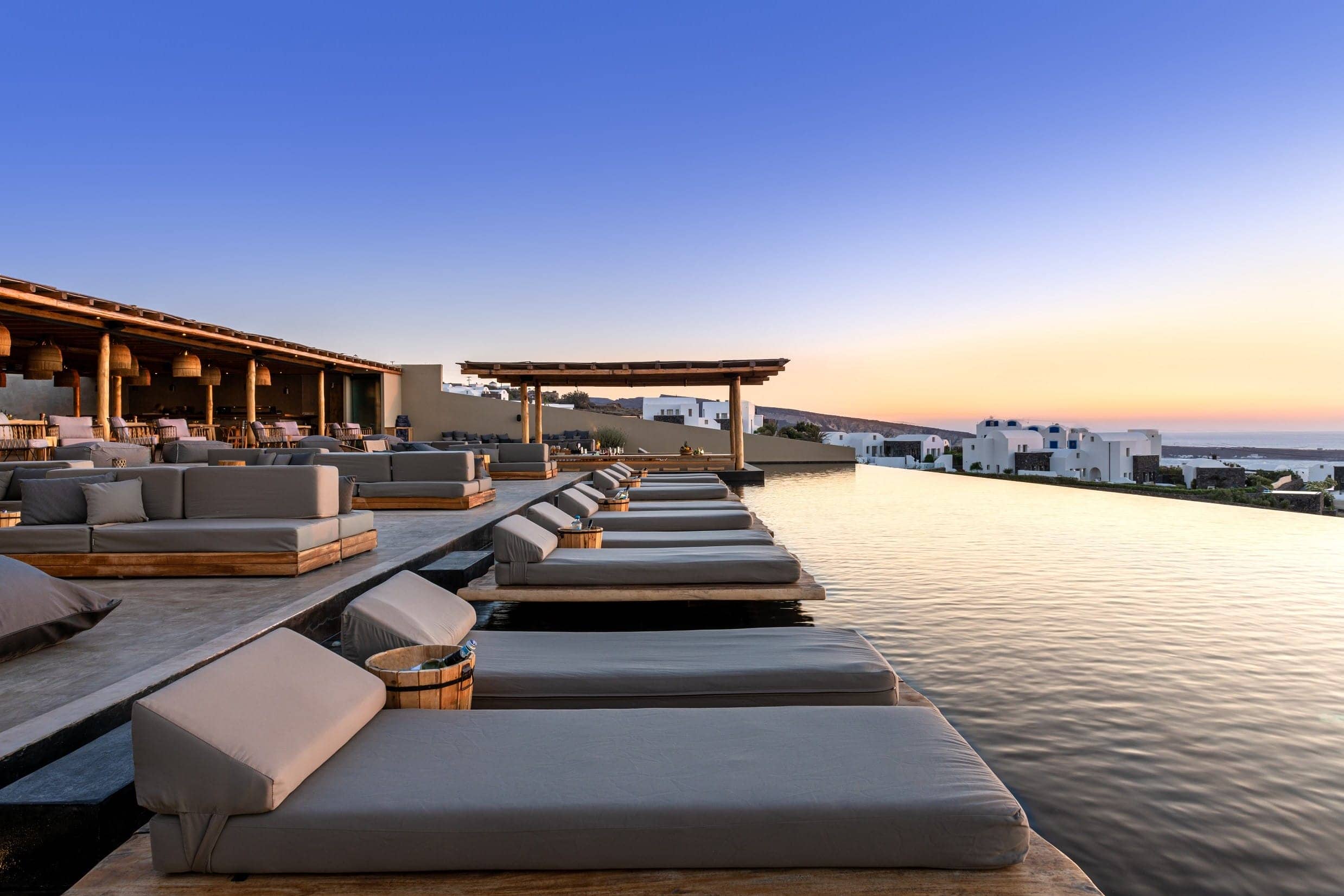
Athina Luxury Suites
Caldera-view suites in Fira with an infinity pool and fine dining.
Topics covered
Part of the Discover Cyclades editorial team, locals who ferry, hike, eat and write about these islands every season.