Sponsorizzato da Booking.com

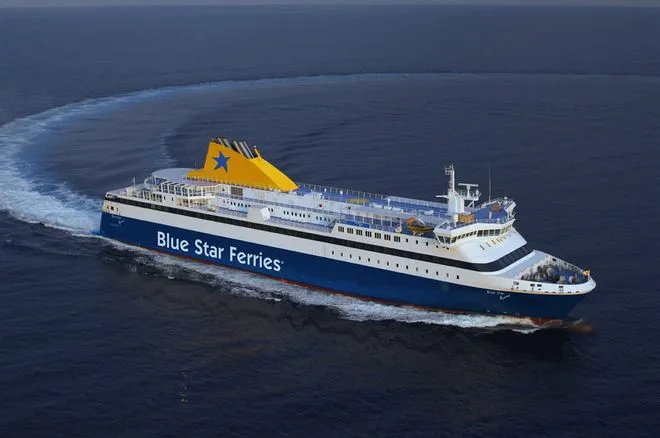
Book the sailing, seating and conditions you need, then complete its boarding process. The important checks are the exact departure and arrival ports, travel date, every passenger, any vehicle or pet, the full price and what happens if plans change. A payment receipt or booking email is not automatically the document used to board.
Start a search on our Ferry Tickets page, use the complete Cyclades ferry guide for ports and journey planning, and keep this booking checklist beside the offer you are considering. Published route examples help you research a trip; the returned sailing and its terms are what you need to review before paying.
Table of Contents

- Booking Methods Overview
- Online Booking Platforms
- Step-by-Step Booking Process
- Booking Tips and Decisions
- Common Mistakes to Avoid
- Booking for Different Seasons
- Group and Special Bookings
- Cancellation and Changes
- Frequently Asked Questions
Booking Methods Overview
Choose where to book by comparing the sailing, full charge and the help you need. The issuing agency or platform and the ferry operator have different roles. Keep both names with your booking so you know where to request a ticket change and where to check embarkation instructions.
Online Booking
An online search lets you compare returned sailings before buying. Enter the complete party and vehicle details rather than comparing the first displayed passenger fare. Review the final total, optional extras and ticket-delivery method. A payment attempt is not proof of a successful reservation; wait for confirmation and check its details.
Travel Agencies
An authorised agency can help discuss a group, cabin combination or complicated itinerary. Ask which tickets it will issue, how you will receive them, what service charges apply and how later changes are handled. Assistance with several journeys does not by itself turn separate tickets into a protected connection.
At the Port
A carrier's authorised port office may sell tickets or provide collection and changes. Establish its location, opening and sales deadline before relying on it. The particular sailing, seat or vehicle space may be unavailable, regardless of season. Buying at the port does not automatically mean a higher or lower fare than an online offer.
Online Booking Platforms
Compare like-for-like offers: the same operator, sailing, passengers, vehicle, seating and fare conditions. An apparent price difference may involve a different category or added service. Keep a note of who issues the ticket and whose instructions explain a change, cancellation or boarding document.
Our ferry search partner
The booking service behind our ferry search provides instructions for each journey's boarding method. Its confirmation can link to an e-ticket, online check-in or ticket collection, depending on the operator. Read that part for every leg. Review the full total and any optional support or flexibility product rather than assuming the price and conditions match a direct carrier booking.
Direct Ferries
Direct Ferries is another option for comparing and booking returned sailings. Check the selected ticket and agency conditions before payment. Its published cancellation guidance distinguishes the carrier's refundable amount from agency fees and the channel used to cancel. Compare the actual offer without treating the platform name as a guarantee of the cheapest fare or a particular support outcome.
Discover Cyclades
Our ferry hub starts a route-and-date search, with passengers, vehicles and pets where relevant. Use the returned results to compare sailings, then follow the booking link and review the provider's offer. The hub's dated timetable samples are research context, not live availability or a reservation. Vessel tracking is separate from booking confirmation and boarding instructions.
Start here: Book Ferry Tickets.
Company Websites
The operator's own site is useful for fare conditions, check-in and boarding requirements. The carriers discussed in our wider guide are Blue Star Ferries, SeaJets, Golden Star Ferries, Fast Ferries and Hellenic Seaways. Consult the relevant carrier for the sailing you choose; an operator's general route list does not mean it sells that journey on every date. Direct booking is not automatically cheaper than an agency offer with different terms.
Step-by-Step Booking Process
Follow the same sequence for each journey, including the return. For an island-hopping trip, record each actual port, date and operator before paying for accommodation or another transport connection around it.
Step 1: Research Routes
Search the departure port, arrival port and date. Athens is not one port: Piraeus, Rafina and Lavrio are separate choices. On the islands, Tourlos/New Port differs from Chora's Old Port on Mykonos, and Santorini's passenger-ferry port is Athinios, separate from the Old Port and cable-car outing. Use the port named in the selected sailing.
Read our complete ferry guide and island guides to plan the wider journey. For a connection via Paros, Mykonos or Naxos, establish the actual onward service and time between bookings; no island is a guaranteed hub for every combination.
Step 2: Choose Ferry Type
Compare the vessel actually offered, scheduled duration, stops, seats, outside-deck access and any cabins. High-speed does not mean passenger-only: some vessels accept vehicles, while others do not. The selected service must accept your vehicle category and have space. A conventional-ferry label does not guarantee particular facilities, comfort in rough conditions or an unchanged departure.
Step 3: Select Dates
Look at the actual outbound and return results together. If a sailing is absent, establish whether the timetable has been released, the route operates on that date or the category you want is unavailable. You may need to try another day or contact the operator; an empty search alone does not explain which issue applies. Include the cost of an extra night when comparing alternatives.
Step 4: Book Tickets
Enter the required passenger details accurately and retain the contact email and phone used for the booking. Choose the actual seat or cabin category; an open lounge place, numbered seat and private or shared cabin are different products. Apply only discounts you can support with the required documents.
For a vehicle, give the requested type, dimensions and fuel information. Check the carrier's loading and fuel or battery conditions, plus a rental company's ferry permission if applicable. A passenger ticket does not reserve a vehicle space. Before paying, read the complete total, the methods actually offered and the cancellation terms for that fare. Do not use a generic car-ferry price range as a quote.
Step 5: Receive Confirmation
Check the confirmation against what you intended to buy: every leg, port, date, time, passenger, seat or cabin, vehicle and pet. Save the booking reference and the operator's reservation or access codes separately from any receipt. If the result is unclear or the email is missing, use the booking provider's support process before placing a duplicate order.
Read the boarding section. Complete online check-in when available, download the accepted boarding pass or collect paper tickets if instructed. Find the collection point and allow time for it. Keep the documents accessible without relying on a fresh mobile connection, and follow any printing requirement for the selected carrier.
Booking Tips and Decisions
A useful comparison includes the whole trip, not just the first displayed fare. Keep the same passengers, vehicle and seat needs across searches, and record the change or cancellation terms alongside the total.
Book Early
Research once your dates and essential requirements are clear, particularly for a specific departure, cabin or vehicle space. Check when the operator releases the schedule. There is no dependable two- or three-week deadline that guarantees availability or the lowest price across all Cyclades routes. Decide whether the offered fare's flexibility fits how certain your plans are.
Flexible Dates
Compare nearby dates if your trip allows it. A different departure may change journey time, accommodation nights, transfers or the next island connection. Work out those effects before choosing a lower fare. Flexibility gives you alternatives to examine; it does not guarantee a saving or a later right to change the ticket for free.
Compare Prices
Make a short comparison row for each offer: operator and sailing, party and vehicle, seating, complete payable total, optional services and change conditions. Check which costs or restrictions differ. An early-booking or group promotion only helps if your particular ticket qualifies; do not assume all passengers, dates or categories receive it.
Check Cancellation Policy
Read the rules for a change requested by you before payment, including any deadline, deductions, fare difference or agency fee. Distinguish them from the carrier cancelling a sailing. If considering insurance or an optional flexibility service, read its actual cover, exclusions and claim process; buying it does not mean every disrupted connection or change of mind is covered.
Have Backup Plans
Identify what you could change if the selected journey is disrupted: another sailing or port, a later hotel check-in or an additional night. Establish each booking's conditions separately. Keep the carrier's and issuer's contacts available; an alternative route on a map is not a confirmed seat, accepted replacement ticket or promise to cover extra costs.
Common Mistakes to Avoid
The preventable errors are usually in the details: the wrong port, incomplete passenger or vehicle information, an unsuitable fare, or a missing boarding step. Review the booking as a whole before paying and again when the travel documents arrive.
Waiting Too Long to Book
Do not postpone a journey that needs a particular cabin, vehicle category or departure just because a general guide says tickets can be bought on arrival. Check the actual release and availability. If your preferred service is unavailable, revise the itinerary using confirmed options rather than relying on a fixed advance-booking rule.
Not Checking Cancellation Policy
Find out what a voluntary cancellation would return and how to request it through the issuer. A refundable carrier fare and a separately charged agency or optional service may have different conditions. Save the terms offered at purchase so a later decision is based on that ticket rather than a general internet summary.
Not Having Backup Plans
A ferry connection and a later flight may be separate reservations. Check how a delay would affect both, including transfer time and the flight's check-in deadline. Where the consequences of missing the onward journey are significant, consider an overnight gap as a planning choice rather than assuming a same-day connection is protected.
Forgetting to Bring Tickets
Know which document is accepted for each leg: an e-ticket, a pass obtained through online check-in or a paper ticket collected from an office. Keep the required identity and discount documents with it. A screenshot of a payment receipt or a reservation number alone should not be assumed to replace the boarding document.
Arriving Late to Port
Follow the operator's passenger check-in, boarding and vehicle-loading instructions for that sailing. Current carrier instructions differ, so a generic forty-five-minute arrival rule can be insufficient. Add time for the journey to the correct port, ticket collection, the gate and any assistance arranged. A tracker showing a delay does not waive the boarding deadline.
Not Checking Departure Gate
Use the current port information and carrier instructions to find the correct embarkation point. Check local boards and ask authorised staff if it is unclear. A booking's island name, a general map pin or a vessel's position offshore does not establish where to queue. Follow any updated port or gate directions for the sailing.
Booking for Different Seasons
Use the season as a reason to investigate the programme, not as proof of a frequency, fare or booking deadline. Check the actual dates in both directions and any services you need at each end.
Peak Season: July and August
Compare released departures early enough to consider alternatives if your preferred seat, cabin or vehicle category is unavailable. A busy travel period does not establish that a specific sailing is sold out, and booking a fixed number of weeks ahead cannot guarantee it will be available. Arrange the rest of the trip around the ticket you actually obtain.
Shoulder Season: May, June, September and October
Confirm which routes and days operate for your week, then compare the whole journey. A seasonal service may not follow the same programme throughout these months. Do not build a group trip around assumed daily ferries, uniformly good weather or automatic accommodation savings.
Low Season: November to April
Start with the dated timetable and the return journey rather than assuming port purchase or the summer network will work. Check release dates with the carrier if necessary. Allow for the possibility of disruption in the onward plan, but do not treat every winter journey as cancelled or every seat as available.
Group and Special Bookings
List the party's requirements before selecting the fare. Besides passengers, that can include cabin arrangements, vehicles, pets, assistance or proof of a discount. An enquiry needs to become an accepted arrangement before you rely on it.
Group Bookings
Compare the actual party and any offer the agency or carrier provides. Establish whether a group fare has different payment, name-submission, amendment or cancellation rules. Ask about the seating or cabin allocation if travelling together matters; buying several tickets does not automatically put everyone in adjoining seats or one cabin.
Assistance, Children and Pets
For ship travel covered by EU reduced-mobility guidance, notify the carrier or ticket seller of assistance needs at least 48 hours before travel. Reasonable efforts are required without that notice, but safety or infrastructure conditions can restrict boarding arrangements. Discuss the actual port approach, embarkation, equipment and onboard facilities; do not infer step-free access from the vessel's age.
Enter children in the correct ticket category and check the age rule and documents for that carrier. For pets, confirm registration, required documents and accepted accommodation or reservation. A standard passenger seat, ordinary cabin or parked vehicle should not be assumed to be an accepted place for a pet.
Cancellation and Changes
Keep voluntary changes, a carrier's cancelled sailing and any insurance or optional flexibility product separate. The ticket issuer explains its process, while the carrier's conditions and applicable passenger rights determine the underlying journey arrangements.
Cancellation Policies
For services covered by EU ship-passenger rights, a cancelled departure or a departure delay of more than 90 minutes gives a choice between reimbursement and rerouting under the applicable conditions. Assistance and arrival-delay compensation have separate rules, including severe-weather exceptions. Keep the notice and ask the carrier or issuer how to proceed; do not assume an automatic replacement seat, hotel payment or cover for another reservation.
Making Changes
Use the issuer's stated process and deadline for the change you want. Establish the new sailing, seat, vehicle category, fare difference and any fee before accepting. A submitted request is not a completed change: retain the new confirmation and follow its boarding instructions. If another office reissues the ticket, keep its paperwork and establish who can assist with any subsequent request.
Frequently Asked Questions
Q1: How far in advance should I book ferry tickets?
A: Research when your dates are clear and check when the operator releases the timetable. A particular departure, cabin or vehicle space may need an early decision, but no fixed two- or three-week window guarantees availability or the lowest fare. Check the actual sailing and its change terms before buying.
Q2: Can I book ferry tickets online?
A: Yes. You can start on our Ferry Tickets page, compare booking platforms such as Direct Ferries, or use the operator's own site. Review the selected sailing, full party, seating, vehicle details, complete price and issuer's terms. Wait for a successful confirmation and follow the boarding instructions for each leg.
Q3: Do I need to print my ferry tickets?
A: Follow the selected operator's instructions. Your journey may use an e-ticket, a boarding pass obtained through online check-in or a paper ticket collected before departure. Check whether printing is required and keep the accepted document accessible. The booking email or a payment receipt alone is not automatically a boarding pass.
Q4: Can I change or cancel my ferry tickets?
A: It depends on the ticket and the issuer's process, deadline and fees. Check these before paying and distinguish a voluntary change from a sailing cancelled by the carrier. A change is complete when you receive the accepted new confirmation; replacement places, any fare difference and optional insurance or flexibility cover have their own conditions.
Q5: What happens if my ferry is canceled?
A: For a service covered by EU ship-passenger rights, the carrier must offer reimbursement or rerouting under the applicable conditions. Contact the carrier or issuer, keep the cancellation notice and confirm the accepted next arrangement. Assistance and compensation have separate conditions, including severe-weather limits. Check separately booked accommodation, flights and insurance on their own terms.
Q6: Can I book ferry tickets at the port?
A: An authorised carrier office or agency may sell tickets, but check its location, opening and sales deadline. The sailing, seat, cabin or vehicle category you want may be unavailable in any season. Do not assume buying at the port will be possible, cheaper or more expensive for your particular journey.
Q7: Do I need to bring ID for ferry travel?
A: Bring the identity and travel documents required by the carrier and any proof supporting a discounted ticket. Enter passenger information accurately when booking, then check it against the confirmation. If travelling with children or on an international leg, establish the specific document requirements before departure.
Q8: Can I bring luggage on ferries?
A: Check the chosen carrier's baggage allowance, storage instructions and any charge or special handling relevant to your bags. Keep essential documents and valuables accessible and use the storage areas directed by the crew. Do not assume an unlimited allowance or continued access to a vehicle deck during the crossing.
Q9: How do I know which terminal/gate my ferry departs from?
A: Read the current carrier and port instructions for the selected sailing, then check local boards or ask authorised staff. Gates or port arrangements can change. Allow time to reach the actual embarkation point and follow any updates; a general map pin or live vessel position is not a boarding-gate instruction.
Q10: Can I book ferry tickets for multiple islands at once?
A: Some booking platforms let you select several journeys, but review every date, direction, port and ticket separately. A multi-leg purchase does not automatically create protected connections. Use our complete ferry guide for planning, then check each service, transfer and onward booking before payment.
Q11: Are there discounts for children or seniors?
A: Check the actual carrier, route, fare and passenger category. Eligibility, age bands and required proof differ, and a discount should not be assumed for every child or senior. Select only an offer for which the passenger qualifies, then review the complete total and any separate agency or optional-service charge.
Q12: Can I book a cabin on ferries?
A: Only if a suitable cabin is offered and available on the selected vessel and sailing. Establish its occupancy, private or shared use, bed arrangement and any access or pet requirements before booking. Journey duration alone does not establish that a cabin exists or is included in the fare.
Ready to compare sailings? Start on our Ferry Tickets page, read the complete ferry guide, and use our island guides for the places at each end. Our AI Trip Planner can help organise ideas before you confirm each journey and its terms.
Primary Sources and Booking Checks
Public guidance and carrier conditions checked on 3 November 2026. These documents explain processes and conditions; they do not confirm a particular sailing, current price, cabin, vehicle space or completed booking.
- The booking partner's booking information, boarding and ticket collection, changes and cancellations and terms distinguish the stages and the issuer's role.
- Direct Ferries publishes cancellation-fee guidance. Use the conditions offered with your actual ticket and cancellation channel.
- Carrier conditions: Blue Star Ferries, Hellenic Seaways, Fast Ferries and Golden Star Ferries.
- SeaJets' first-party vehicle guidance distinguishes vessels with vehicle transport. Check the selected service and category.
- EU guidance explains ship-passenger rights and travel with reduced mobility, including their scope and conditions.
- Physical port identities: the Santorini Port Fund Athinios page and Mykonos Port Fund. Use the actual sailing's port and any updated instructions.
Organizza il viaggio
Pianifica le date a Santorini
Organizza traghetto, soggiorno e trasporti locali prima che le date più richieste si esauriscano.

Athina Luxury Suites
Suite con vista sulla caldera a Fira, con piscina a sfioro e cucina raffinata.
Parte del team editoriale di Discover Cyclades: gente del posto che traghetta, fa escursioni, mangia e scrive su queste isole ogni stagione.