
Patrocinado por Booking.com


How Weather Shapes an Island Trip

Choose a Cyclades travel month around the holiday you want: towns and villages, beach time, walking, a sailing outing or a route between islands. Air temperature, sea conditions and the transport you need are separate parts of that choice. A warm-looking photograph cannot tell you whether a boat trip will operate.
HNMS describes Greece's Mediterranean climate, with a broadly wetter, cooler winter and hotter, drier summer. GNTO's climate guide also stresses differences caused by geography and elevation. Use that seasonal background to shortlist dates, then check the specific island, route and forecast.
Plan the journey and the base: compare ferry tickets and car rental. For accommodation enquiries, compare the locations of Athina Luxury Suites, Mykonos.Luxury or The ACE VIP, with dated offers and arrival arrangements for your particular week.
Cyclades Weather at a Glance

Read the seasonal summary with the station example below. It separates broad climate patterns from the daily conditions that determine a beach visit, walk or departure.
Best Weather Months
Compare May, June, September and October through your priorities. A town-and-village trip needs different conditions from a sailing or swimming holiday. For each possible week, price the transport and accommodation you would actually use and keep a workable alternative to an outdoor activity.
Hottest Months
July and August form the main summer-heat planning period. Allow for shade, breaks and a practical route back to your accommodation when organising a walk or sightseeing day. The monthly air figures below describe one Naxos station; daily peaks and other locations can differ.
Warmest Sea
A Bank of Greece climate assessment, section 1.10, describes Aegean surface water as generally warmest in August and coolest in February, with a lag behind land air temperatures. This is seasonal background, not a temperature promise for a particular beach. Compare your dates using a sea forecast as well as the air forecast.
Windiest
Summer northerlies, known as meltemi or Etesians, deserve attention in an island-hopping or boat-based trip. Wind direction, strength and waves need a location-and-time check; a monthly average cannot establish the conditions along a whole ferry route.
Rainiest
HNMS places the wetter season broadly in the cooler part of the year. The Naxos example below has much larger published monthly rain amounts in winter than summer. Those amounts measure rainfall in millimetres, not the number of rainy days or the timing of a shower.
Comparing Travel Costs
Compare a complete May or late-September trip with your summer alternative: the same room type, cancellation terms, transport and activities. Include the journeys needed to reach the property and the services central to your stay. A lower room price is useful only when the complete trip fits your plans.
Month-by-Month Breakdown
Published station example: Naxos Town Hall. NOA's station page places the station at 19m and says reporting began in August 2010. It does not state an explicit data end date. These are its published monthly averages, read on 4 November 2026, rather than thirty-year climate normals or a forecast for every island.
Use the high and low columns as average air-temperature figures from the published station record; the station page lists historic record extremes separately. A rounded 0.0mm monthly mean is not a promise of a rain-free stay. The table contains no sea-temperature, sunshine-hour, rain-day or wind-speed series. Keep those variables separate when planning the actual day.
January
The published Naxos Town Hall figures for January are a mean high of 14.6°C, a mean low of 10.2°C and mean rainfall of 67.2mm. Build a January visit around a base you can reach and services you have confirmed. Plan a town walk or indoor visit with an alternative for a wet or windy day. For a late arrival, establish how you reach the property and obtain food; a summer accommodation description may not answer those winter questions.
February
For February, the Naxos Town Hall example gives a mean high of 15.4°C, a mean low of 10.8°C and mean rainfall of 46.2mm. February calls for a winter itinerary rather than a summer programme with fewer people. Fewer island changes can reduce the number of connections your holiday depends on. Check the return journey before committing to a remote base, and match footwear and layers to the actual walking route and forecast.
March
Naxos Town Hall’s published March averages are 16.5°C for the high, 11.7°C for the low and 36.8mm for rainfall. Use March for a trip whose main purpose can work without a swimming or boat day. If villages or a walk are central, check the route and return transport separately from the weather in the port town. Confirm the activities and accommodation you intend to use rather than relying on a fixed reopening percentage.
April
The April station example at Naxos Town Hall has a mean high of 19.6°C, a mean low of 14.1°C and mean rainfall of 13.4mm. For April, distinguish a beach visit from a plan to spend time swimming. An outdoor lunch, village outing and day on the water can need different clothing and arrangements. An Easter trip also needs the correct year's calendar and local opening or transport checks; a past holiday's weather does not predict the next one.
May
May’s published Naxos Town Hall figures are a mean high of 22.9°C, a mean low of 17.4°C and mean rainfall of 10.1mm. Compare May through the mix of activities you want and the services confirmed for your travel week. Keep a land-based option for a beach or boat day that does not fit the conditions. If considering Athina Luxury Suites, obtain the selected room's dated offer and terms rather than treating May as an automatic discount.
June
For June, Naxos Town Hall’s published record gives a mean high of 26.7°C, a mean low of 21.5°C and mean rainfall of 1.5mm. A June plan can combine town visits, beaches and an organised activity, provided their actual schedules and transport fit. Choose the accommodation base with those journeys in mind. Establish the meeting point and change terms of a boat outing before attaching a meal, transfer or onward booking to its return.
July
The July example at Naxos Town Hall has a mean high of 28.2°C, a mean low of 23.8°C and mean rainfall rounded to 0.0mm. For July, organise sightseeing and walking with breaks and a realistic return. Keep wind and wave checks in the plan even when the air forecast looks sunny. If a ferry connects to an expensive flight or event, consider the consequence of disruption before choosing the last possible connection.
August
Naxos Town Hall’s published August averages are a mean high of 28.0°C, a mean low of 24.2°C and mean rainfall of 0.5mm. Plan August around your actual party, not an assumption that every beach, business or sailing is operating. Check the start and finish points of water activities and the transport between them. For families or mixed interests, establish what non-participating companions can do while others join an activity.
September
September’s station figures at Naxos Town Hall give a mean high of 26.2°C, a mean low of 22.0°C and mean rainfall of 4.0mm. September is worth comparing with June for the holiday you want, using the specific travel week rather than a month-wide promise of calmer wind or fewer people. Confirm any late-season activity, boat or accommodation arrangement on which the trip depends. Keep the sea forecast separate from the temperature in town.
October
The published October example for Naxos Town Hall has a mean high of 22.3°C, a mean low of 18.5°C and mean rainfall of 25.6mm. For October, compare the beginning and end of your possible stay through confirmed connections and services. A town-based visit and a remote beach stay can need very different arrangements. Choose an itinerary that still works if a planned outdoor day changes; the month does not establish a final swimming date or a closing percentage.
November
For November, the Naxos Town Hall figures are a mean high of 19.3°C, a mean low of 15.3°C and mean rainfall of 33.3mm. Make the practical base the starting point for November: arrival, food, local journeys and return travel. Confirm the specific venue or indoor visit you would use on an unsettled day. A published summer timetable or excursion page is not evidence that the same programme runs during your week.
December
Naxos Town Hall’s published December averages are a mean high of 16.3°C, a mean low of 12.0°C and mean rainfall of 60.8mm. For December, decide whether the trip is mainly for a town stay, a family visit or a particular event, then verify that event and its dates. Do not assume a Christmas market takes place on every island or that every advertised hotel operates. Leave room to adapt local outings to the conditions.
Weather by Island (Key Differences)
Use an island name to locate the forecast, then narrow it to your accommodation, walking route, beach or departure point. A coastal station does not describe the conditions on higher ground or along the whole crossing to another island.
Santorini
Compare the location of the accommodation with the route to the activity or transport you need. A caldera terrace, a beach and an airport are different locations to check. Match the forecast to the places where you will spend time, and ask about the actual outdoor space attached to a room if that is important to the stay.
Mykonos
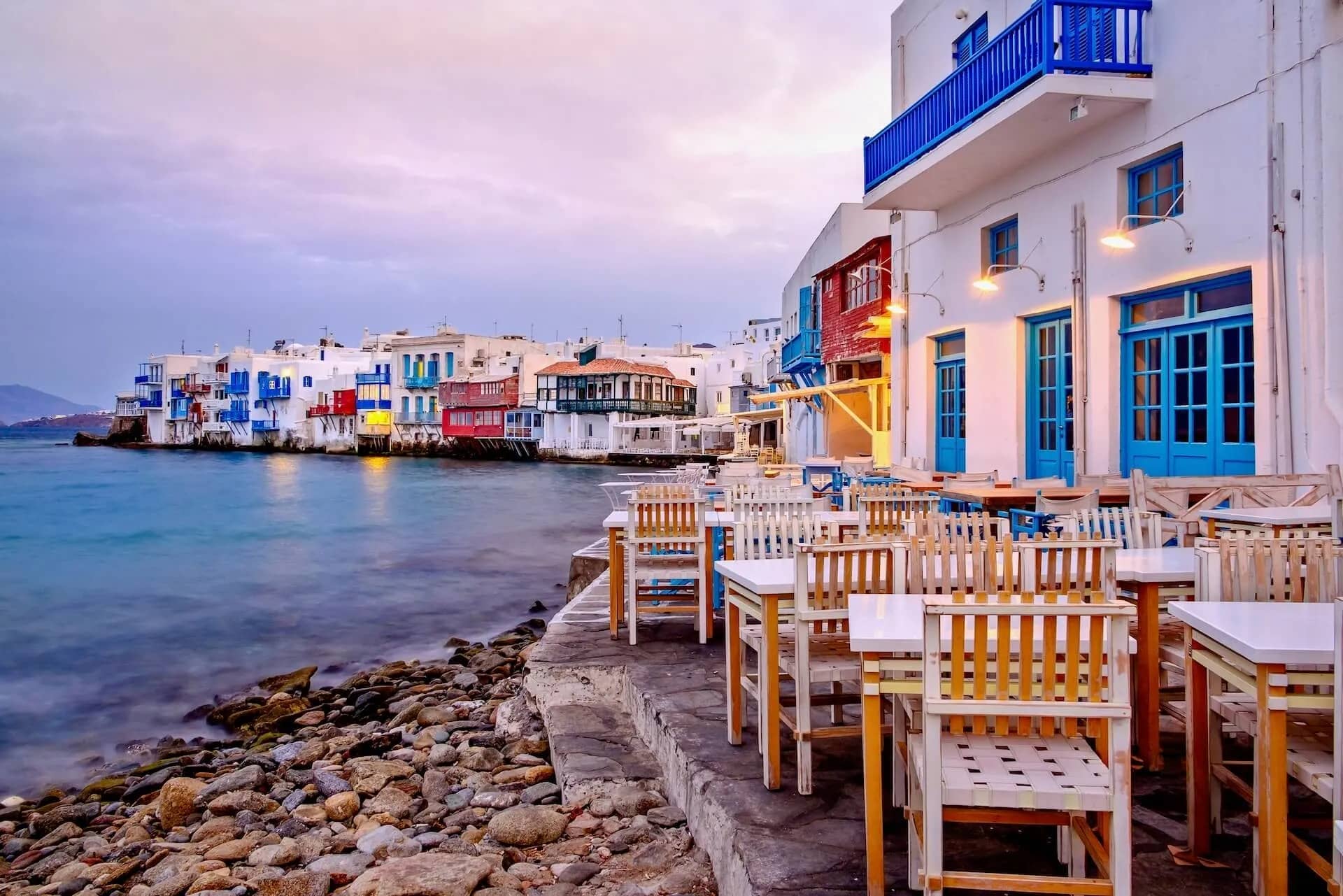
For Mykonos, check the actual beach, waterfront or activity location rather than assigning the island a universal wind ranking. If your day involves a transfer across the island, establish the meeting point and return arrangements. The conditions at one place do not automatically describe another coast.
Paros / Naxos
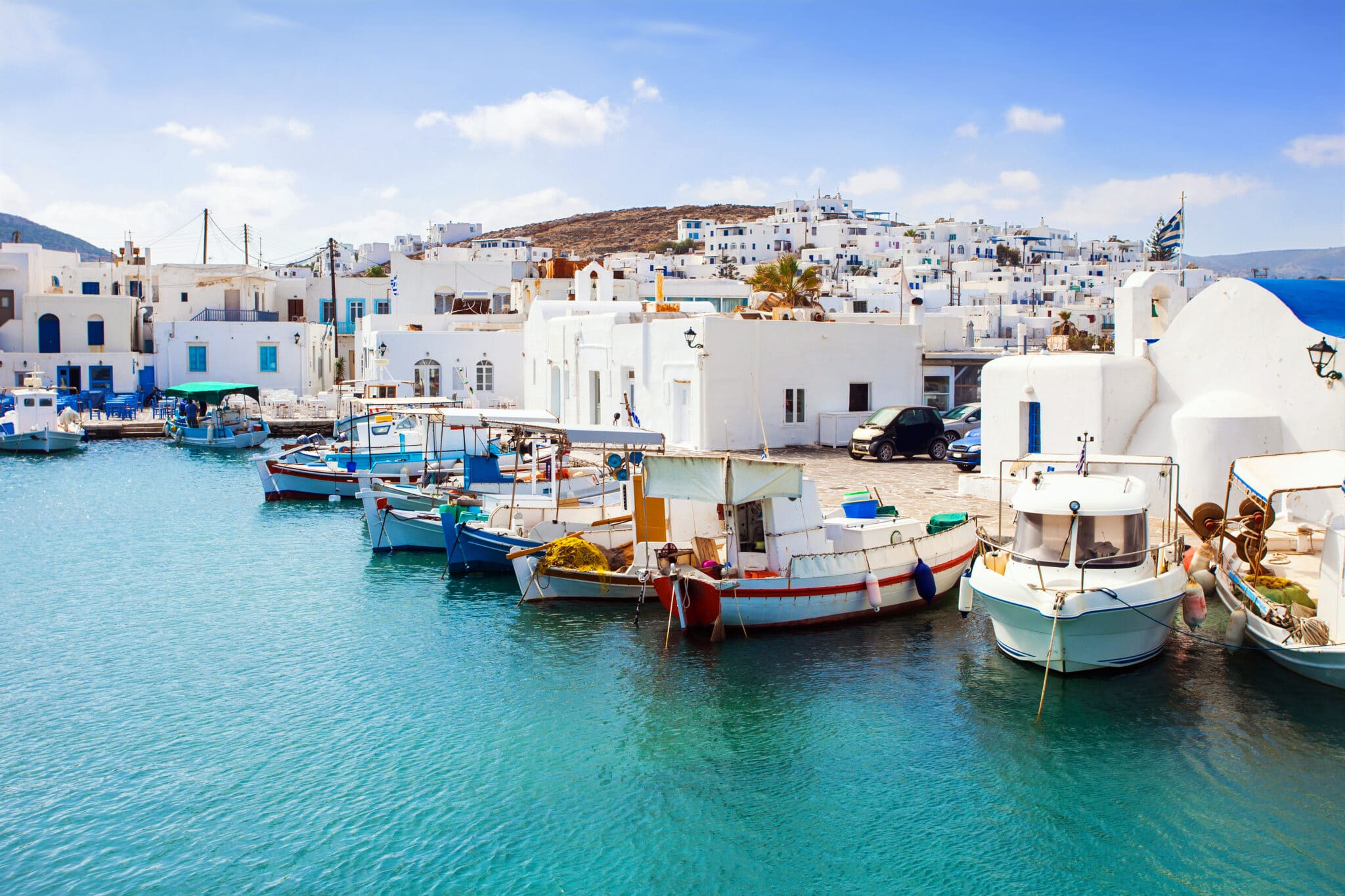
The Naxos station example is a low-elevation town measurement. For a mountain-village outing, obtain the forecast for that route and plan the journey back. On Paros, distinguish the accommodation base from the beach or boat starting point. Choose the relevant coastal or inland location when reading weather information for either island.
Milos / Sifnos
On Milos or Sifnos, identify the exact coast and departure point before deciding on a sea-based day. A south-facing location alone does not establish calm water, access or suitability for swimming. Read the local forecast and follow the responsible operator or authority's instructions for the actual outing.
Meltemi: The Meteorology of the Cyclades
Meltemi is the name commonly used for summer Etesian winds. The cited climate assessment describes them as predominantly northerly, with their greatest frequency and intensity in July–August, including the channel between Paros and Naxos. That climate pattern is not a daily wind forecast or a ferry-cancellation percentage.
For the actual trip, HCMR's POSEIDON guide distinguishes surface wind, waves, air temperature and sea-surface temperature. Select the relevant place and time, and read the units and whether the display uses UTC or local time.
- Onward travel: consider the effect of a delayed or cancelled crossing before booking a separate flight, event or non-refundable stay. An extra night is a planning choice, not a universal guarantee against disruption.
- Beaches and boats: use the local conditions and operating instructions; a leeward label is not a swimming or sailing assessment.
- Tickets and notices: if booking through a platform, keep the ticket and operator's contact details available. Check the carrier and port notices for the actual departure, rather than treating an app as a guarantee of operation.
- Change terms: compare what happens if the operator cancels with what happens if you choose not to travel. A flexible label needs the selected ticket's conditions.
Packing by Season
Pack for the activities and journeys you have chosen as well as the season. Check the forecast close to travel and any provider's activity-specific requirements; a general holiday packing list is not a complete equipment list for swimming, sailing or hiking.
May–June
Pack light clothing, a layer for a cooler or breezy stop, sun protection and footwear for the routes you will walk. If swimming or a boat activity is central, obtain the provider's equipment list and look at the sea conditions. A wetsuit recommendation needs the specific activity and person.
July–August
Include sun-protective clothing, a hat, appropriate sunscreen, water for outings and footwear that fits the terrain. Plan how to carry what you need and where to take breaks. Swimwear alone is not the equipment for a water-sports lesson or a sailing trip.
September–October
Bring a mixture that works for a warm day and a change in conditions, including a light layer and suitable footwear. Check any boat, walking or swimming plan for the actual travel week. There is no fixed first-half-of-the-month cutoff that determines which clothes or equipment you need.
November–April
Prioritise layers, a weather-resistant outer layer and footwear suited to the walking and transport you expect. For higher-ground or winter-road journeys, check local notices before departure. Confirm practical property details such as arrival arrangements and the facilities relevant to your stay.
Frequently Asked Questions
These answers distinguish seasonal background, the published Naxos station example and the conditions of a particular day.
Can I swim in May?
Plan May beach time with a land-based alternative, and make the decision about entering the water using local conditions and guidance. Air temperature and swimming strength do not establish water comfort or suitability. Check the sea forecast, entry and exit, wind and waves for the actual location and activity.
When is the sea warmest?
August is the broad seasonal high described in the cited Aegean marine-climate assessment. It is useful background for comparing summer with spring, but it does not establish a fixed temperature at every beach. For your dates, use the sea-surface-temperature forecast together with local conditions and your own requirements.
Worst weather month?
There is no single worst month for every kind of trip. A winter visit built around a town needs different arrangements from a beach-first holiday. Use the seasonal summary to choose the style of visit, then compare the station data, actual connections and services for the dates you can travel.
Is April warm enough for beach days?
A beach walk or time sitting outside is a different plan from an extended swim. For an April visit, use the local air forecast for the day and a separate sea forecast before choosing a water activity. Keep another outing available instead of using one temperature threshold to decide the whole holiday.
Does it rain in summer?
Rain can occur during the generally drier summer season. HNMS includes occasional showers or storms in its climate explanation. A near-zero average in the Naxos table does not promise a dry travel week or tell you the number of rain days. Check the current forecast for a weather-dependent outing.
When does meltemi start?
Treat meltemi as a summer pattern, with July–August a climatic peak, rather than assigning it a guaranteed starting or finishing day. Check wind and waves for your actual crossing, beach or activity. A September date alone does not establish that the wind has stopped.
Can meltemi cancel flights?
Check the airline and airport's actual operating information for your flight. A wind forecast or a cancelled ferry is not enough to predict the flight's status, and there is no verified percentage here. If flying depends on a separate ferry connection, plan that connection's disruption risk as part of the booking.
Best month for photography?
Choose the locations, time of day and subjects first, then compare the weather you are willing to work with. May or October can be candidates for a town-and-landscape itinerary, but dramatic clouds, a particular sunset or soft light are not guaranteed by the month. Check access and your return transport as well as the forecast.
Does it snow?
Yes. The Regional Unit of Naxos's advisory dated 23 January 2022 described snow on the central and mountain road network. That historical example is not a frequency estimate or a current warning. For a winter journey, check the actual route, forecast and road notices.
Is it humid?
Humidity varies with place and conditions. HNMS climatic data lists it as a separate station parameter; choose the relevant station and understand the period of the data you are reading. For a walk or accommodation stay, also consider the local conditions and the arrangements that matter to your party.
Do ferries run in winter?
Check the winter route and date before choosing the accommodation or onward journey. A summer fast-ferry timetable does not establish a winter departure, and a carrier name alone does not prove daily service. Build an island-hopping trip around the connections you can confirm and read the selected ticket's change terms.
What is the summer UV index?
NOA's UV guide says Greek summer midday values can reach 10 or 11; this is a possible high value, not a daily Cyclades forecast. Select the relevant region, date and time on the UV map, and plan sun protection and time outside accordingly. The breeze is not a UV measurement.
How predictable is sea temperature?
Seasonality can help narrow travel dates, while the actual sea conditions need their own location-and-time check. Use a sea-surface-temperature forecast and local guidance rather than repeating one temperature every year. A monthly air average is not a sea-temperature observation or an assessment of a swimming spot.
How should I plan for Greek Easter weather?
Greek Easter fell on 12 April 2026, the historical date discussed in the original guide. That calendar date cannot establish another year's weather. For a future Easter trip, confirm the correct holiday dates, services and travel connections, then use the forecast as the visit approaches.
Which month should I consider for a wedding?
Compare June and September as possible dates against the venue's actual location and your guests' travel plans. Agree an indoor or weather-change arrangement and understand the contract before paying. A climatic average cannot promise calm wind, dry weather or a particular sunset for an outdoor ceremony.
Does elevation matter?
Yes. GNTO highlights cooler conditions in mountainous areas as part of Greece's geographical climate variation. A low-elevation coastal station does not describe a higher village or walking route. Check the destination's forecast and plan clothing and transport for the place you will actually visit.
Is evening cool in summer?
Bring a layer suited to the evening setting, especially if you will remain outside or travel by boat. Use the local evening forecast and the activity's requirements to decide what to carry. Think about the journey back as well as the temperature at the start of the outing.
Hurricanes and typhoons: what should travellers know?
Use official severe-weather warnings when planning the trip, rather than relying on the label “hurricane” or “typhoon”. NOA's explanation of Ianos, published in September 2020, describes a Mediterranean cyclone with hybrid tropical and extratropical characteristics. It is a historical example, not a forecast or a current frequency estimate for the Cyclades.
Choosing Dates and Making Bookings
Choose the month through the trip it can support, then connect the climate summary to the details that need checking close to travel: local forecasts, departure information, opening dates and activity arrangements. The aim is a holiday with alternatives, not a promise that a calendar month controls the weather.
For a stay at Athina Luxury Suites, Mykonos.Luxury or The ACE VIP, compare the actual property or room and arrival arrangements. Fit ferry tickets to the route and dates you need. Consider car rental where it fits the accommodation location, outings and parking arrangements.
Related Research
Organiza el viaje
Planifica tus fechas en Santorini
Organiza ferry, alojamiento y transporte local antes de que se agoten las fechas más populares.
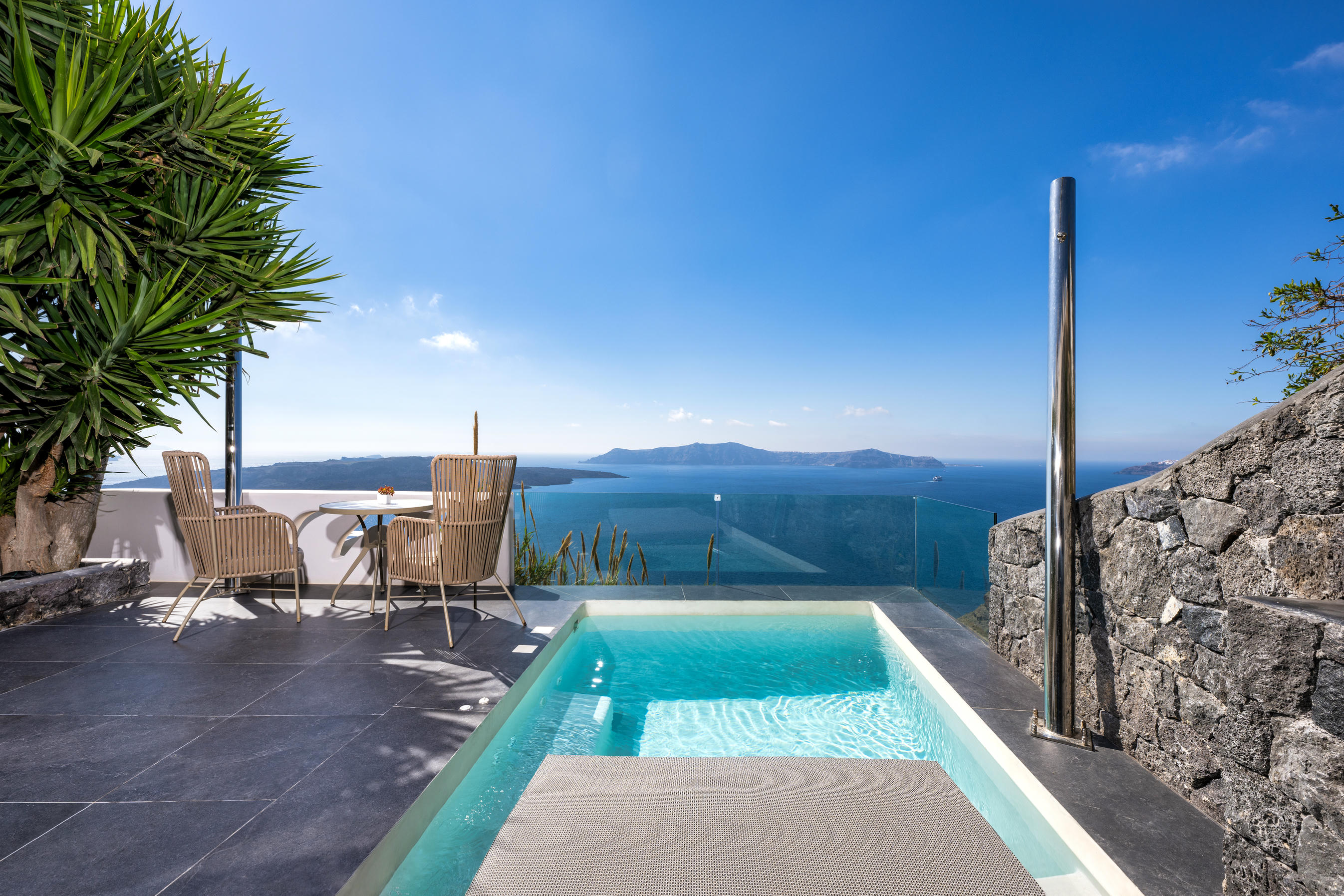
Athina Luxury Suites
Suites con vistas a la caldera en Fira, con piscina infinita y alta cocina.
Parte del equipo editorial de Discover Cyclades: lugareños que viajan en ferry, caminan, comen y escriben sobre estas islas cada temporada.


