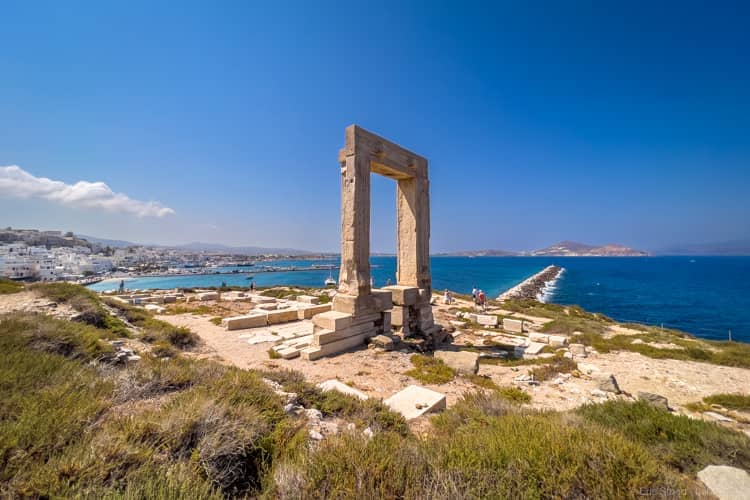
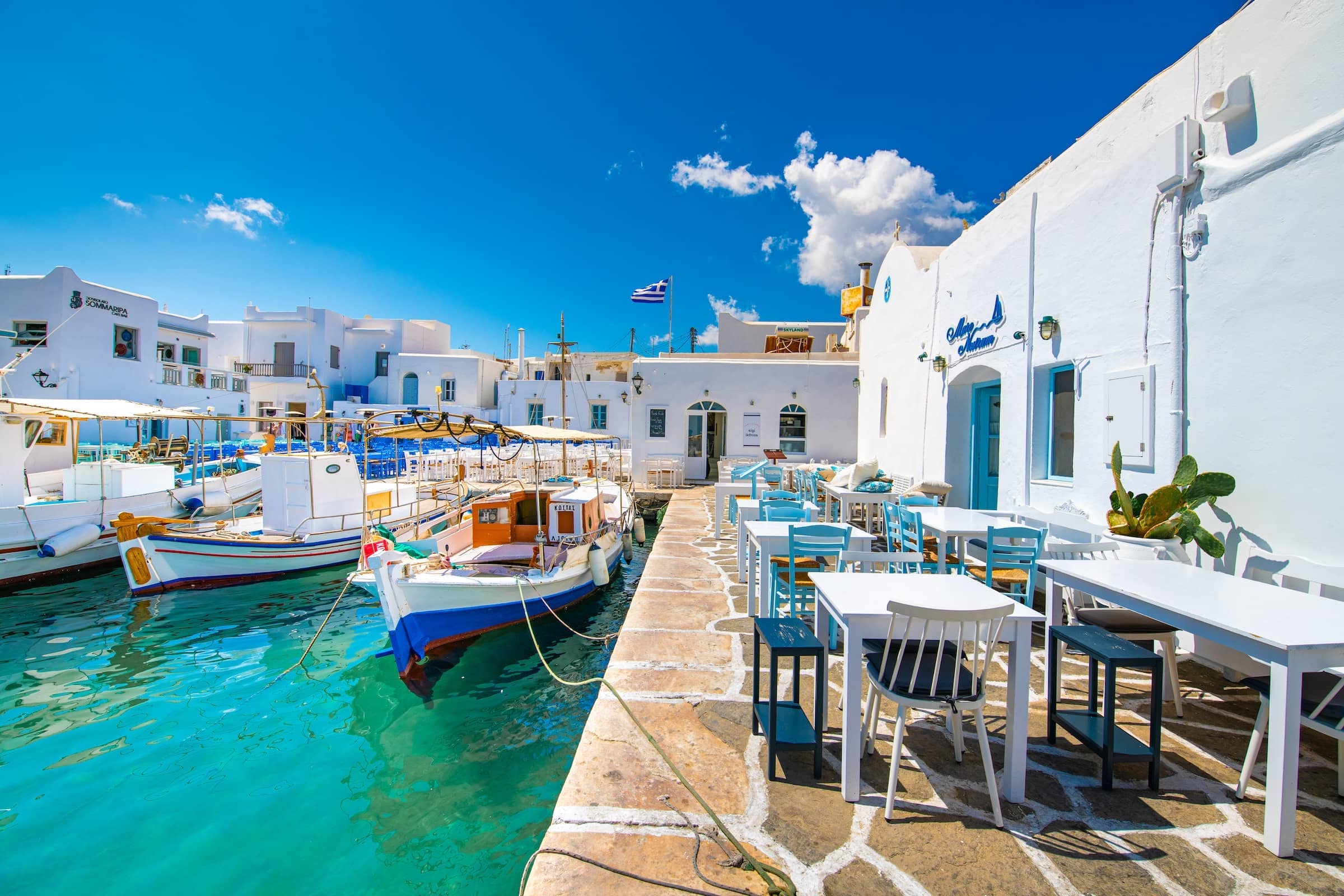
If you are choosing between Paros and Naxos, the useful answer is not that one island is universally “better.” They suit different trips.
Choose Paros if you want a more compact island, easy access to Naoussa and Parikia, a stronger social/nightlife scene, water sports and a trip that can work well without driving every day. Choose Naxos if you want long sandy beaches, mountain villages, hiking, a slower inland side and more freedom to build road-trip days around the island.
For many travelers, the smartest answer is both. Paros and Naxos are neighbouring islands with direct ferry connections, so they combine naturally in one Cyclades itinerary. Check the live Paros to Naxos ferry options for your exact travel date rather than planning around a static timetable.
Paros vs Naxos: quick verdict by traveler type
| Traveler | Better fit | Why |
|---|---|---|
| First-time couple | Paros | Compact sightseeing, Naoussa evenings, beaches and easy day planning |
| Family with young children | Naxos | Long sandy west-coast beaches and a more relaxed base-and-explore rhythm |
| Nightlife / social trip | Paros | Naoussa and Parikia offer the stronger evening scene |
| Hiking / mountain villages | Naxos | Halki, Filoti, Apeiranthos and the Mount Zas area add a substantial inland dimension |
| No-car trip | Paros | The public bus network connects the main towns and villages year-round and expands in summer |
| Road-trip traveler | Naxos | The island is larger and rewards having a vehicle for beaches, villages and inland stops |
| Windsurfing / active beach trip | Paros | The southeastern coast is internationally known for windsurfing conditions |
| Food-focused slow travel | Tie | Paros combines coastal dining with village food culture; Naxos adds a strong agricultural and mountain-village identity |
That is the short version. The rest of this guide explains where the decision actually changes your trip.
Paros vs Naxos at a glance
Paros feels more compact and socially concentrated. Parikia is the ferry-port capital, Naoussa is the best-known evening base, and villages such as Lefkes add a quieter inland counterpoint. You can spend a day at the beach, return to your hotel, and still have a lively dinner or drinks plan without turning the day into a road trip.
Naxos is physically larger and feels more varied from coast to interior. Naxos Chora gives you a classic port-town base, the west coast strings together major sandy beaches, and inland routes reach Halki, Filoti and Apeiranthos. That makes Naxos especially good when “exploring the island” is part of the holiday rather than something you do once.
If you still need destination-level context, open the Paros travel guide and Naxos travel guide beside this comparison.
Beaches: which island is better?
Choose Naxos for long, easy beach days
Naxos has the edge if your ideal beach day means long sandy stretches, room to spread out and several west-coast beach bases. Agios Prokopios, Agia Anna and Plaka form the core beach zone for many visitors, while areas farther south give you more options when you have a car.
That matters for families and travelers who want to stay near the sand for several days rather than beach-hop constantly. A Naxos trip can be as simple as choosing one west-coast base, using Naxos Town for evenings, then adding one or two inland days.
Choose Paros for variety plus beach culture
Paros offers a different beach experience. Golden Beach is closely associated with windsurfing, while Santa Maria, Kolymbithres, Logaras, Farangas and other beaches give you a mix of organized and more relaxed settings. In 2026, the Municipality of Paros lists lifeguard coverage during the main summer period at several busy beaches including Golden Beach, Santa Maria, Logaras, Farangas, Livadia and Parasporos.
The better choice is therefore not “which island has beaches?” Both do. It is what kind of beach holiday you want:
- Naxos: longer sand, beach-base lifestyle, family-friendly rhythm.
- Paros: more beach-hopping, windsurfing culture, easy pairing with Naoussa/Parikia evenings.
Towns, villages and nightlife
Paros: Naoussa and Parikia drive the social side
Paros is the stronger choice if your evenings matter. Naoussa concentrates restaurants, bars and harbour-side nightlife in a walkable setting. Parikia adds a more practical port-town base with its own old-town atmosphere.
But Paros is not only nightlife. Lefkes gives you the inland village contrast that many short comparisons miss. Official Greek tourism material specifically connects Paros gastronomy with both the coast and inland villages such as Lefkes, so a good Paros itinerary should not stop at the beach clubs and harbour.
Naxos: Chora plus a real mountain-village circuit
Naxos Town is lively enough for dinner and drinks, but Naxos wins the village category because the interior becomes a major part of the trip. Halki, Filoti and Apeiranthos can be combined into a practical inland route, with museums, churches, food stops and mountain scenery along the way.
Official Naxos tourism information confirms regular bus connections to Apeiranthos via Halki and Filoti, while also noting that island-wide bus destinations and frequency vary by season. That distinction matters: you can visit villages without a car, but a vehicle gives you more control over timing and combinations.
If that sounds like your trip, see the Naxos car rental guide and the Naxos vehicles page before deciding what you actually need.
Food and authenticity: a closer call than most comparisons suggest
Calling Paros “touristy” and Naxos “authentic” is too simplistic.
Paros has a polished tourism scene, especially around Naoussa, but its food identity still reaches into fishing villages and inland communities. Official Visit Greece material highlights seafood around Naoussa and Alyki and traditional village cooking around Lefkes.
Naxos has a stronger agricultural and mountain-village identity woven into the visitor experience. The value of Naxos is not one famous dish; it is that beach days, farms, inland villages and Chora can all sit inside the same itinerary.
Decision: pick Naxos if food is part of a broader slow-travel and inland-exploration trip. Pick Paros if you want excellent food combined with a more compact, social itinerary.
Getting around: Paros is easier without a car; Naxos rewards one
This is one of the most useful differences between the islands.
Paros without a car
Paros officially describes a public bus network linking its villages with Parikia and Naoussa throughout the year. In summer, service expands and some routes continue later into the night. That makes a bus-based holiday realistic if you stay in a well-connected base and accept that your day follows the network.
A car still adds freedom for beaches and quieter villages. If you want that flexibility, compare options through Paros car rental.
Naxos without a car
Naxos also has a substantial KTEL network. Official Naxos guidance lists summer service to many beaches and inland villages, but explicitly warns that destinations and frequency depend on the time of year and recommends checking the latest timetable.
That is why Naxos is possible without a car but better with one if your wish list includes multiple beaches plus Halki, Filoti, Apeiranthos or more remote parts of the island.
Do not choose a vehicle purely because “SUV sounds better.” Match it to passengers, luggage, accommodation access and the routes you genuinely plan to drive.
Families: Naxos has the edge
For most families, especially those planning a beach-heavy holiday, Naxos is the safer default choice. The west-coast beach zone makes it easy to build low-friction days, and a rental car lets you add villages without reorganizing the entire trip.
Paros can still be excellent for families, particularly around quieter beach bases, but its biggest comparative advantages — Naoussa nightlife, social energy and windsurfing culture — matter more to couples and groups than to a family deciding where to spend a week.
Couples: Paros for atmosphere, Naxos for space
For a shorter romantic trip, Paros usually wins on atmosphere. Naoussa gives you an easy evening focal point after a beach day, and the island is compact enough to avoid spending too much of a three- or four-night stay in transit.
Naxos is better for couples who want more space and exploration: a beach base, a mountain-village road trip, hiking and longer drives through different landscapes.
September and October: which island works better late season?
Both islands can work well in September, but the decision changes as the season progresses.
Paros's official transport information says buses operate year-round, with expanded frequency in summer. Naxos's official tourism site similarly notes that transport frequency changes with the season. That is why you should not assume an August-style timetable in late September or October on either island.
For September, choose based on trip style rather than fear that one island has “closed.” Paros remains attractive for a compact beach-and-evening trip; Naxos remains strong for beaches plus villages and self-drive exploration.
For October, give more weight to transport flexibility, where your hotel is located, and whether the specific restaurants/activities you care about are operating. If you are traveling late in the shoulder season, verify each critical component before booking rather than relying on generic seasonal claims.
For a broader island-hopping decision, use our Cyclades in October guide.
Which is cheaper: Paros or Naxos?
There is no honest fixed-price answer that stays true across dates, hotel classes and booking windows.
Naxos often gives travelers more ways to build a lower-friction beach-and-road-trip holiday, while Paros has a larger concentration of high-demand accommodation and nightlife around Naoussa. But quoting a universal “daily budget” would be misleading without a live date search.
Use the decision in this order:
- Compare accommodation for your exact dates: Paros hotels vs Naxos hotels.
- Decide whether you need a car every day or only for part of the stay.
- Check the live ferry options for your arrival/departure dates.
- Add activities only after you know your base and transport plan.
That gives you a real trip cost instead of an invented island average.
Can you visit both Paros and Naxos?
Yes — and for many first-time Cyclades trips, this is the best answer.
Because the islands have direct ferry connections, you can divide one trip without returning to Athens between them. The exact sailing time varies by vessel and date, so use the live Paros → Naxos route page or Naxos → Paros route page when you are ready to book.
If you have 5 nights
Pick one island unless the split itself is the point of the trip. Two hotel changes plus ferry logistics can consume too much of a short stay.
If you have 7 nights
A 4+3 split works well. Give the fourth night to the island that matches your priority: Paros for evenings/social atmosphere, Naxos for beaches/villages/road trips.
If you have 10 nights
A 5+5 or 6+4 split lets each island feel distinct rather than rushed. This is where doing both becomes especially compelling.
If you are comparing a third island too, keep that intent separate and use our Naxos vs Paros vs Milos comparison.
Final decision matrix
Choose Paros if most of these sound like you:
- You want Naoussa evenings and a stronger social scene.
- You prefer a compact trip with less driving.
- You plan to rely heavily on buses.
- Windsurfing or active beach culture matters.
- You are combining several Cyclades islands and want simple onward planning.
Choose Naxos if most of these sound like you:
- Long sandy beaches are the main priority.
- You are traveling with children.
- You want mountain villages and hiking, not only coastal sightseeing.
- You are happy to rent a car and explore independently.
- You want a slower trip with more variety between coast and interior.
Choose both if you have at least a week and the contrast itself is what you want.
Frequently asked questions
Which is better, Naxos or Paros?
Paros is usually better for nightlife, a compact social trip and travelers who want to rely more on public transport. Naxos is usually better for long sandy beaches, families, hiking, mountain villages and self-drive exploration.
Which has better beaches, Paros or Naxos?
Naxos has the edge for long sandy beaches and a beach-base holiday. Paros is stronger if you want to combine varied beaches with windsurfing, beach culture and Naoussa/Parikia evenings.
Is Paros or Naxos better without a car?
Paros is the easier choice without a car because its main towns and villages are linked by a year-round bus network, with more service in summer. Naxos also has extensive buses, but frequencies and destinations vary seasonally and its larger size makes a car more valuable.
Is Paros or Naxos better for families?
Naxos is the stronger default for families because of its long west-coast beaches and relaxed base-and-explore format. Paros remains a good option for families who choose a quieter beach base and do not need Naoussa nightlife.
Can I visit Paros and Naxos in one week?
Yes. A 4+3-night split is practical because the islands have direct ferry connections. Check the live ferry for your exact date and avoid building the trip around a fixed duration published months earlier.
How long is the ferry between Paros and Naxos?
There is no single duration: it depends on the vessel and sailing. Use the live route pages for the exact date instead of relying on a static number.
Sources and verification notes
This 2026 refresh was checked against official tourism and transport information from the Municipality of Paros, Imagine Paros, Naxos & the Small Cyclades, and Visit Greece. Transport frequency and ferry timings are intentionally not hard-coded because they change by season and sailing date.
Next step: choose your island first, then lock the base, transport and ferry in that order. Compare Paros hotels, Naxos hotels, Paros car rental, Naxos car rental, and live Cyclades ferries.