A tiny, traditional Cycladic island where authentic Greek life remains beautifully unchanged
Sikinos is one of the smallest and most overlooked islands in the Cyclades, tucked between Ios and Folegandros. With just 270 permanent residents, no ATM for decades (there is one now), and virtually no tourist infrastructure beyond a handful of family-run rooms and tavernas, it offers something increasingly rare: a completely genuine Greek island experience.
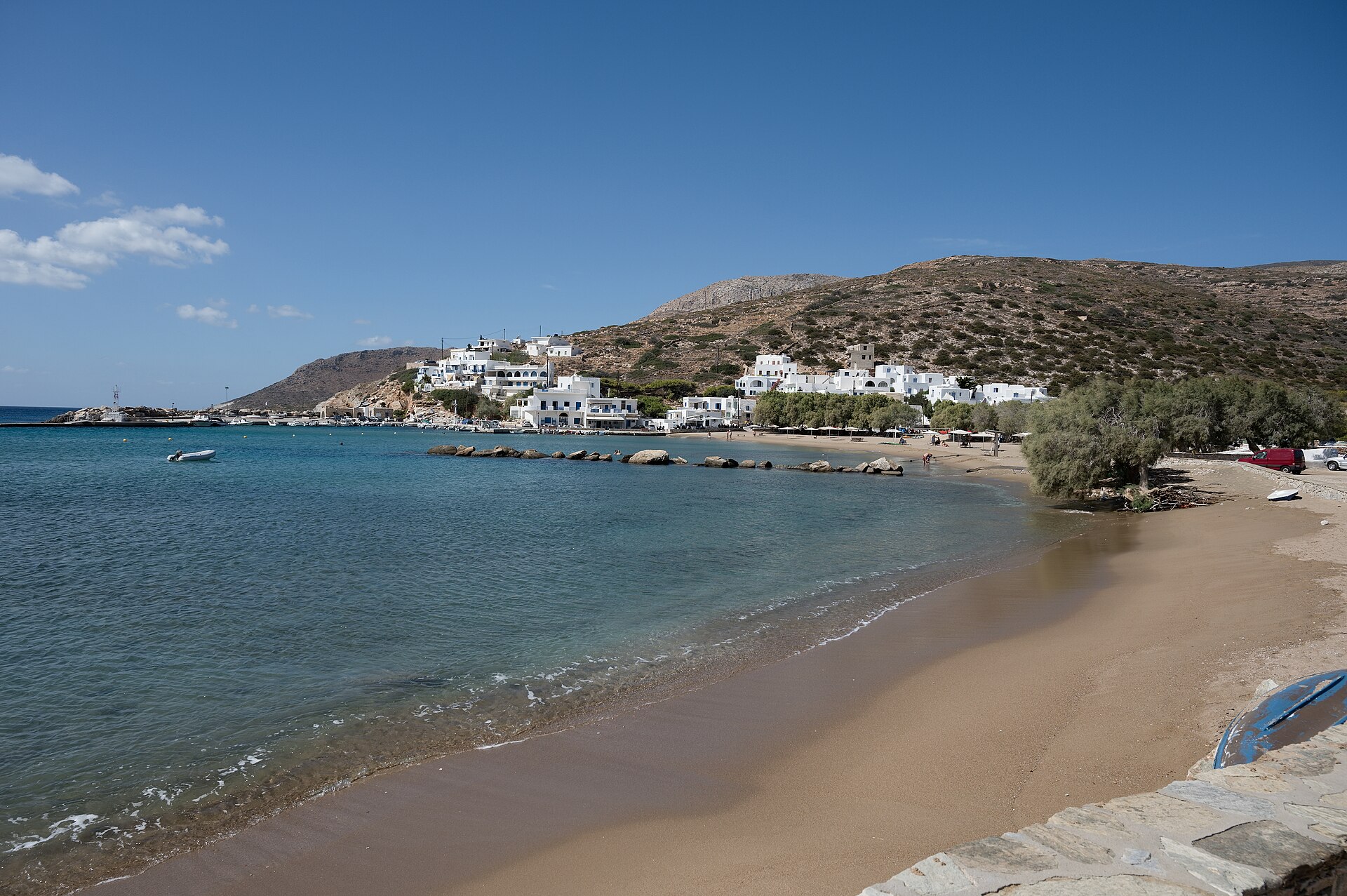
The island's twin hilltop settlements — Kastro and Chora — form one of the most atmospheric villages in the Cyclades, perched on a ridge with sweeping views of the sea in both directions. Below, the tiny port of Alopronia serves as the island's only connection to the outside world, with a small beach and a few tavernas that come alive when the ferry arrives.
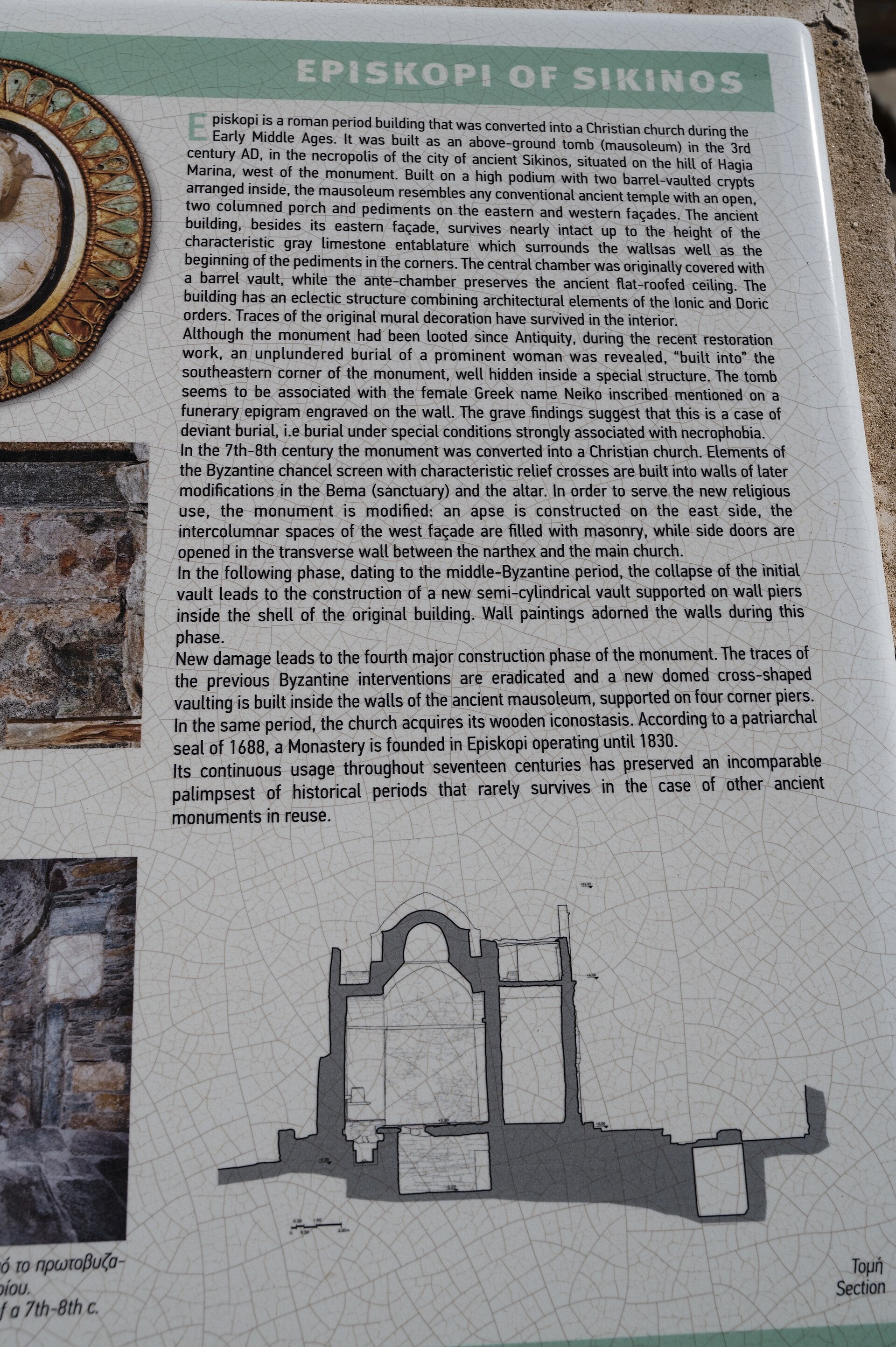
What Sikinos lacks in size it makes up for in character. The ancient Episkopi monastery — actually a converted Roman mausoleum, one of the most mysterious archaeological sites in the Aegean — sits alone on a hillside above terraced vineyards. Walking the mule paths between villages, you'll encounter nothing but stone walls, wild herbs, and the vast blue sea stretching to the horizon.
Sikinos doesn't try to impress you — it simply is what it is, and that's more than enough.
In antiquity, Sikinos was known as "Oinoe" (Wine Island) for its excellent vineyards. The name Sikinos comes from mythology — the island was named after the son of the wine god Thoas and the nymph Oinoe. Winemaking remains a small but proud tradition on the island today.
The most remarkable monument on Sikinos is Episkopi, a structure that has puzzled archaeologists for centuries. Originally a 3rd-century AD Roman mausoleum or temple, it was converted into a Byzantine church dedicated to the Dormition of the Virgin. Its remarkably preserved columns and architraves make it architecturally unique in the Cyclades.
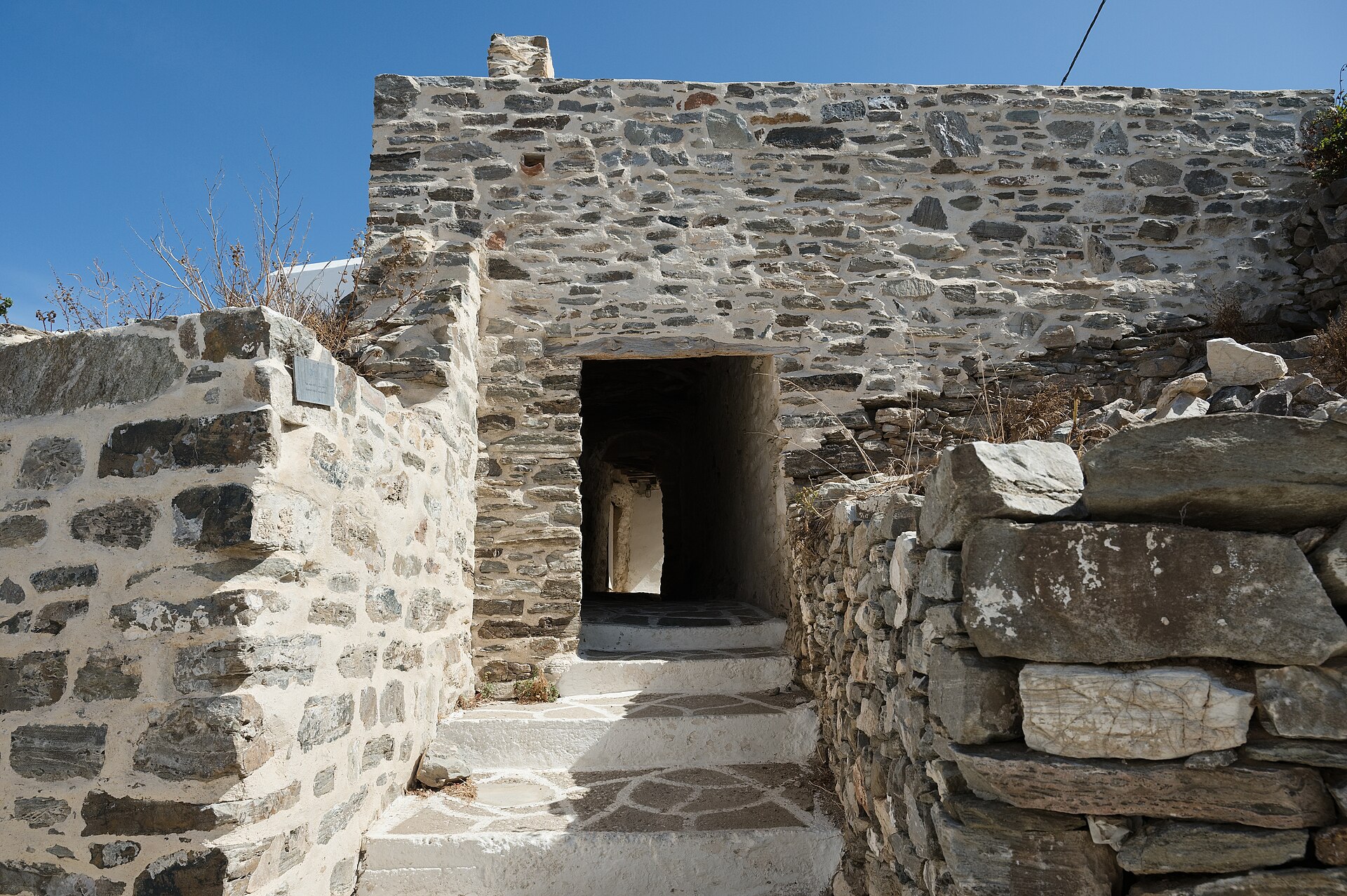
Like many Cycladic islands, Sikinos built its main settlement as a kastro — a fortified village where the outer walls of houses formed a continuous defensive barrier against pirates. The Kastro of Sikinos, dating to the 15th century, is one of the best-preserved examples in the Cyclades.
Sikinos nearly emptied in the 20th century as residents emigrated to Athens and abroad. But a small, devoted community remained, and in recent years, a trickle of visitors seeking authenticity has helped sustain the island without changing its fundamental character.
Explore the heart of Sikinos
The island's capital is actually two settlements seamlessly joined — the medieval Kastro with its fortified architecture and the later Chora that grew alongside it. Perched on a ridge 280 meters above sea level, the village offers breathtaking views in every direction. The main square with its iconic church, a couple of tavernas, and a kafeneio form the entire social hub of the island.
Sikinos's only port is a miniature waterfront settlement with a handful of tavernas, a small beach, and rooms to let. Life here revolves around the ferry schedule — the village buzzes when a boat arrives and returns to peaceful quiet moments later. The beach is sandy and calm, perfect for a swim before or after your ferry.
Not so much a village as a sacred site, Episkopi sits on a terraced hillside southwest of Chora. The remarkable monument — a Roman mausoleum converted to a Byzantine church — stands surrounded by vineyards and olive groves. The walk from Chora to Episkopi through the countryside is one of the island's highlights.
The best shores of Sikinos
A remote beach of dark sand and pebbles on the northeast coast, reached by a scenic footpath with stunning sea views
A tiny sheltered cove with turquoise water tucked into the coastline, accessible by a steep but rewarding footpath
A striking pebble beach backed by dramatic cliffs on the island's wild southwest coast, with vivid blue water
Named for its resemblance to Santorini, this beach features dark volcanic sand and a dramatic cliff backdrop
The sandy beach right at the port, offering easy access, calm water, and the convenience of nearby tavernas
Honest, home-cooked island food rooted in farming traditions and the bounty of the sea
Sikinos continues its ancient winemaking tradition — small producers make excellent reds and whites from local varieties, served in tavernas by the carafe
Slow-cooked chickpea stew baked overnight in a wood-fired oven, a Cycladic classic prepared beautifully on Sikinos
Tender goat braised slowly with tomatoes, potatoes, and island herbs — a hearty dish using locally raised animals
Whatever the fishermen bring in that day, simply grilled and served with lemon and olive oil at Alopronia's waterfront tavernas
Small-batch sheep and goat cheeses made by island families, often served as a starter with bread and honey
Preserved fruits made from local figs, grapes, and citrus, served with Greek coffee as a gesture of hospitality
From sunrise to sunset in Sikinos
Watch the sun rise over the Aegean from the eastern walls of the Kastro. The light hitting the whitewashed houses and the sea turning from silver to blue is an unforgettable sight.
30 minFollow the old mule path from Chora to the ancient Episkopi monument, passing through vineyards and olive groves. Explore the mysterious Roman-Byzantine structure and enjoy the valley views.
2 hoursTake the scenic footpath from Chora to the remote beach of Agios Georgios on the northeast coast. The trail offers spectacular views before descending to the wild, empty shore.
3 hoursHike down to the sheltered cove of Dialiskari for a morning of swimming and snorkeling in turquoise water surrounded by rocks. Bring supplies — there are no facilities.
2-3 hoursSettle into a waterfront table at Alopronia and enjoy fresh grilled fish, a Greek salad with local cheese, and a carafe of Sikinos wine while watching the fishing boats.
2 hoursWander through the quiet lanes of Chora and Kastro, discovering small churches with beautiful icons, hidden courtyards, and traditional architecture preserved for centuries.
1.5 hoursTaste local wines at one of the island's small producers, learning about Sikinos's ancient winemaking tradition. The island's volcanic soil gives the wines a distinctive mineral character.
1.5 hoursWalk along the path above Chora toward the Zoodochos Pigi monastery and watch the sun set behind Folegandros. The sky turns brilliant shades of orange and red over the Aegean.
1 hourJoin locals on the main square (plateia) of Chora for evening meze, wine, and conversation. On summer evenings, the square comes alive with families, music, and the simple joy of community.
2-3 hoursFind the perfect time for your Sikinos trip
Curated tours and activities
Explore the island's wild coastline by boat, visiting hidden beaches and sea caves inaccessible by land.
Guided walk from Chora to Episkopi and through the countryside, covering history, archaeology, and traditional farming.
Insider tips for your Sikinos trip
Everything you need to know about Sikinos
Our AI travel assistant knows everything about Sikinos
Step off the beaten path to an island where tradition lives and breathes. Sikinos is waiting — quietly, authentically, beautifully.