Thermal springs, the legendary Kolona double beach, and a way of life untouched by mass tourism
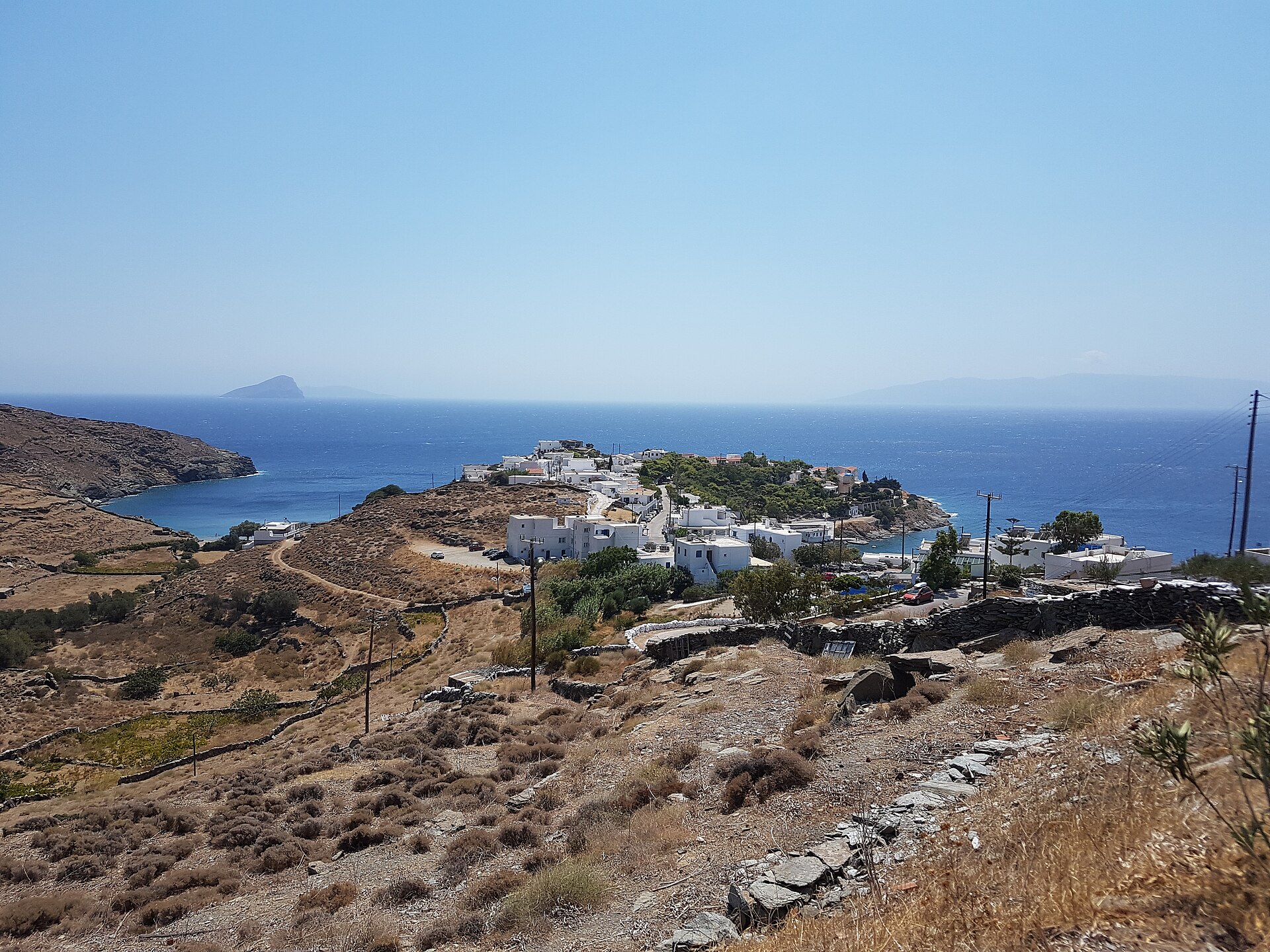
Kythnos is the Cyclades' best-kept secret — an island so close to Athens yet so far from the well-trodden tourist path that it feels like stepping back in time. Just two hours from Piraeus by ferry, Kythnos (also called Thermia for its natural hot springs) offers an authentic Greek island experience that its more famous neighbors have largely lost.
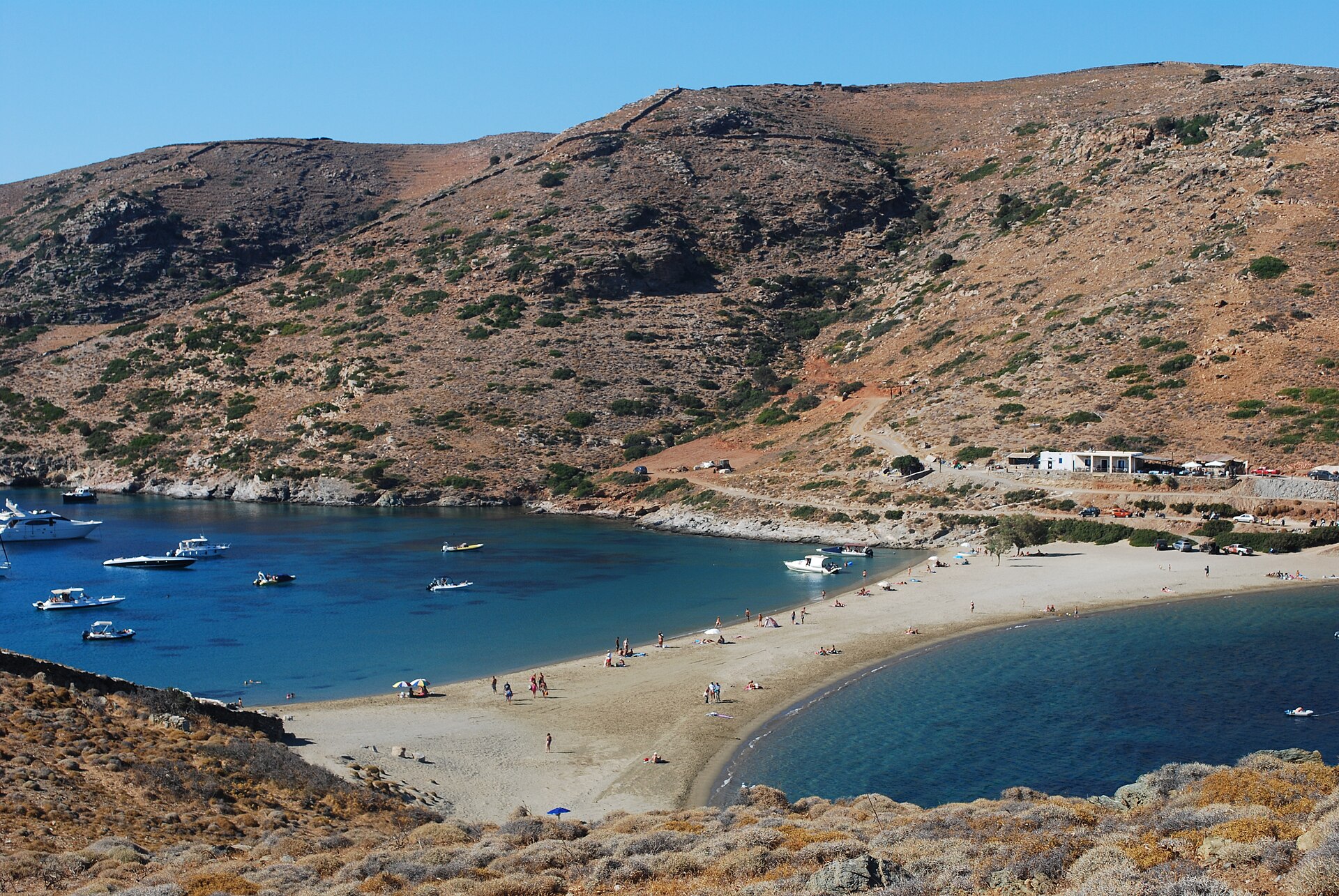
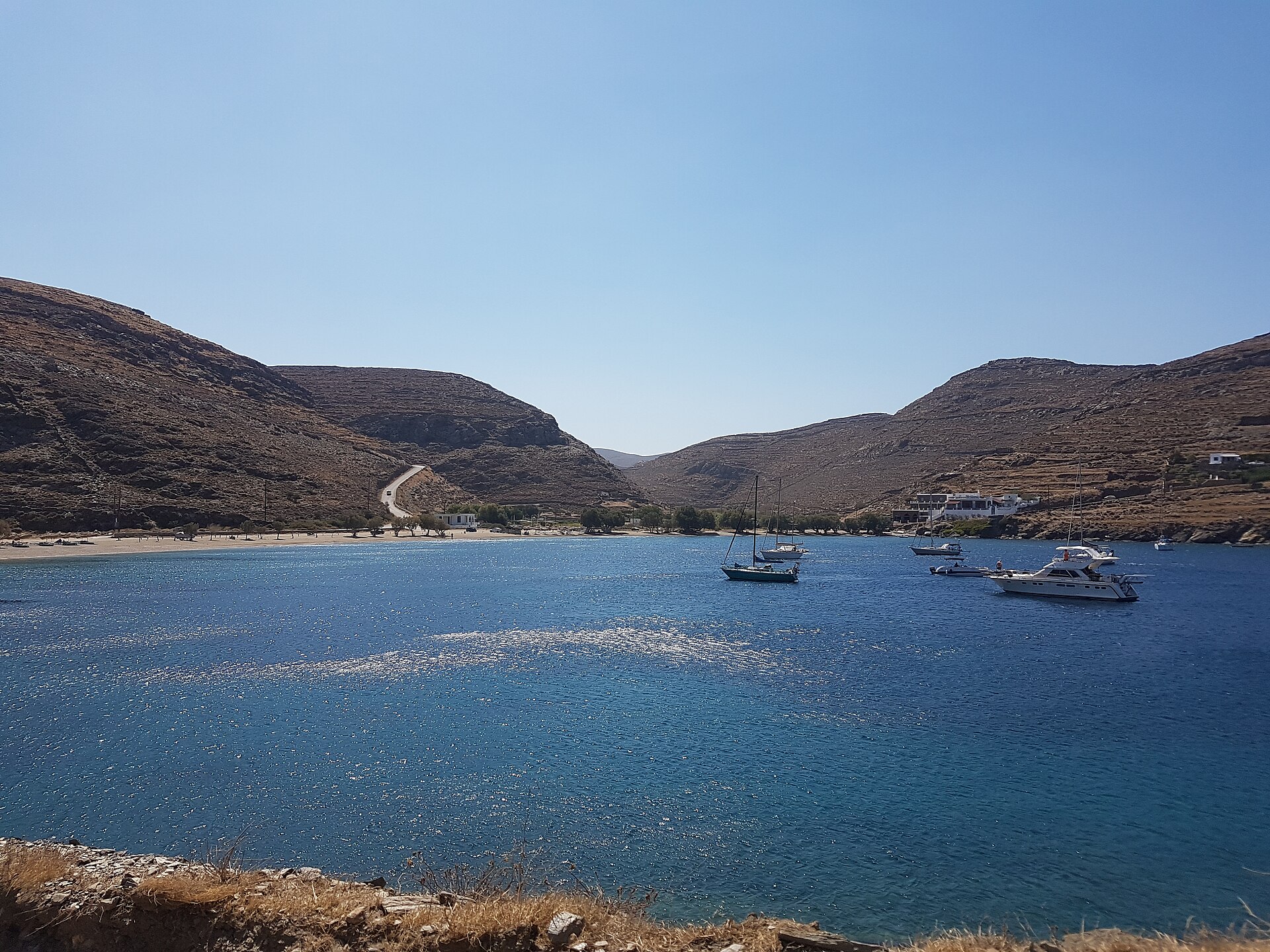
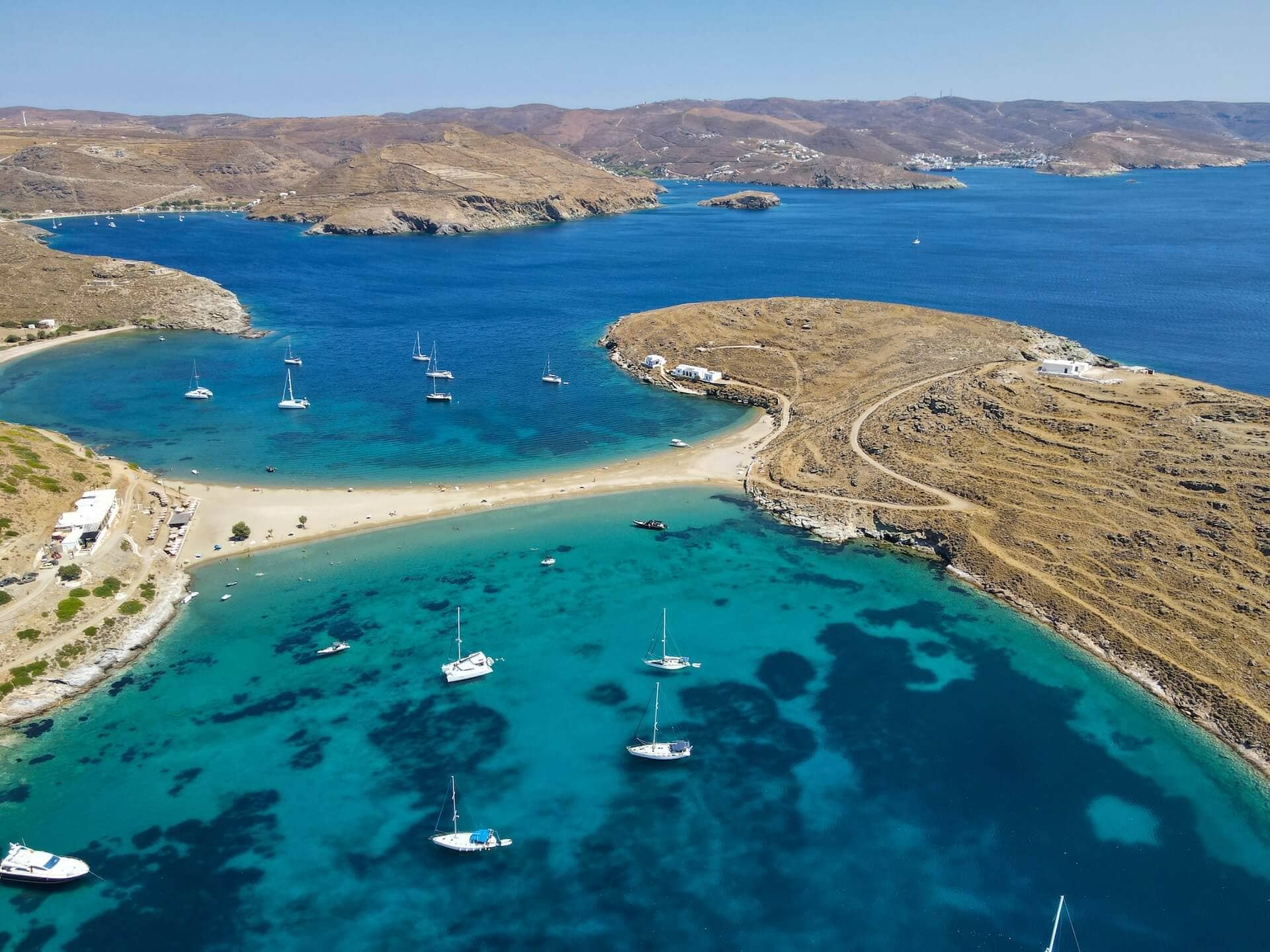
The island's crown jewel is Kolona, a breathtaking double beach where a narrow strip of golden sand connects the island to a small peninsula, creating two sheltered bays of turquoise water on either side. It's one of the most photographed beaches in Greece, and yet on most days you'll share it with only a handful of visitors. That paradox defines Kythnos — extraordinary beauty without the crowds.
Inland, two remarkable villages await discovery. Chora (Messaria) is a perfectly preserved Cycladic village of whitewashed lanes and over 70 churches, while Dryopida — named after the ancient Dryopes tribe — is a unique settlement of red-tiled roofs cascading into a valley, hiding the spectacular Katafiki cave beneath its streets. Add the thermal springs of Loutra, accessible beaches, and a genuine warmth from islanders unaccustomed to mass tourism, and Kythnos reveals itself as one of the most rewarding destinations in the Aegean.
Kythnos is what the Greek islands were like before the world discovered them — and that is precisely its magic.
Kythnos was settled by the Dryopes, a pre-Hellenic tribe that migrated from the mainland. The village of Dryopida preserves their name and possibly their legacy — its unusual architecture of red-tiled roofs and narrow covered passages (stegadia) is distinct from any other Cycladic settlement, suggesting a cultural thread stretching back millennia.
The ancient name Thermia comes from the natural hot springs at Loutra on the northeast coast. Known since antiquity, these iron-rich thermal waters attracted visitors seeking healing from arthritis and skin conditions. King Otto of Greece built a hydrotherapy center here in the 1850s, making Loutra one of Greece's first organized spa towns.
Beneath the village of Dryopida lies the vast Katafiki cave, a natural cavern used since prehistoric times as a shelter, place of worship, and during World War II as a hiding place from occupying forces. The cave features impressive stalactites and stalagmites and has been partially developed for visitors.
While other Cycladic islands embraced tourism in the latter 20th century, Kythnos remained firmly under the radar, its economy based on farming, fishing, and the thermal springs. This happy accident of neglect has preserved an authentic island culture that is now beginning to attract discerning travelers seeking the "real Greece."
Explore the heart of Kythnos
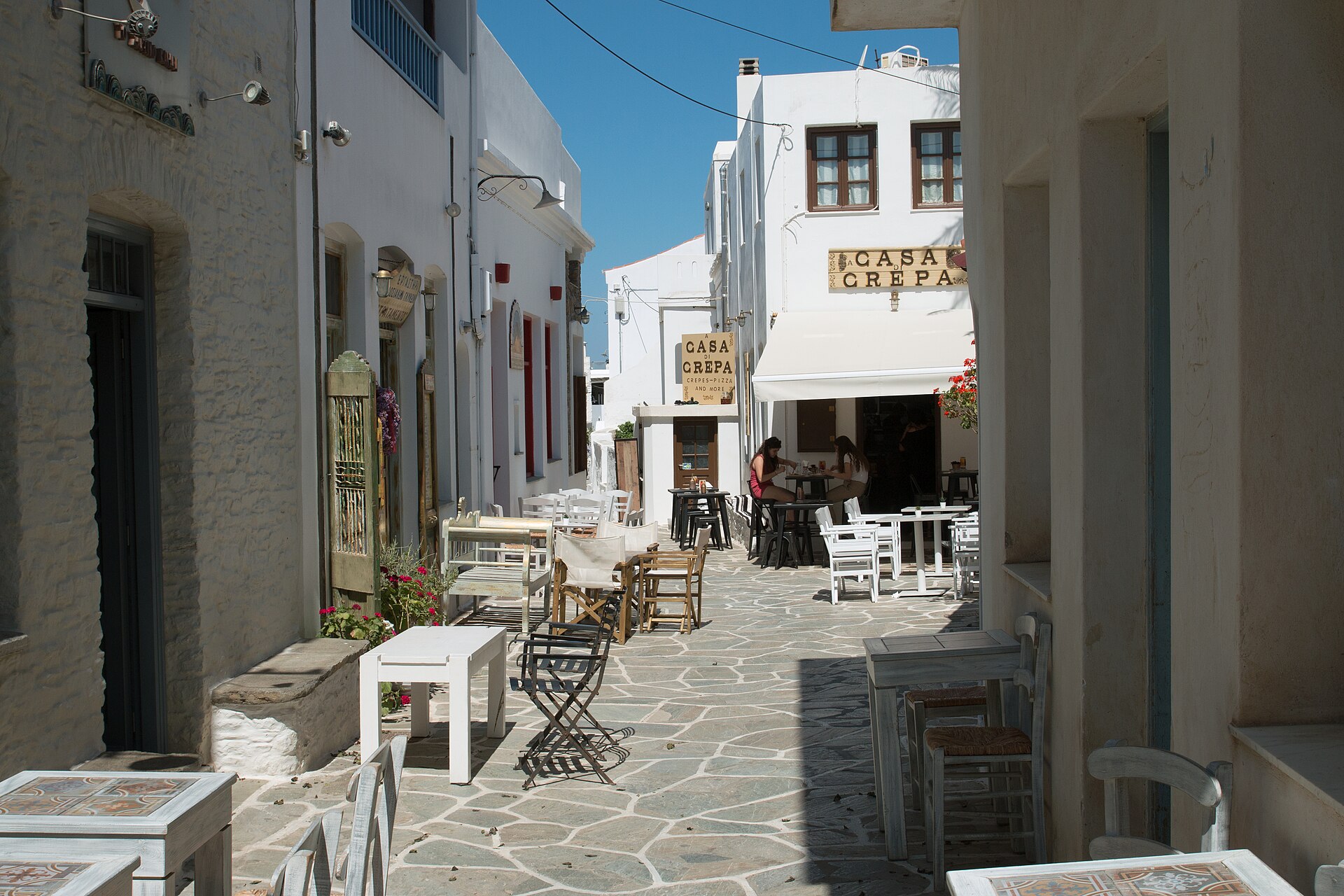
The capital of Kythnos is a beautifully preserved Cycladic village that has changed little in centuries. Whitewashed houses with blue shutters line impossibly narrow lanes, and over 70 churches — an extraordinary number for such a small settlement — dot the village. There are no tour groups, no souvenir shops, just genuine village life unfolding at its own pace around the central square.
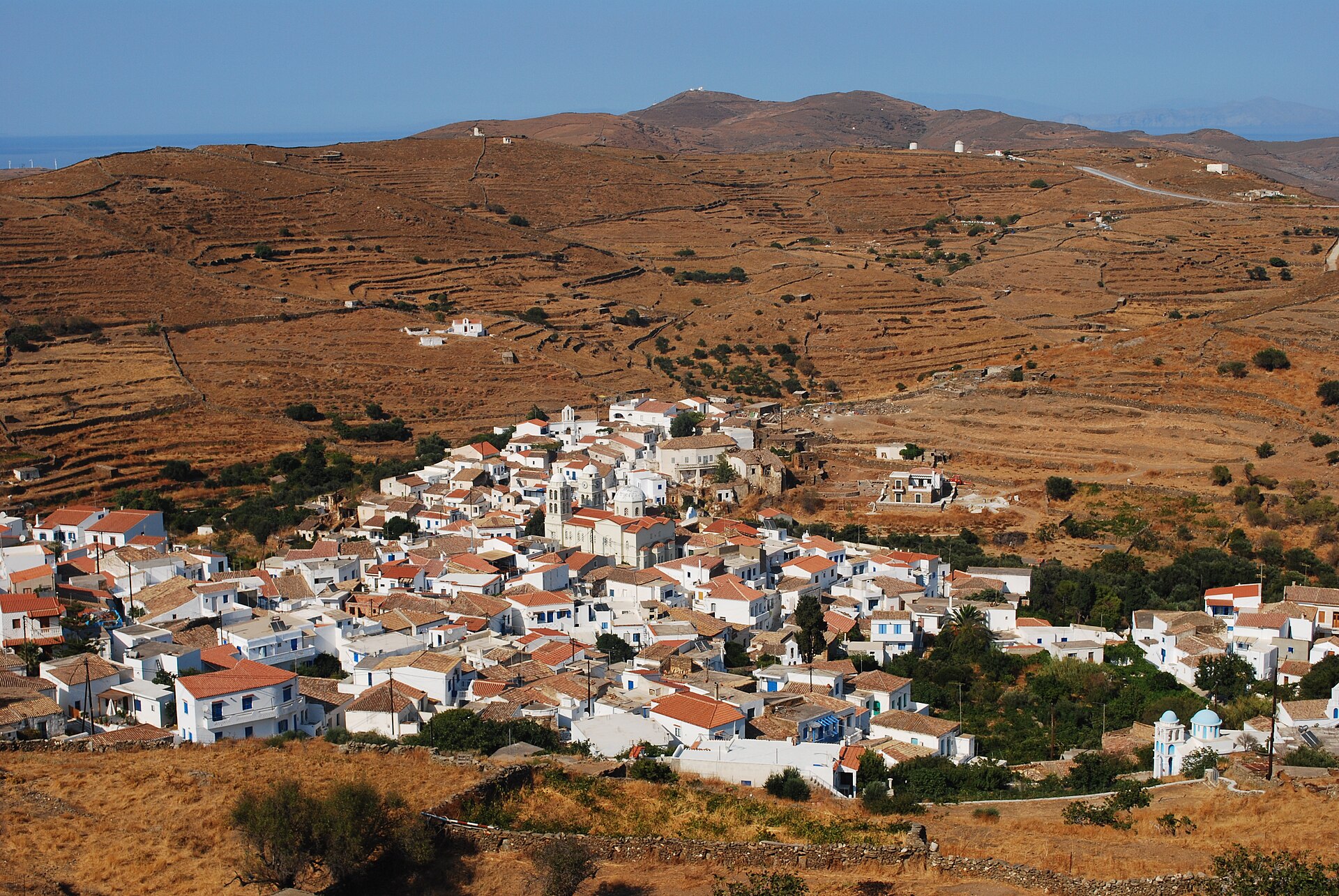
Perhaps the most unique village in the Cyclades, Dryopida tumbles down a hillside into a ravine, its red-tiled roofs a striking departure from the typical Cycladic white-and-blue. Named after the ancient Dryopes tribe, its narrow lanes include covered passages called stegadia, and beneath the village lies the spectacular Katafiki cave with its ancient stalactites.
This small seaside settlement on the northeast coast has been famous since antiquity for its natural thermal springs. Iron-rich hot water bubbles up at temperatures of 38-52°C right at the shoreline, allowing bathers to soak in hot pools while watching the waves. King Otto's 19th-century hydrotherapy facility still stands, and modern spa services complement the natural springs.
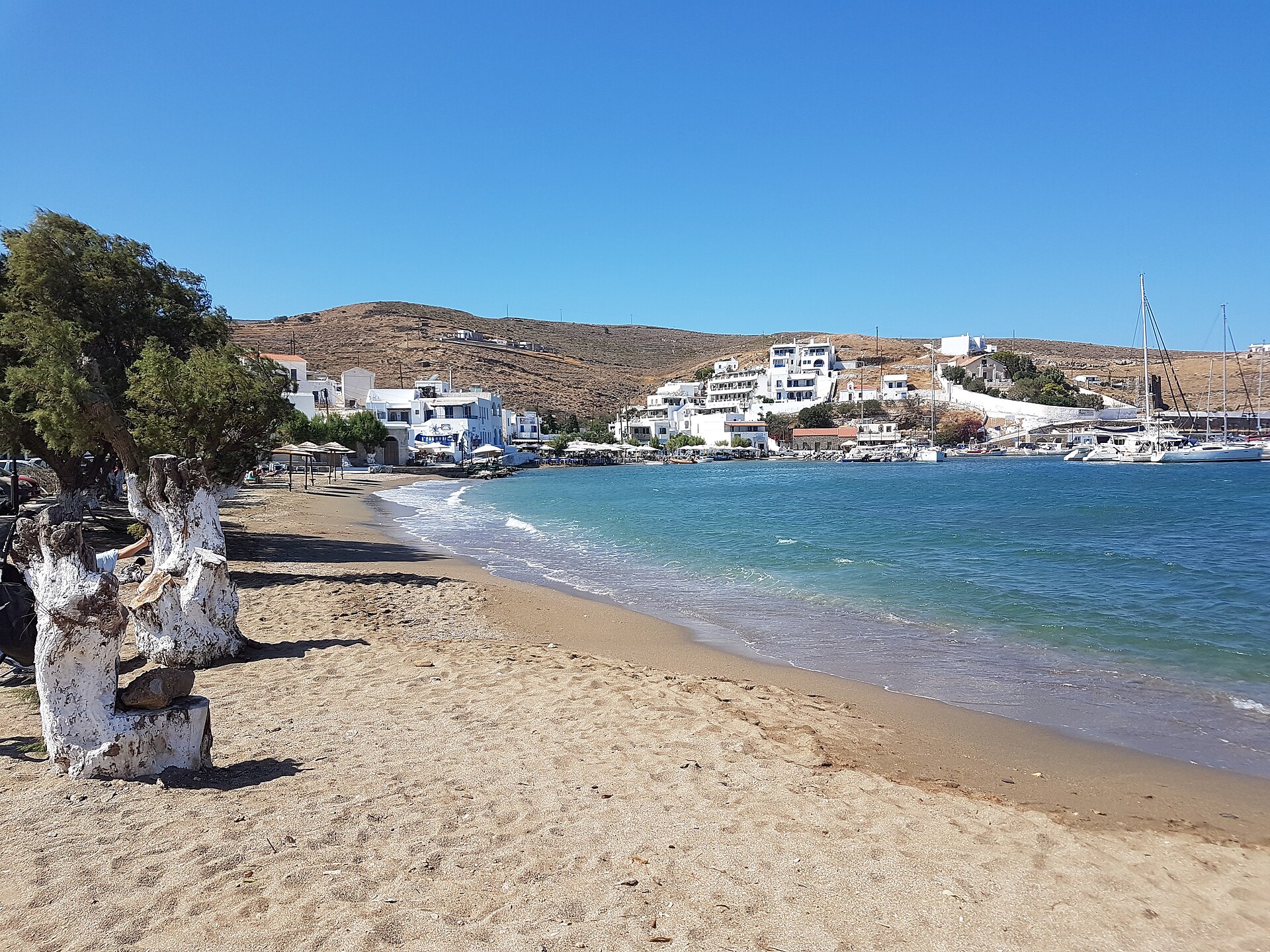
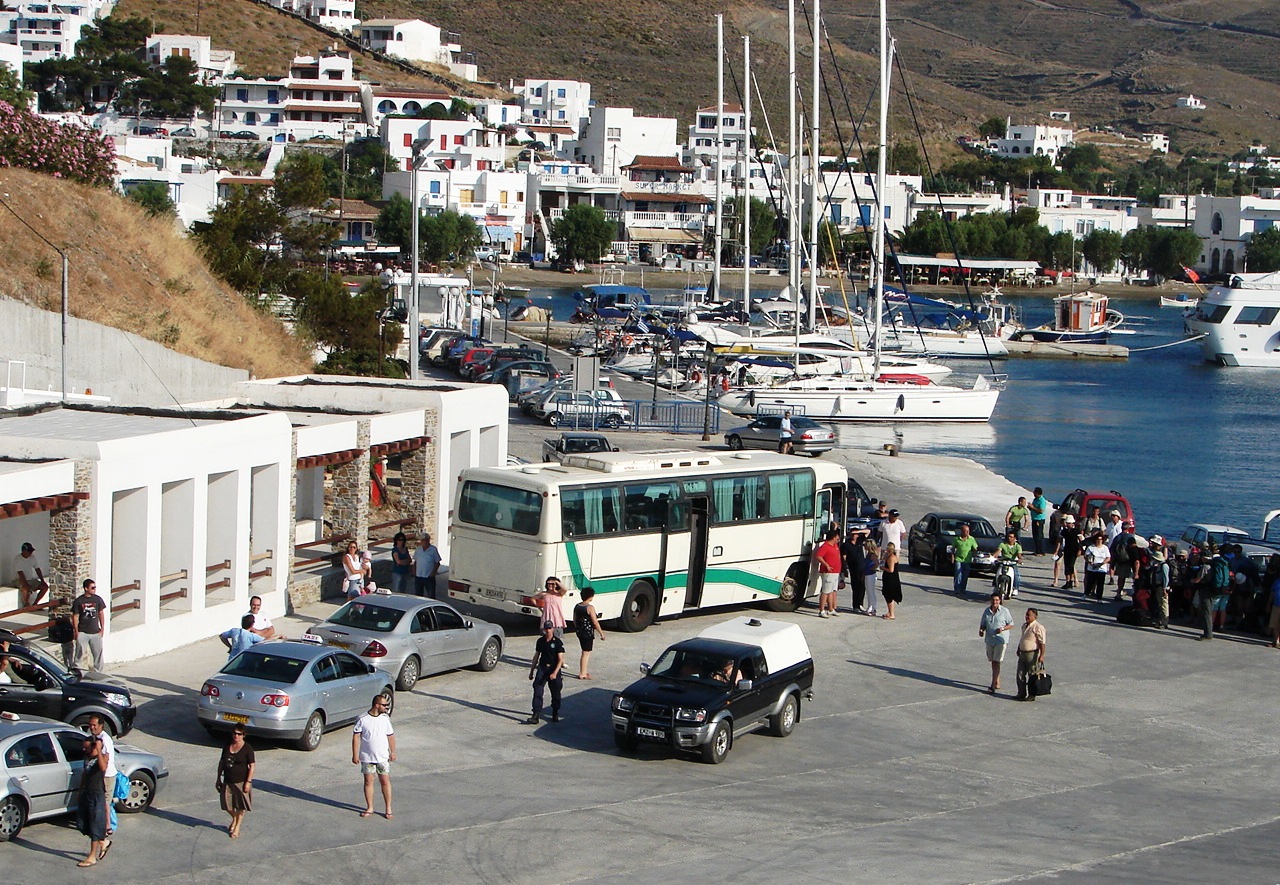
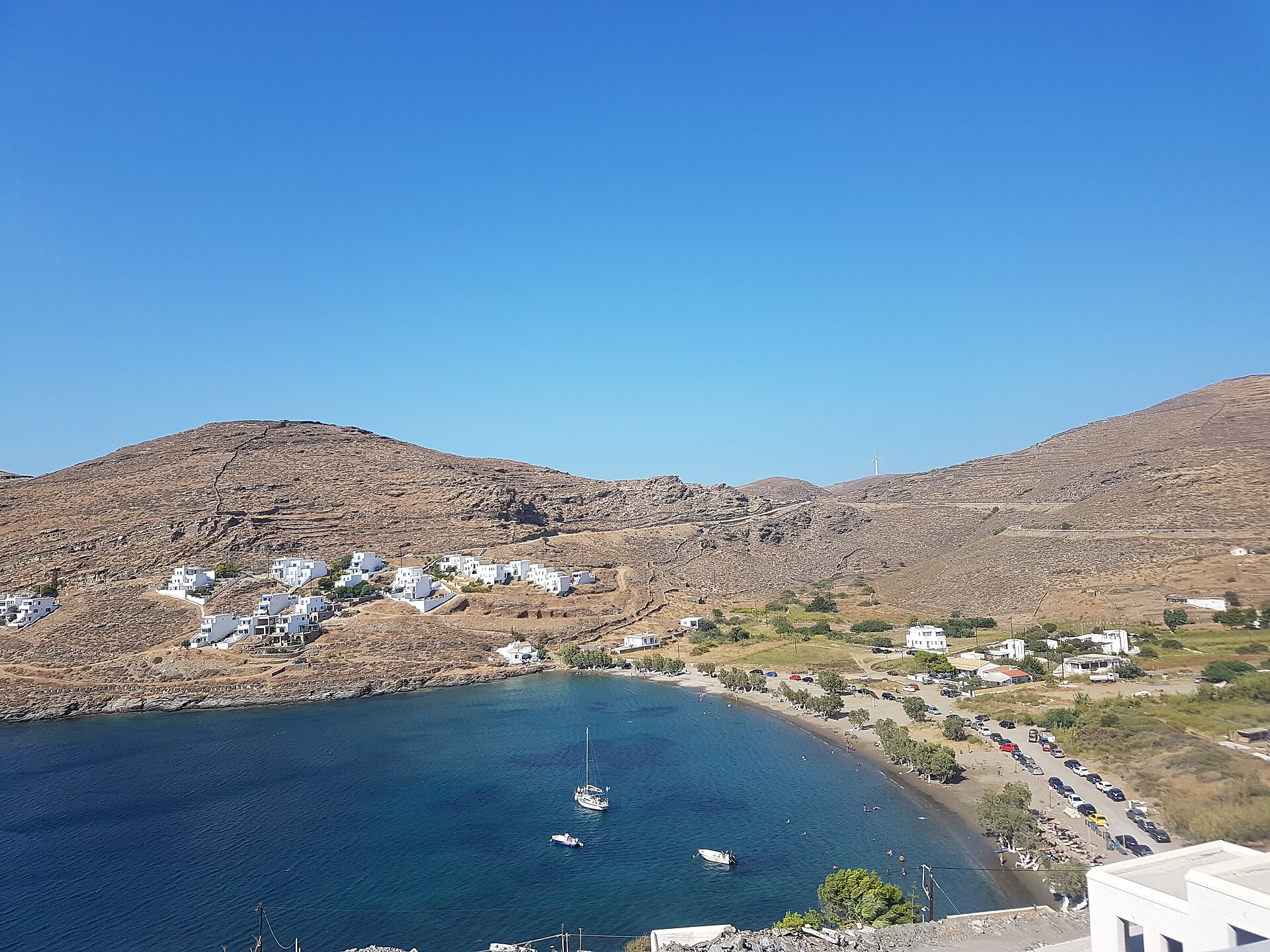
The main port of Kythnos occupies a sheltered bay on the west coast. While primarily functional as the ferry arrival point, Merichas has its own charm with a small sandy beach, a handful of waterfront tavernas serving fresh fish, and a working harbor where fishermen still mend their nets. It's also the departure point for boats to Kolona beach.
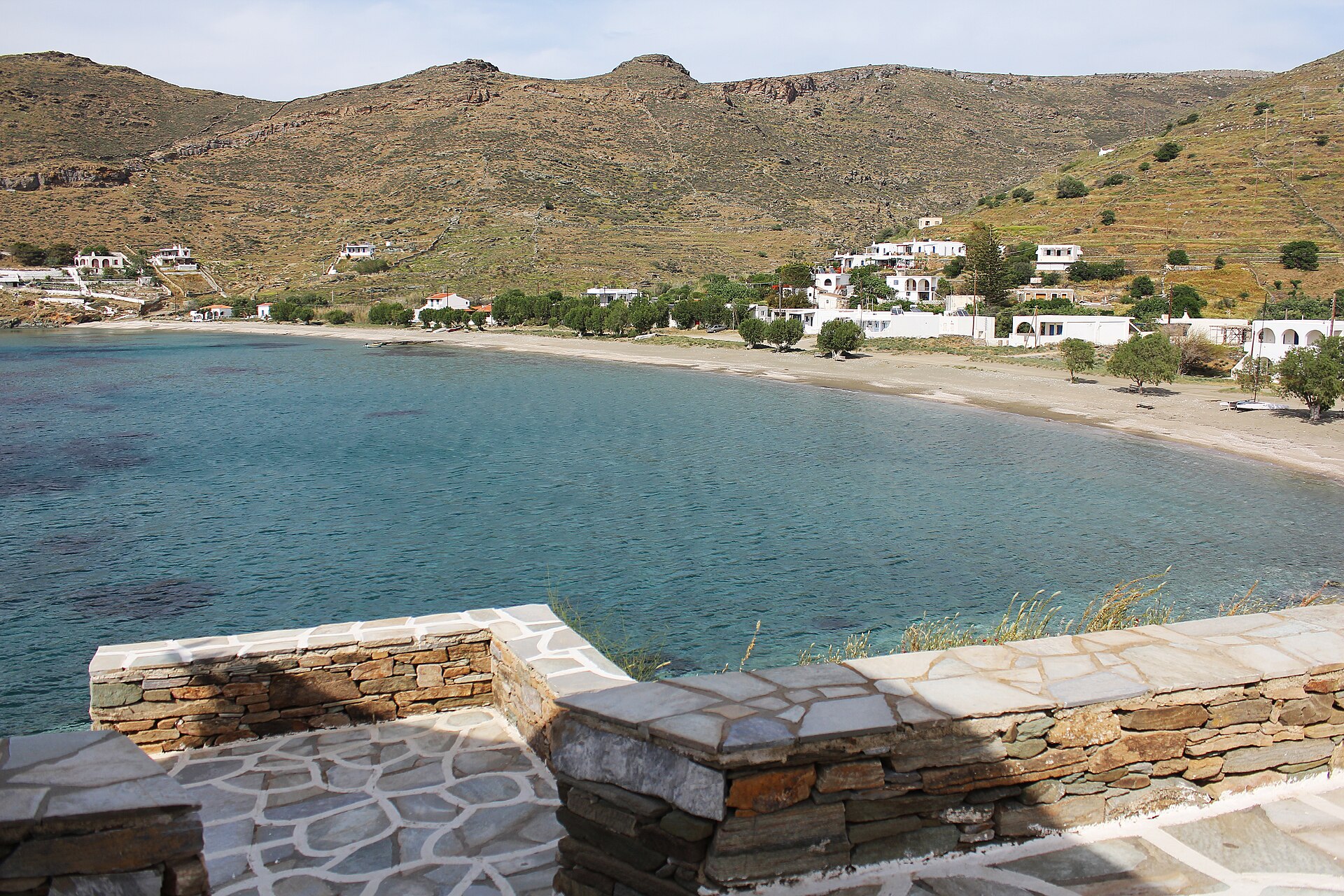
A tiny settlement on the southeast coast built around the church of Panagia Kanala, the island's patron saint. Set among pine trees overlooking a beautiful bay, Kanala draws pilgrims on August 15 for the island's biggest festival. The beach below the church is one of the most scenic on the island, with calm, pine-shaded shores.
The best shores of Kythnos
The legendary double beach — a narrow sand strip connecting the island to a small peninsula, with turquoise water on both sides. One of the most unique beaches in all of Greece
A completely undeveloped beach on the northwest coast, accessible only by boat or a challenging hike — rewarding those who make the effort with absolute solitude
The longest sandy beach on Kythnos, stretching along the southwest coast with shallow water and rarely more than a few visitors — perfect for those wanting space
A sheltered bay south of Merichas with tamarisk shade, clear water, and a relaxed beach bar — the most convenient quality beach from the port
A long sandy beach near Loutra on the northeast coast, backed by low cliffs and offering views across to the island of Kea
Simple, honest island cooking that reflects centuries of self-sufficiency — where the cheese is local, the fish was caught this morning, and every grandmother has a secret recipe
Small fish-shaped bread rolls made during Lent, flavored with pepper and sesame — a unique Kythnian tradition tied to the celebration of Lazarus Saturday
Handmade local pasta served with caramelized onions and soft local cheese — a rustic Cycladic staple perfected on Kythnos
A savory omelet-pie made with local cheese, zucchini, and herbs — the island's answer to comfort food, served at every family table
Wild capers pickled in vinegar and sea salt, harvested from the island's rocky hillsides — served as meze with bread and cheese
A strong, peppery soft cheese aged in clay pots — the bold local cheese that divides opinion but rewards the adventurous
Kythnos's hillsides are covered in wild thyme, producing a dark, aromatic honey that is among the finest in Greece
From sunrise to sunset in Kythnos
Begin the day with a soak in the natural hot springs at Loutra, where iron-rich water at 38-52°C flows directly into pools at the water's edge. The therapeutic waters have been used since antiquity for arthritis and skin conditions.
1.5 hoursTake the scenic trail from the road above Merichas to the iconic Kolona double beach. The 40-minute hike passes through scrubland with views of the coast, arriving at the stunning sand strip connecting the mainland to the Agios Loukas peninsula.
3-4 hoursDescend into the Katafiki cave beneath Dryopida village, a vast natural cavern with impressive stalactites and stalagmites. Used since prehistoric times, the cave served as a shelter during World War II and is now partially illuminated for visitors.
1 hourJoin a small boat from Merichas that visits Kolona and continues to the remote Flabouria beach on the northwest coast. Swim in crystal-clear water at beaches inaccessible by road, with a simple lunch onboard.
4-5 hoursExplore the unique architecture of Dryopida — the only Cycladic village with red-tiled roofs. Walk through the covered stegadia passages, visit the small Folklore Museum, and admire how this remarkable village seems to grow organically from the ravine.
1.5 hoursThe rocky shores on either side of Kolona's sand strip offer excellent snorkeling. The water is exceptionally clear, and the transition between the two bays creates interesting underwater landscapes with diverse marine life.
2-3 hoursSit down at a traditional taverna in Chora or Dryopida for an unhurried lunch of sfougato, makarounes, and fresh fish. The pace is slow, the portions generous, and the prices refreshingly modest.
2 hoursDiscover why tiny Chora has over 70 churches — from grand stone basilicas to tiny whitewashed chapels tucked in alleyways. Each tells a story of devotion, seafaring vows, or family tradition stretching back centuries.
1.5 hoursFollow the ancient path connecting the island's two main villages. The well-marked trail passes through agricultural terraces and offers sweeping views of both the east and west coasts of the island.
1.5 hoursDrive or walk to the church of Panagia Kanala for sunset views over the Aegean. The pine-shaded setting is peaceful, and a small kantina serves drinks as the sky turns golden over the sea.
1.5 hoursEnd the day at a waterfront taverna in Loutra, where the catch of the day is grilled over coals and served with local wine. The sound of waves provides the soundtrack as you dine under the stars.
2 hoursFind the perfect time for your Kythnos trip
Ferry routes and travel connections
Curated tours and activities
Sail to Kolona, Flabouria, and secluded coves along the northwest coast with swimming stops and a light lunch.
Guided experience of Loutra's thermal springs including spa treatments, history of the ancient baths, and seaside relaxation.
Guided walking tour of Dryopida village and the Katafiki cave, with insights into the ancient Dryopes culture and wartime history.
Insider tips for your Kythnos trip
Everything you need to know about Kythnos
Our AI travel assistant knows everything about Kythnos
Experience the Cyclades as they once were — thermal springs, double beaches, cave villages, and the warmth of an island that hasn't forgotten how to be authentic.